

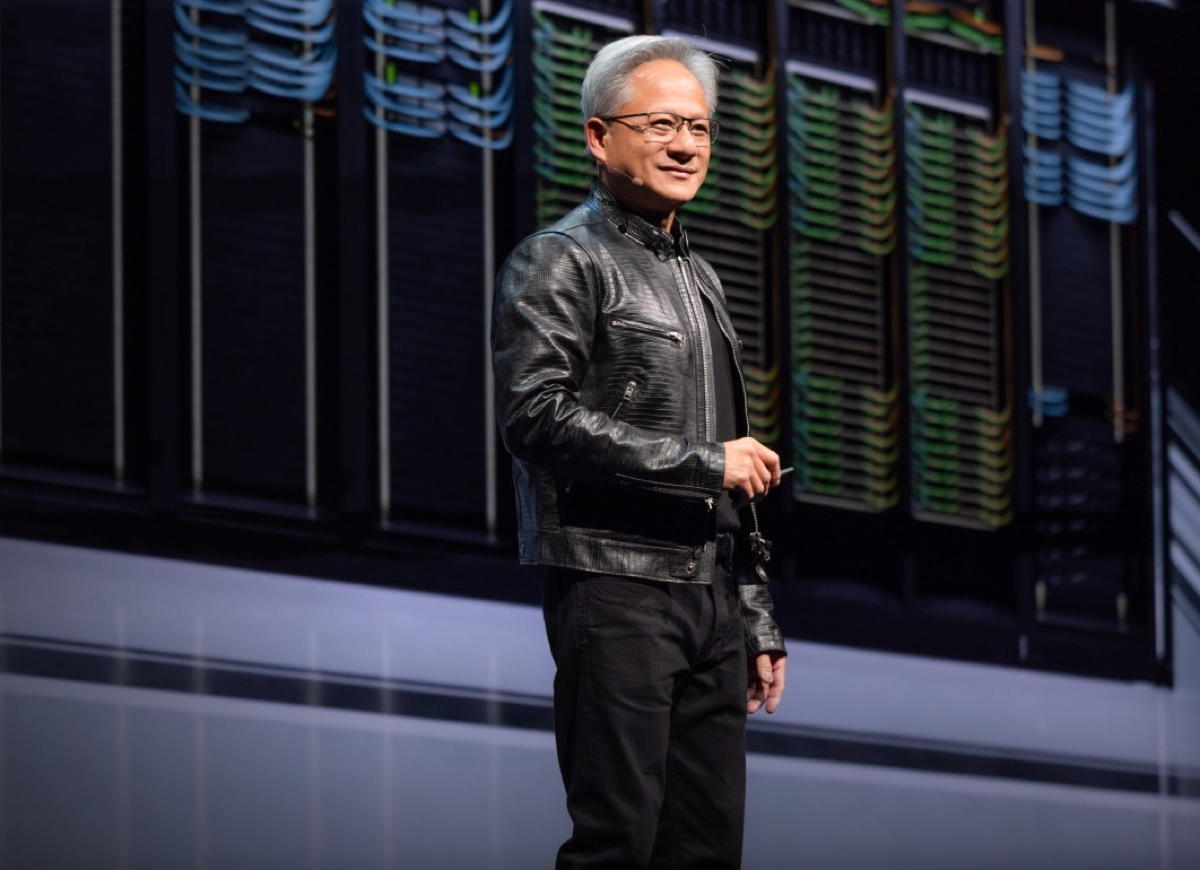
Nvidia chief executive Jensen Huang said the company will “probably” not invest $100 billion (£75bn) in OpenAI, following a much smaller $30bn investment as part of a funding round last week. The reason, Huang explained, is the AI start-up’s likely initial public offering (IPO) sometime this year. “I think the opportunity to invest $100 billion in OpenAI is probably not in the cards,” Huang stated during a Morgan Stanley conference. Because of the expected IPO, “this might be the last time we’ll have the opportunity to invest in a consequential company like this,” he added.
This statement comes amid a period of intense speculation about the relationship between Nvidia and OpenAI, the two companies at the forefront of the generative artificial intelligence revolution. Nvidia, known for its powerful graphics processing units (GPUs) that are essential for training large AI models, has become one of the most valuable companies globally. Its stock price has surged more than fivefold since 2023, driven by the insatiable demand for its chips from AI startups and tech giants alike. OpenAI, the creator of ChatGPT, has similarly seen explosive growth, becoming a household name and a symbol of the AI boom.
The Investment and IPO Context
Huang’s comments at the Morgan Stanley technology conference provided a rare glimpse into the strategic thinking behind Nvidia’s investments in AI companies. In September of the previous year, Nvidia had announced plans to invest up to $100 billion into OpenAI over several years, with the investment tied to the startup’s successive deployments of Nvidia’s chips in data centers. However, that agreement was never finalized and reportedly stalled by January. Industry analysts suggest that the rapid evolution of the AI market, coupled with OpenAI’s corporate structure and governance changes, may have contributed to the breakdown. OpenAI has undergone significant reorganization, transitioning from a non-profit to a capped-profit model, and has been actively preparing for an IPO that could value the company at well over $100 billion.
Huang also touched on Nvidia’s recent $10 billion investment in Anthropic, another leading AI safety and research company founded by former OpenAI employees. Anthropic, known for its Claude AI assistant, is also expected to go public. “This might be the last time we’ll have the opportunity to invest in a consequential company like this,” Huang said, echoing his sentiment about OpenAI. He implied that once these companies become publicly traded, the dynamics of investment change, making large private placements less likely.
Background on Nvidia and OpenAI
Nvidia’s relationship with OpenAI dates back to the company’s early days. OpenAI was founded in 2015 by Elon Musk, Sam Altman, and others with a mission to ensure that artificial general intelligence benefits all of humanity. To train its models, OpenAI relied heavily on Nvidia’s GPUs, creating a symbiotic relationship: Nvidia provided the hardware that powered OpenAI’s breakthroughs, and OpenAI’s success drove demand for Nvidia’s chips. In 2020, Nvidia supplied OpenAI with one of the world’s most powerful supercomputers at the time to train GPT-3. This collaboration was mutually beneficial, but as OpenAI grew and attracted billions in investment from Microsoft, the relationship became more complex.
Microsoft, a major competitor of Nvidia in the cloud computing space, has invested over $13 billion in OpenAI and integrated its models into Azure and Office products. This has created a delicate triangle: Nvidia supplies chips to both Microsoft and OpenAI, while Microsoft and OpenAI are close partners. Nvidia’s investment in OpenAI could be seen as a strategic move to keep its technology central to OpenAI’s future, even as Microsoft also tries to develop its own AI chips. The $100 billion figure was widely seen as a bold statement of commitment, but it also raised eyebrows given the financial implications and potential conflicts of interest.
Changing Economics of the AI Boom
Beyond the investment specifics, Huang’s remarks underscore a broader shift in the economics of the AI industry. The initial wave of optimism that swept through the tech world in 2023 and early 2024 has given way to the stark realities of building and operating massive data centers to power AI workloads. These facilities consume enormous amounts of electricity, water for cooling, and other natural resources, leading to increased operational costs and environmental concerns. For instance, training a single large language model can emit as much carbon as five cars over their lifetimes. Data centers now account for about 1-2% of global electricity use, and that figure is expected to rise sharply as AI adoption grows.
Local communities have begun pushing back against the construction of new data centers, citing strain on power grids, water shortages, and rising energy prices. In regions like Northern Virginia, where the world’s largest concentration of data centers exists, residents have complained about noise, traffic, and the visual impact of sprawling facilities. Some local governments have imposed moratoriums on new data center construction or demanded that companies invest in renewable energy and water conservation. These backlash trends are forcing AI companies and their hardware suppliers—including Nvidia—to rethink their expansion plans and invest in more efficient technologies.
Jensen Huang has acknowledged these challenges, emphasizing Nvidia’s efforts to improve chip efficiency and reduce power consumption per workload. The company’s latest Blackwell architecture, announced in 2024, promises significant performance gains while keeping power requirements manageable. However, even with such improvements, the sheer scale of AI deployment means that energy consumption will continue to rise. Huang has also advocated for the use of nuclear energy and other carbon-free sources to power data centers, though such solutions take years to implement.
The Broader Implications for AI Startups
Nvidia’s evolving investment strategy also reflects a maturing market where startups are increasingly seeking IPO exits rather than remaining private. OpenAI and Anthropic are among the most prominent AI companies expected to go public in the next year or two, joining other tech unicorns. For Nvidia, large private investments become less attractive when a company is about to offer shares to the public—the dynamics of negotiation, valuation, and control change substantially. Additionally, Nvidia’s own cash reserves, while substantial (over $30 billion as of early 2025), are not infinite, and the company must allocate capital wisely across its core business, research and development, and strategic investments.
The AI industry is also seeing increased competition from startups that aim to reduce reliance on Nvidia’s hardware. Companies like Cerebras, Graphcore, and Groq have developed alternative chip architectures, while hyperscalers like Google (TPU), Amazon (Trainium and Inferentia), and Microsoft (Azure Maia) are designing their own AI accelerators. If these alternatives prove viable, Nvidia’s dominance could face challenges, potentially reducing the leverage it has in negotiations with companies like OpenAI. Huang’s cautious approach to investing $100 billion may also reflect an understanding that the AI hardware landscape is not static, and that overcommitting to a single partner could be risky.
Despite these uncertainties, Nvidia remains in a commanding position. Its CUDA software ecosystem, which optimizes its GPUs for AI workloads, is deeply entrenched in the industry, and the company continues to release new products at a rapid pace. Huang’s comment that the $100 billion investment is “probably not in the cards” does not necessarily signal a cooling of interest in OpenAI, but rather a pragmatic recognition of the changing circumstances. Nvidia has already invested $30 billion in OpenAI, a significant amount by any measure, and that stake will likely appreciate if OpenAI’s IPO succeeds.
The relationship between Nvidia and OpenAI—and between Nvidia and the broader AI ecosystem—will continue to evolve. As both companies approach potential inflection points (OpenAI’s IPO and Nvidia’s next-generation chips), the financial and strategic ties between them will remain a subject of intense interest. Huang’s words at Morgan Stanley offer a rare window into the decision-making process of one of the most important figures in tech, and they hint at a future where partnerships are more conditional and investment terms more carefully scrutinized.
In the meantime, the AI industry presses on. The race to build ever-more-capable models continues, with OpenAI’s GPT-5 and Anthropic’s Claude 4 expected later this year. Data center construction continues, albeit under closer scrutiny. And Nvidia’s chips will power it all, regardless of whether the company holds a $100 billion stake in any single startup. The “probably” in Huang’s statement leaves the door open for further investment, but for now, the era of massive speculative capital commitments in AI appears to be giving way to a more measured, market-driven approach.
Source:Silicon UK News