

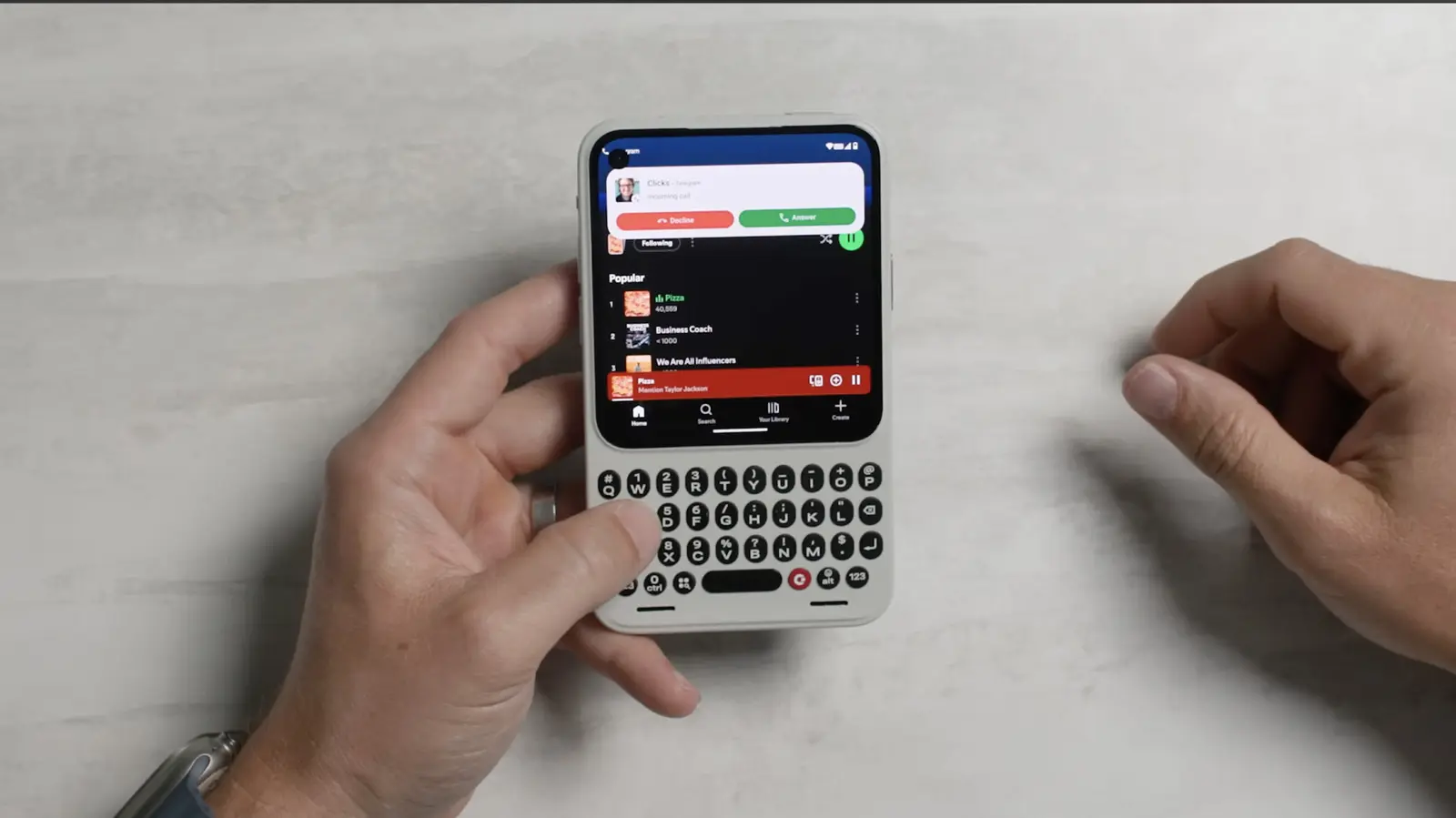
Nearly a decade after physical keyboards vanished from the smartphone mainstream, Clicks is betting that nostalgia and tactile typing can make a comeback. The company, co-founded by prominent tech YouTuber Michael Fisher (MrMobile), first teased the Communicator at CES 2026 with a non-functional dummy. Now, a full hands-on video reveals a device that marries the classic Blackberry form factor with modern Android internals.
A Blast from the Past: The Return of Physical Keyboards
For those who remember the satisfying click of a Blackberry Pearl or the precision of a Nokia E71, the Clicks Communicator is a time machine. The smartphone features a prominent physical keyboard with sculpted keys, a spacebar embedded with a fingerprint sensor, and a layout reminiscent of the iconic QWERTY devices that once dominated boardrooms and text messaging. Unlike many recent attempts at reviving the form factor—such as the Unihertz Titan series or the F(x)tec Pro1—the Communicator does not slide out its keyboard. Instead, the keyboard is a permanent fixture below a 4-inch OLED display, giving it a compact, almost square profile that fits comfortably in one hand.
The keyboard is not just for show. In the video, Clicks marketing VP Jeff Gadway demonstrates how the keys can be used for app launching, typing, and even navigating the interface. The keycaps are backlit, allowing use in low light, and the overall build quality appears solid, with a metal frame and a removable plastic back cover that comes in multiple colors. The company claims the keyboard is designed for rapid, thumb-typing, with a row of shortcut keys that can be customized to open specific apps or perform actions like taking a screenshot.
Clicks Communicator: Specs and Features
Under the hood, the Communicator is a thoroughly modern device. It runs Android 16, the latest version of Google's operating system, ensuring compatibility with current apps and security patches. The 4-inch OLED display offers vibrant colors and deep blacks, though it is notably smaller than today's average screen—a deliberate choice to maintain the compact footprint that made Blackberries so pocketable. The display resolution is expected to be 1080p, providing sharp text and images.
The camera system includes a 50-megapixel main sensor and a 24-megapixel front-facing camera, which should handle everyday photography and video calls adequately. While not flagship-level, these specs are competitive with mid-range offerings. The device also includes NFC for Google Pay, Bluetooth 5.3, dual-band Wi-Fi, and a 3.5mm headphone jack—a rarity in 2026 that will please audiophiles. Storage is expandable via microSD, and the battery is a 4,000 mAh unit supporting both USB-C and wireless charging, ensuring the phone lasts a full day under moderate use.
Connectivity options are comprehensive, though it is unclear whether the Communicator supports mmWave 5G or only sub-6GHz bands. Given that Clicks positions this as a secondary device for many users, the lack of ultra-fast connectivity may not be a dealbreaker. The phone also includes a barometric pressure sensor, which can be used for weather apps or elevation tracking.
The Custom Interface: Niagara Launcher and Ribbon Navigation
One of the most innovative aspects of the Communicator is its custom user interface, based on the Niagara Launcher. This launcher is known for its minimalist, single-screen design that prioritizes essential apps and contacts. Clicks has adapted it to work seamlessly with the physical keyboard. Instead of tapping icons, users can type the first few letters of an app's name to launch it instantly. A ribbon-style interface on the right side of the screen allows for scrolling through a list of installed apps, and selected apps can be pinned for quick access.
Gadway demonstrated how the keyboard can be used to switch between apps, answer calls, and even control media playback. For example, pressing a designated key brings up the recent apps drawer; another key opens the notification shade. This deep integration means that users rarely need to touch the screen, making one-handed operation a reality. The launcher also supports custom themes and widget placements, giving users control over the look and feel of their device.
Hardware Details: Fingerprint Scanner, Ports, and Microphones
The hardware design is thoughtful, with attention to details that enhance usability. The fingerprint sensor embedded in the spacebar works reliably and is conveniently placed for the thumb. The top edge houses the 3.5mm headphone jack, while the bottom edge has a USB-C port that is recessed—this recess helps when removing the back cover, which provides access to the SIM and microSD slots. Three microphones are placed on the top, bottom, and back for noise cancellation during calls and voice recording. Stereo speakers deliver decent sound for music and video playback.
Clicks has also included a notification LED, a feature that many modern phones have abandoned but which remains useful for quick glances. The power button is on the right side, with volume rockers on the left. The overall dimensions are approximately 150mm in height, 70mm in width, and 12mm in thickness, making it thicker than most smartphones but comparable to classic Blackberry devices. The weight is around 200 grams, which feels substantial but not burdensome.
Target Audience and Pricing
The Communicator is not aimed at everyone. Clicks explicitly markets it as a second device for productivity-focused users who miss the tactile feedback of physical keyboards. It is also likely to appeal to those who want a digital detox device: the small screen discourages endless scrolling, while the keyboard encourages deliberate typing. The company plans to launch sales by Q4 2026 at a price point of $499, which positions it competitively against other niche devices like the Unihertz Titan Pocket and the soon-to-be-released Astro Slide. Pre-orders may begin as early as September.
For those curious about the experience, Clicks has promised additional demo videos exploring specific features like the camera performance, battery life, and the keyboard's typing speed. The company also intends to open-source parts of the launcher's code to encourage third-party development. With its unique blend of retro design and modern capabilities, the Clicks Communicator could carve out a loyal following among enthusiasts who refuse to let the physical keyboard die.
Source:Engadget News