

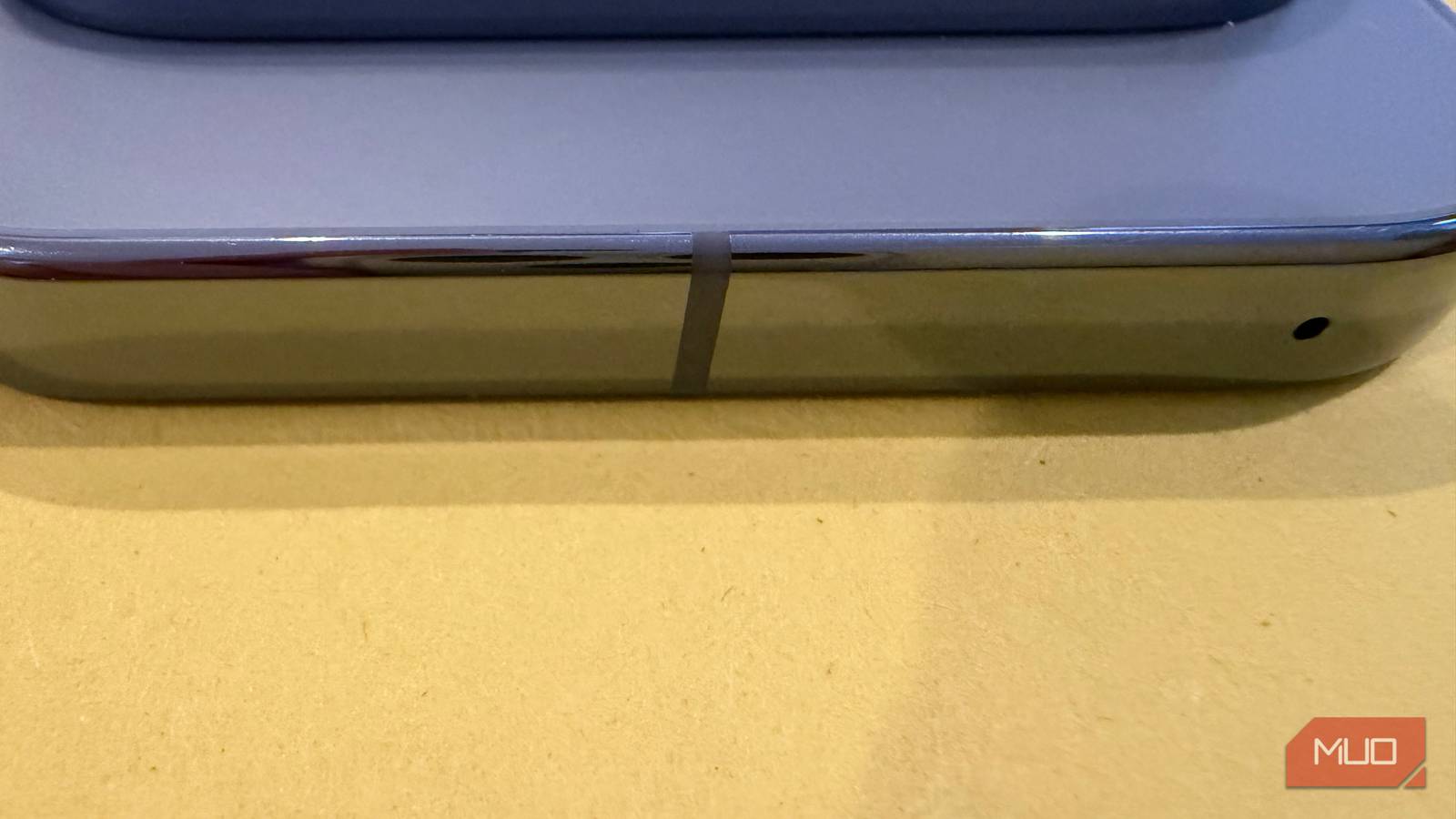
Take a close look at your smartphone. Chances are, you will notice a series of thin, often subtle lines running across the metal edges or around the back panel. These lines might also appear as small rectangular or oval cutouts, sometimes mistaken for a fingerprint sensor or a speaker grille. They are far from decorative; in fact, many users consider them a visual compromise. Yet these features are essential — they are the result of a fundamental engineering problem that every phone manufacturer has had to solve since the industry moved away from plastic casings.
The shift to metal unibody construction in the early 2010s brought undeniable benefits: a premium look and feel, superior heat dissipation, and greater structural rigidity. But it also created a major obstacle: metal is effectively a Faraday cage, blocking the electromagnetic waves that cellular, Wi-Fi, Bluetooth, and GPS signals rely on. To allow these signals to pass, manufacturers were forced to introduce gaps in the metal in the form of plastic or composite strips — the very lines you see on your phone today.
The Problem: Metal Blocks Wireless Signals
How a Faraday Cage Works
A Faraday cage is an enclosure made of conductive material, such as metal, that blocks external electromagnetic fields. When a phone is encased in a continuous metal shell, the radio waves generated by its internal antennas reflect off the metal and are trapped inside. This severely degrades or completely prevents communication with cell towers, satellites, and other devices. Early adopters of metal phones quickly discovered that a completely sealed metal body would render a smartphone useless for calls, data, and navigation.
The Pre-Metal Era: Plastic Is Signal-Friendly
Before 2012, the vast majority of smartphones were constructed primarily from plastic. Materials like polycarbonate were lightweight, durable, and — most importantly — transparent to radio frequencies. Plastic casings allowed antennas to be placed near the surface without significant signal loss. However, plastic lacked the high-end feel that consumers began to demand after the launch of premium devices like the iPhone 4 (which used a glass and stainless steel frame) and the HTC One series. The desire for a more luxurious, cool-to-the-touch device pushed manufacturers toward metal, sparking the engineering challenge that persists today.
The Solution: Antenna Lines and Cutouts
Plastic Composite Strips as Antenna Breaks
To overcome the Faraday cage effect, manufacturers insert small strips of non-conductive material — typically a plastic composite — into the metal frame. These strips act as "antenna windows," allowing radio waves to exit and enter the device. The lines are strategically placed along the edges or back of the phone, often forming a continuous band that divides the metal into multiple sections. Each section can then be used as a separate antenna for different frequency bands (e.g., cellular, Wi-Fi, GPS). The number and placement of these lines depend on the device's antenna design and metal structure. For example, the HTC One M7 (2013) had two prominent plastic strips across the back, which were widely criticized for their appearance. Over time, manufacturers refined the aesthetic by moving these strips to the side rails or using subtler color-matched materials.
Glass Windows and Panels
An alternative to plastic strips is the use of glass windows within the metal body. Apple, for instance, introduced glass cutouts on the iPhone 4 and later models to allow cellular and wireless signals to pass. On modern phones like the iPhone Pro series and Google Pixel devices, you will find large glass panels on the back (sometimes called the "visor" or "camera bar") that not only house the camera sensors but also serve as antenna-friendly zones. Samsung has taken a similar approach with its Galaxy S series, using a full glass back that mimics the tactile feel of metal. Glass is transparent to radio frequencies, so it solves both signal transmission and wireless charging (since metal blocks inductive charging coils).
Evolution of Design: From Awkward Lines to Sleek Edges
The first generation of metal unibody phones, such as the HTC One M7 and the iPhone 5, placed antenna bands prominently on the back or top and bottom edges. These early attempts were functional but visually disruptive. As consumers became more sensitive to aesthetics, engineers developed methods to hide the lines. By the mid-2010s, manufacturers learned to integrate the antenna breaks along the top and bottom edges of the phone, often as thin strips that blend into the chamfered edges. The back of the phone could then remain a clean, uninterrupted surface. This design evolution culminated in devices like the iPhone 6 series (2014), which had subtle plastic bands at the top and bottom, and the Galaxy S6 (2015), which used a metal frame with antenna lines inconspicuously placed on the sides.
Today, premium smartphones still use antenna lines, but they are often so well integrated that most users do not notice them. The lines are often filled with a material that matches the phone's color and texture, making them nearly invisible from a distance. Some manufacturers, such as OnePlus, have experimented with ceramic or glass backs that allow antennas to be placed underneath, eliminating the need for visible lines altogether on the back panel. However, the metal frame remains a requirement for structural integrity, so side antenna lines persist on virtually all metal-framed devices.
The Oval Cutout: mmWave 5G Antenna
In addition to the thin plastic strips, some smartphones feature a larger oval-shaped cutout on the side or top edge. This cutout is specifically designed for millimeter-wave (mmWave) 5G antennas. mmWave operates at very high frequencies (24 GHz and above) and requires specialized antenna modules that are larger and more sensitive than those for sub-6 GHz bands. Because mmWave signals are easily blocked by metal and even by a user's hand, the antenna must be placed in a location with minimal obstruction. The oval cutout is typically covered with a plastic or glass window that allows the high-frequency waves to pass through with minimal loss.
Despite the hype around mmWave 5G, its real-world deployment remains limited. Networks are expensive to build, signals only travel short distances (a few hundred meters), and they struggle to penetrate walls and foliage. Additionally, mmWave consumes significant battery power. As a result, many users may never actually connect to a mmWave cell tower. The antenna cutout on your phone is therefore more of a future-proofing feature than a daily necessity. The lower-frequency 4G/LTE and sub-6 GHz 5G bands are responsible for the vast majority of your connectivity — and those rely on the traditional antenna lines we discussed earlier.
The Modern Glass Sandwich: Best of Both Worlds
Recognizing the limitations of a fully metal body, the industry has largely converged on a design known as the "glass sandwich." In this approach, the front and back of the phone are made of glass (or a glass-like ceramic), while the frame is still made of strong metal, typically aluminum or stainless steel. This provides several advantages: the glass back allows wireless charging and does not block signals from internal antennas. The metal frame maintains the premium feel where users grip the phone most often and provides the necessary structural rigidity. The antenna lines are then placed only on the metal frame, often in locations where they are least noticeable, such as the top and bottom edges or along the sides.
This design philosophy is evident in almost every flagship smartphone released in the last five years, from the Samsung Galaxy S series to the iPhone 12 and later models, and Google Pixel 6 and beyond. The use of glass enables more advanced features like reverse wireless charging and improved 5G antenna performance, while the metal frame ensures that the device does not bend or crack under stress. Even budget and mid-range phones have adopted this approach, using glass-free back panels made of plastic with a metallic finish, but still incorporating the necessary antenna lines in the frame.
The lines on your phone are not a flaw or a cost-cutting measure; they are the visible signature of a well-engineered compromise between industrial design and wireless functionality. The next time you look at your device, you can appreciate the invisible battle between aesthetics and physics that takes place inside every smartphone. Without these unassuming plastic strips, your phone would be a beautiful, silent paperweight — unable to connect to the world.
Source:MakeUseOf News