

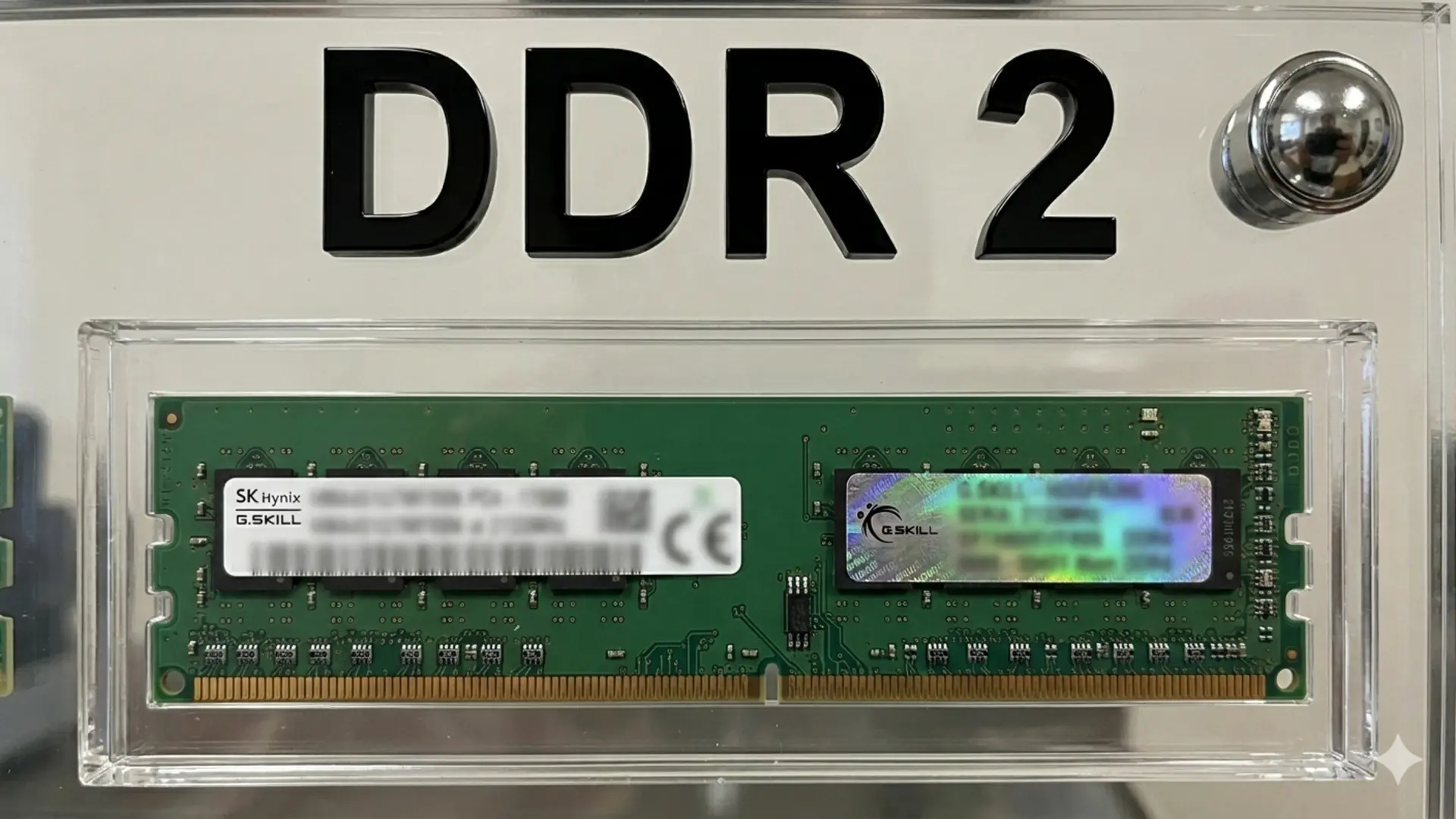
The landscape of computer memory is witnessing an unusual phenomenon: the price of 25-year-old DDR2 memory modules is set to more than double, a spike driven by what industry analysts are calling an 'AI-driven RAM-armageddon.' While modern systems rely on DDR4 and DDR5, the aging DDR2 standard, introduced in 2003, is experiencing a renaissance of demand—not for cutting-edge PCs, but for legacy servers, embedded systems, and industrial controls that still depend on this obsolete technology.
The Forced Upgrade Cycle
For years, DDR2 modules could be found in the bargain bin of most electronics retailers, often selling for pennies per gigabyte. However, the sudden surge in artificial intelligence workloads has reshuffled the global memory market. The explosion of AI model training and inference requires vast amounts of high-bandwidth memory, typically HBM2e, HBM3, and GDDR6, which are produced using advanced fabrication nodes. As foundries dedicate more capacity to these modern memory types, production of older legacy memory like DDR2 has been curtailed or ceased entirely. Simultaneously, the AI boom has driven up the cost of raw materials, silicon wafers, and packaging substrates, affecting all memory tiers.
Manufacturers such as Samsung, SK Hynix, and Micron have long since discontinued DDR2 production, shifting focus to newer, more profitable technologies. The remaining stock of DDR2 modules is finite and dwindling. Yet demand persists, especially from enterprise customers who maintain aging server fleets for specific applications, as well as from the industrial sector where PLCs, CNC machines, and point-of-sale systems often run on decades-old hardware. The result is a classic supply-demand imbalance, with prices expected to increase by more than 100% in the coming months.
Historical Context of DDR2
DDR2 SDRAM was a significant leap over its predecessor, DDR1, offering higher clock speeds, lower power consumption, and improved bandwidth. It became the standard for desktop computers from around 2004 to 2009, eventually giving way to DDR3. Peak adoption of DDR2 occurred during the era of Intel's Core 2 Duo and AMD's Athlon 64 processors. Despite its age, DDR2 remains in use in numerous legacy systems, particularly in industrial automation, telecommunications, and embedded computing where upgrading would be prohibitively expensive or disruptive.
The typical DDR2 module operates at frequencies between 400 MHz and 1066 MHz, with capacities ranging from 512 MB to 8 GB per stick. ECC (Error-Correcting Code) variants are commonly found in server environments. As AI infrastructure expands, companies are repurposing older servers for less intensive tasks, such as data preprocessing or inference at the edge, inadvertently increasing demand for DDR2 memory to keep those systems running.
The AI Connection
How exactly does artificial intelligence cause a price spike in a memory standard that predates the modern AI boom? The answer lies in the massive build-out of data centers. To train large language models like GPT-4 or Google's Gemini, companies deploy thousands of servers equipped with the latest GPUs and accelerators. These servers require tremendous amounts of high-speed memory, straining the global supply chain. Suppliers prioritize the production of DDR5, HBM, and GDDR7, neglecting older standards. Additionally, the construction of AI data centers consumes huge quantities of DRAM for the server motherboards themselves — often registered DIMMs (RDIMMs) based on DDR4 or DDR5. However, the ancillary infrastructure, such as management controllers, auxiliary processors, and legacy backup systems, sometimes still relies on older memory types.
Furthermore, the AI frenzy has tightened the global supply of semiconductor-grade silicon, increasing costs across the board. Memory controllers, interface chips, and even PCB substrates for legacy modules become more expensive to produce as fabs allocate capacity to high-margin AI chips. The ripple effect is clear: a shortage of modern memory cascades into a shortage of legacy memory, as production lines are retooled and older manufacturing processes are phased out.
Market Reactions and Speculation
Resellers and distributors have reported a sharp uptick in inquiries for DDR2 modules. On secondary markets like eBay and specialized electronics surplus sites, prices for 2 GB and 4 GB DDR2 sticks have already risen by 30% to 50% in the past year, with further increases expected. Some speculators are even stockpiling DDR2 as an investment, betting that scarcity will drive prices higher. Meanwhile, system integrators who support legacy equipment are struggling to source parts, and some are resorting to salvaging modules from discarded office computers.
The phenomenon mirrors the recent spike in prices for other legacy technologies, such as older NAND flash and DDR3, which also saw price increases due to repurposing of factories for AI-related production. However, the DDR2 situation is particularly acute because of its age and limited existing inventory. According to industry analysts, the average price per gigabyte for DDR2 could surpass that of DDR4 within the next year, an inversion that defies typical technology depreciation trends.
Industrial and Enterprise Impact
For many businesses, the cost impact is significant. Manufacturing plants running Windows XP-based control systems, healthcare facilities managing legacy medical imaging equipment, and logistics companies using ancient warehouse management terminals all depend on DDR2 modules. A doubling in price can force expensive recertification projects or accelerate migration to modern platforms—both costly endeavors. The aerospace and defense sectors also have equipment with long service lives that rely on DDR2, making replacements scarce and expensive.
Some companies are exploring creative solutions, such as using DDR2-to-DDR3 adapters or reworking motherboard memory slots, but these workarounds are often unreliable. The best advice for organizations still using DDR2 is to secure a sufficient inventory now before prices climb further. The shortage is expected to persist for at least 18 to 24 months, as memory manufacturers show no interest in restarting production lines for a 20-year-old technology.
Global Supply Chain Factors
The wider context includes geopolitical tensions affecting semiconductor supply chains. Export controls, particularly those involving China and Taiwan, have disrupted the flow of memory chips. Tariffs and trade restrictions add another layer of cost. Additionally, the COVID-19 pandemic led to a surge in demand for electronics, which rippled through supply chains and resulted in reduced production of older components. Now, the AI boom is superimposing additional stress, creating a perfect storm for legacy memory pricing.
While DDR2 is unlikely to become as expensive as gold, the trend is unmistakable. For a technology that was once considered obsolete, DDR2 is experiencing a surprising revival—driven by the insatiable appetite of artificial intelligence. The RAM-armageddon may not be a global catastrophe, but for those dependent on aging memory, it feels like one.
Source:TechRadar News