

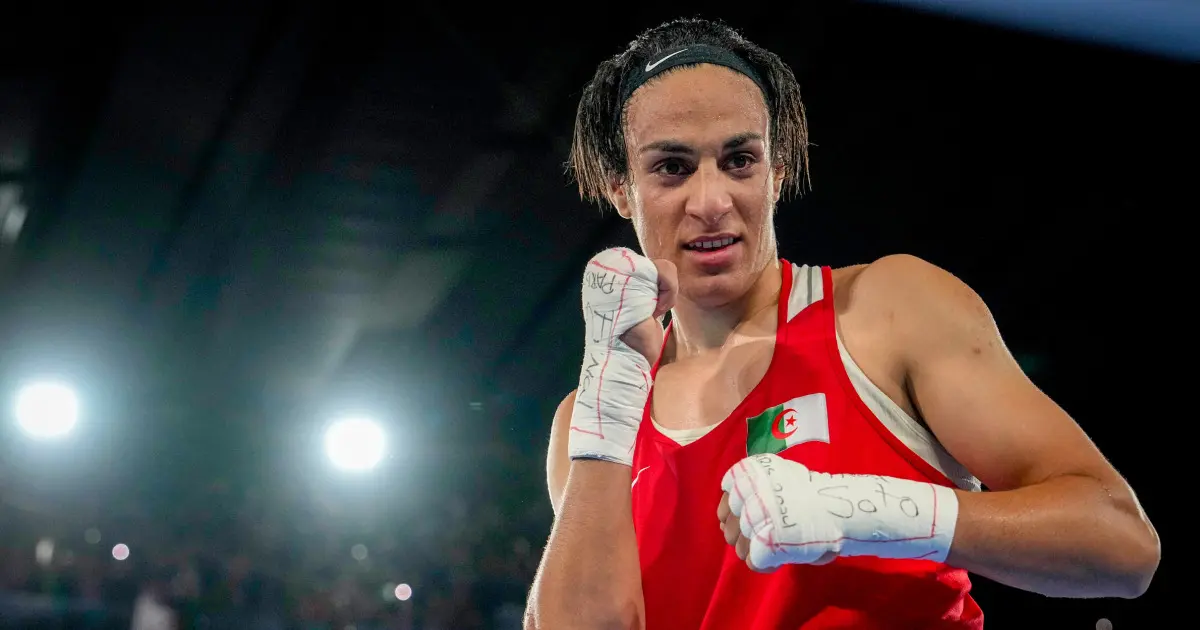
World Boxing, the newly recognized governing body for the sport, announced on Friday that Olympic boxing champion Imane Khelif must undergo genetic sex screening before she can participate in any of its sanctioned events. The decision marks a significant shift in how the organization will handle sex eligibility, introducing mandatory testing for all athletes over 18 years old. World Boxing specifically named Khelif in its announcement, stating that the Algerian gold medalist must be cleared before competing at upcoming events, including the Eindhoven Box Cup in the Netherlands scheduled for next month.
New policy on sex, age and weight
The testing requirement is part of what World Boxing describes as a new policy on "Sex, Age and Weight," designed to strengthen safety protocols and ensure a competitive level playing field for men and women. Under the policy, all athletes competing in World Boxing events must undergo a polymerase chain reaction (PCR) genetic test, which detects chromosomal material through a mouth swab, saliva sample, or blood draw. National federations will be responsible for administering the tests and providing the results to World Boxing. If an athlete intending to compete in a women's category is determined to have male chromosomal material, the case is referred to independent clinical specialists for further evaluation, including genetic screening, hormonal profiles, anatomical examinations, or assessments of endocrine profiles. The policy also includes an appeals process, allowing athletes to challenge any findings.
Khelif's path to Olympic gold
Khelif, a 26-year-old from Algeria, became an international figure during the 2024 Paris Olympics, where she won the gold medal in the women's welterweight division. Her performance, however, was overshadowed by intense scrutiny surrounding her eligibility. Alongside Taiwan's Lin Yu-ting, who also won gold in Paris, Khelif had been disqualified from the 2023 world championships by the International Boxing Association (IBA), the previous governing body for Olympic boxing, after what the IBA called a failed unspecified eligibility test. The IBA, which has been run under Russian leadership and faced decades of controversy, was stripped of its role in organizing Olympic boxing tournaments by the International Olympic Committee (IOC).
The IOC took over the running of the last two Olympic boxing tournaments and applied the eligibility standards used in previous Games. Under those standards, both Khelif and Lin were eligible to compete. The IOC's decision to include them drew sharp criticism from some quarters, but the organization defended its approach, emphasizing that the athletes had met all necessary requirements. Khelif's victory in Paris was celebrated widely in Algeria and across much of the Arab world, yet it also became a flashpoint in the broader global debate over transgender participation and sex testing in women's sports.
IBA ban and ongoing controversy
Khelif's participation in the 2023 IBA world championships had not been controversial before the disqualification. She had competed in women's boxing under the IBA's auspices for years without issue, and she had never won a major international competition prior to her dominant showing in Paris. The IBA's decision to bar her and Lin from the 2023 event came without public explanation of the specific test that was used, leading to accusations of political motivation and unfair treatment. The IBA's credibility had already been severely damaged by a history of financial mismanagement, judging scandals, and its dependence on Russian sponsorship, including deals with energy giant Gazprom. After the IOC expelled the IBA in 2023, the governing body was left without a recognized role in the Olympic movement, and national boxing federations began scrambling to form a new international organization.
World Boxing, which was provisionally approved by the IOC to replace the IBA at the 2028 Los Angeles Games, has been under significant pressure from boxers and national federations to create clear and enforceable sex eligibility standards. Some boxers had already spoken out against Khelif's inclusion in upcoming events, and several federations threatened to boycott competitions if no action was taken. The new mandatory testing policy is seen as a direct response to that pressure, and the specific mention of Khelif in Friday's announcement signals that World Boxing intends to take a stricter line than the IOC did in Paris.
A history of chromosome testing
The reintroduction of chromosome testing represents a major departure from the approach used by most international sports federations in recent decades. Chromosome screening was common in Olympic sports during the 20th century, with female athletes required to provide evidence of two X chromosomes. However, the practice was largely abandoned in the 1990s because of the numerous ambiguities associated with the tests, particularly in cases of differences in sex development (DSD). DSD encompasses a range of conditions where an individual's chromosomal, hormonal, or anatomical characteristics do not fit typical definitions of male or female. The tests often produced inconclusive results, raised privacy concerns, and led to the exclusion of athletes who were later found to have no competitive advantage.
In response, many sports organizations shifted to hormone testing, specifically measuring testosterone levels. But that approach also created difficult decisions, especially for women with naturally high testosterone levels. Some governing bodies, including the International Association of Athletics Federations (now World Athletics), implemented restrictions on athletes with certain DSD conditions, requiring them to lower their testosterone levels before competing in women's events. These rules have been challenged in court and remain highly contentious. Three months ago, World Athletics became the first major Olympic sport to reintroduce chromosome testing, requiring all athletes competing in women's events to undergo the test once in their careers. That decision was driven by what the organization described as concerns about fairness and safety, and it has been followed by World Boxing's announcement.
The science of the PCR test
The PCR test adopted by World Boxing is a well-established laboratory procedure that amplifies specific DNA sequences to detect the presence of Y chromosomes. It is considered highly accurate and can be administered quickly, but it is not without limitations. For example, some individuals with XY chromosomes may have complete androgen insensitivity syndrome (CAIS), meaning their bodies do not respond to testosterone in the usual way. Those individuals may have typical female anatomy and female gender identity, and many sports authorities have historically considered them eligible to compete as women. Under World Boxing's new policy, any athlete with male chromosomal material would be referred for further evaluation, but the final determination would depend on a range of clinical factors, including hormonal profiles and anatomical examination.
Broader implications and political context
The decision by World Boxing comes at a time when sex eligibility policies have become an international flashpoint. The issue of transgender participation in sports has moved to the forefront of political discourse, with leaders such as former President Donald Trump and several conservative heads of state weighing in on the subject. In the United States, lawmakers in numerous states have passed bans on transgender athletes participating in girls' and women's school sports, and some international organizations have followed suit with strict regulations. World Athletics, in addition to its chromosome testing policy, has also proposed recommendations that would impose stringent rules on athletes who were born female but have what the organization describes as naturally occurring testosterone levels in the typical male range. In 2023, World Athletics banned transgender athletes who had transitioned from male to female and gone through male puberty. World Athletics president Sebastian Coe expressed confidence that the organization's new rules would withstand legal challenges, and World Boxing seems poised to adopt a similarly assertive stance.
For Khelif, the immediate concern is whether she will be cleared in time to compete at the Eindhoven Box Cup. She has said she intends to return to international competition next month as part of her preparation for the 2028 Los Angeles Olympics, where she hopes to defend her gold medal. Her legal team has not yet commented publicly on the new policy, but it is likely that any adverse finding would be met with an appeal. The broader question of how to balance fairness, safety, and inclusion in sports remains unresolved, and World Boxing's decision adds another layer of complexity to an already heated debate. With the Olympics on the horizon, the outcome of Khelif's screening could set a precedent for how other international federations handle sex eligibility in the coming years.
As the sporting world watches, World Boxing's mandatory testing policy represents a significant step backward or forward, depending on one's perspective, in the long-running effort to define acceptable criteria for women's competition. The case of Imane Khelif is likely to be the first major test of this new regime, and its resolution will echo beyond the boxing ring. Whether it leads to greater clarity or further controversy remains to be seen, but for now, Khelif's Olympic legacy is once again under the microscope as she awaits the results of a genetic test that will determine her immediate future in the sport.
Source:NBC News News