

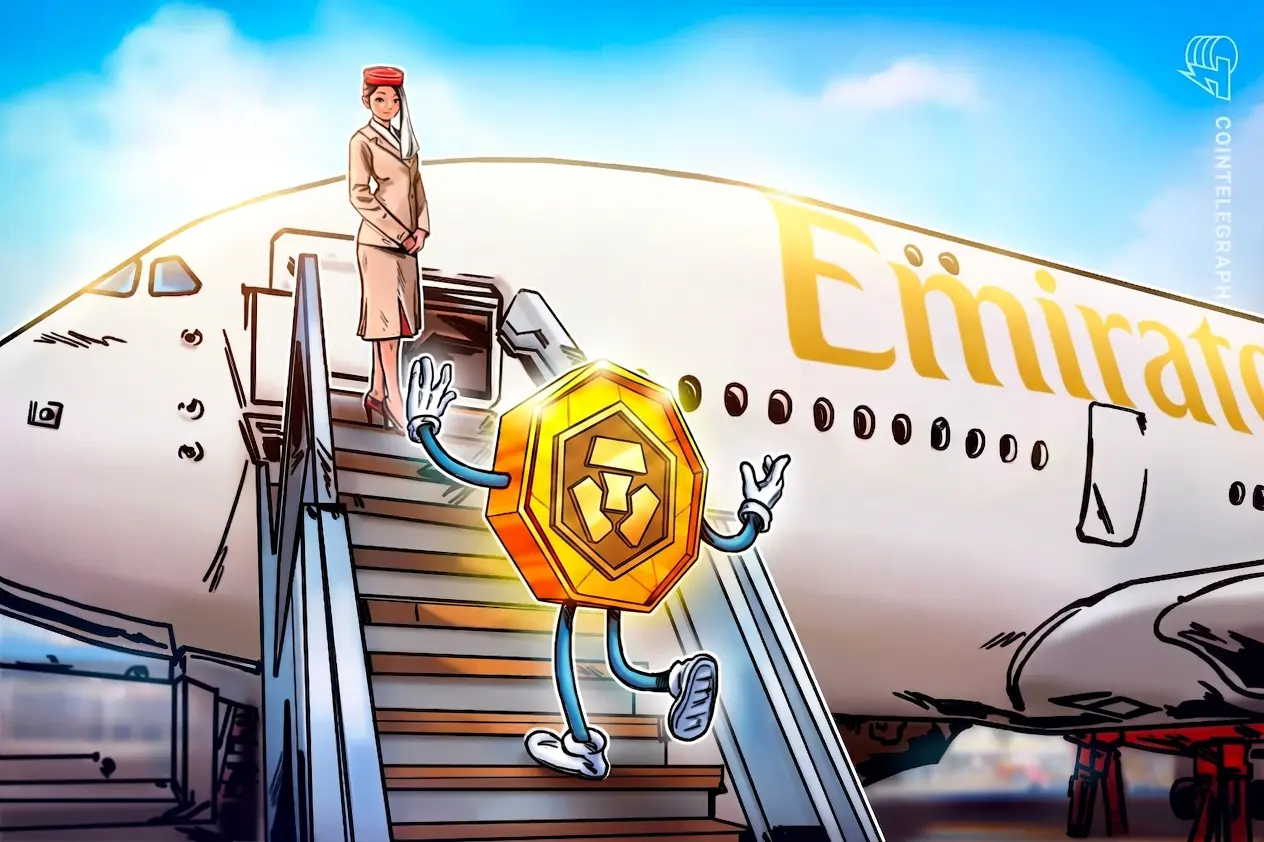
Emirates introduces crypto checkout for UAE residents
On Tuesday, Dubai-based carrier Emirates activated a new payment option for eligible residents of the United Arab Emirates, allowing them to book flights using cryptocurrency through Crypto.com Pay. The service is available on Emirates' official website and mobile app, marking another step in the airline's digital transformation strategy. Bookings made with crypto are priced and settled in dirhams, the national currency of the UAE, with Crypto.com handling the conversion behind the scenes.
For mobile users, the checkout flow redirects them to the Crypto.com app to authorize the payment from their wallet. Desktop users are instead presented with a QR code that they scan using the app to complete the transaction. This approach is designed to keep the airline's financial operations stable while giving customers greater flexibility in how they pay.
Why Emirates is embracing digital payments
The airline said the move responds to the behavior of younger, digitally fluent travelers who increasingly manage their finances and travel plans from their phones. Adnan Kazim, Emirates' deputy president and chief commercial officer, said the launch reflects these rapidly evolving preferences. He emphasized the importance of meeting customers where they are, especially as digital wallets and cryptocurrency become more common in everyday commerce.
The introduction of Crypto.com Pay at Emirates follows a partnership announced in July 2025. The two companies had signaled their intention to work together on crypto-enabled payments, and the latest rollout is the concrete result of that collaboration. Notably, Crypto.com received a Stored Value Facilities license from the UAE Central Bank earlier in May, a regulatory approval that allows non-bank companies to hold customers' funds in digital wallets and process payments under official oversight. This license was seen as a key enabler for integrating crypto payments into major merchant platforms, including Emirates and Dubai Duty Free.
How the SVF license supports crypto payments
The SVF framework is important because it provides a clear legal structure for crypto payments. Under this license, customers can fund payments using cryptocurrencies, while merchants receive dirhams or dirham-backed stablecoins. This setup reduces the volatility risk for airlines and retailers, as the conversion happens at the point of sale and the merchant is never exposed to crypto price swings. For customers, it means they can spend their digital assets at a major airline without needing to first convert them through an exchange.
Emirates is not the first airline in the region to accept digital currencies. Air Arabia, a Sharjah-based low-cost carrier, began accepting the dirham-backed AE Coin stablecoin in May 2025. The AE Coin is designed to maintain a stable value relative to the UAE dirham, making it suitable for everyday purchases such as flight tickets. Emirates' approach differs slightly because it supports a broader range of cryptocurrencies through Crypto.com Pay, rather than a single stablecoin. Both models indicate a growing appetite among Gulf carriers to embrace blockchain-based payments.
Regional momentum for crypto adoption
The wider context also includes other regional moves toward crypto adoption. Bhutan, for example, has launched tourism-related crypto payments powered by Binance Pay and DK Bank, showing that countries in Asia are also exploring how digital assets can support travel and commerce. These developments come as regulators in the UAE and elsewhere work to create frameworks that allow innovation without undermining consumer protection or financial stability.
The UAE has been particularly proactive in this area. Dubai, where Emirates is headquartered, has established itself as a global hub for blockchain and digital asset companies. The Dubai Virtual Asset Regulatory Authority and the UAE Central Bank have introduced rules governing crypto exchanges, custodians, and payment providers. The SVF license held by Crypto.com is one example of how the country is building a comprehensive regulatory ecosystem.
Strategic benefits for the airline
For Emirates, the ability to accept cryptocurrency is also about brand image and future-proofing. The airline serves a global customer base, including many tech-savvy travelers from regions with high crypto adoption. By offering crypto payments, Emirates positions itself as an innovative carrier that understands the needs of modern consumers. It also gives the airline a way to differentiate itself in a competitive market where customer experience is a key battleground.
The payments integration is limited to eligible UAE residents for now. Neither Emirates nor Crypto.com has indicated whether the service will be expanded to other countries. This limitation may stem from regulatory requirements, as different jurisdictions have different rules governing crypto payments. It may also reflect the company's strategy of testing the feature in a well-regulated market before scaling it internationally.
Technical and security considerations
From a technical perspective, integrating a crypto payment option into an airline's booking system requires careful planning. The payment flow must be seamless, secure, and compliant with local regulations. The partnership with Crypto.com allows Emirates to leverage an existing crypto payment infrastructure rather than building one from scratch. Crypto.com's platform handles the wallet authorization, the conversion from crypto to fiat, and the settlement in dirhams. This reduces the operational burden on the airline and ensures that transactions are processed efficiently.
Security is another critical consideration. Crypto transactions are irreversible, so any error in the payment process could result in lost funds. By using a licensed payment provider, Emirates can rely on established safeguards such as two-factor authentication, transaction monitoring, and fraud detection. The redirect to the Crypto.com app or QR code scan ensures that the customer explicitly authorizes each payment from their own wallet.
Market context and industry impact
The announcement has generated interest within the crypto community, as airline tickets are a significant purchase for many consumers. Being able to spend crypto directly on flights adds a practical use case for digital assets, beyond trading or storing value. It also demonstrates that major brands are willing to accept crypto when there is a clear regulatory framework.
The broader market for crypto payments has been growing steadily. According to data from CoinGecko, Crypto.com processed around $686 million in trading volume in the 24 hours before the announcement. While trading volume is not the same as payment volume, it indicates the scale of activity on the platform and suggests healthy demand for crypto services.
Emirates' adoption of crypto payments could also have a ripple effect. Other airlines, hotels, and retailers in the region may feel pressure to offer similar options as consumer expectations evolve. The UAE government has encouraged digital innovation, and the commercial sector is responding with new payment methods. If the Emirates pilot is successful, it could pave the way for a wider rollout across the region.
It is worth noting that airline payments are a challenging use case for crypto due to price volatility. Most airlines, including Emirates, prefer to settle in fiat currency to avoid the risk of holding depreciating assets. The model used here, where Crypto.com converts crypto to dirhams immediately, addresses that concern. It provides the customer with the convenience of paying in crypto while the airline maintains a stable revenue stream.
There are also implications for the unbanked or underbanked populations. Some travelers may hold crypto but not have access to traditional banking services. Accepting crypto could make air travel more accessible to them, though the current limitation to UAE residents narrows that impact. Still, it sets a precedent for other companies to explore.
Blockchain's growing role in travel
In the longer term, blockchain technology might play an even larger role in airline operations, from loyalty programs to ticketing and identity management. Some airlines have experimented with blockchain-based loyalty tokens and digital identity systems. The crypto payment option is a stepping stone toward more integrated uses of distributed ledger technology in the travel industry.
The partnership between Emirates and Crypto.com is an excellent example of how legacy companies can collaborate with digital asset firms to bring new services to market. Rather than trying to become a crypto company, Emirates outsources the complex regulatory and technical work to a licensed specialist. This allows the airline to focus on its core business while still offering a modern payment experience.
As the payment service goes live, eligible UAE residents will be able to choose crypto as a payment method when booking flights on emirates.com or through the airline's app. The airline expects to learn from the rollout and may adjust the service based on customer feedback and operational performance. No exact date has been given for any potential international expansion, and the companies have remained tight-lipped about future plans.
Emirates operates one of the world's largest long-haul networks, connecting Dubai to more than 130 destinations across six continents. Its willingness to experiment with crypto payments could send a strong signal to the global aviation industry. If the service proves popular and smooth, other carriers might follow suit, especially those serving regions with high crypto penetration.
Regulatory oversight will continue to play a key role in the expansion of crypto payments. The UAE's clear licensing framework gives companies like Emirates and Crypto.com the confidence to launch such services. Other countries are still in the process of developing their own rules, which may explain why the service is initially limited to UAE residents.
The launch also comes at a time when the broader cryptocurrency market is showing resilience. Bitcoin and Ethereum are trading at significant levels, and many investors are looking for ways to use their digital assets in everyday life. Payment integrations like this one help bridge the gap between the crypto economy and the traditional financial system.
While the immediate impact may be modest, the symbolic importance is substantial. A flagship airline accepting crypto payments is a mainstream validation of the technology. It shows that digital assets have moved beyond niche use cases and are becoming an accepted part of the global financial infrastructure.
For Crypto.com, the partnership with Emirates is a major win. It gives the exchange visibility among millions of Emirates customers and demonstrates that its payment infrastructure can handle large, reputable merchants. This could lead to more partnerships with airlines, travel companies, and other businesses.
Source:Cointelegraph News