

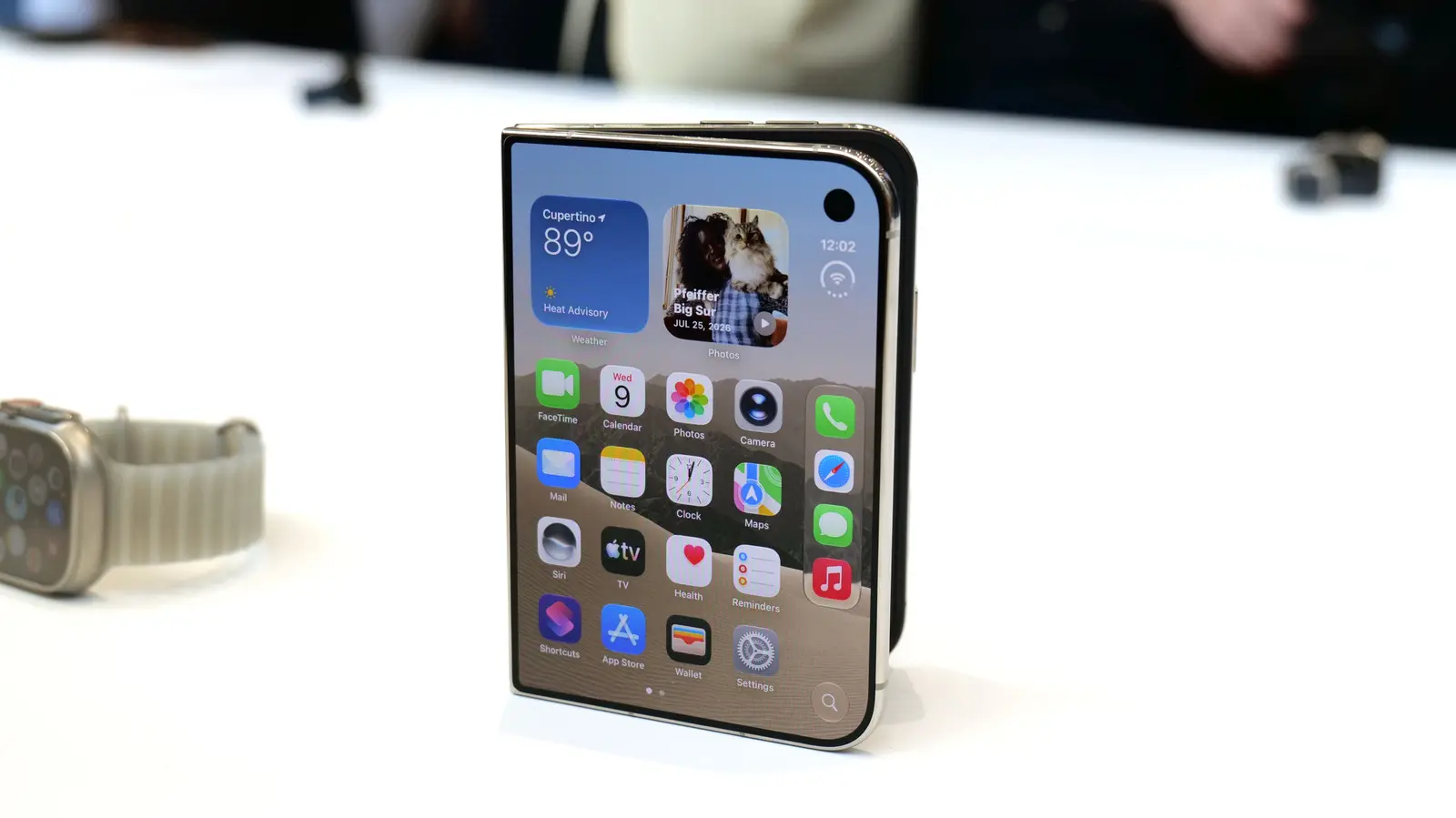
Apple's Foldable Era Begins
Apple has finally entered the foldable phone market with the iPhone Duo, a device that arrives nearly a decade after the iPhone X reset expectations for smartphone design. In a hands-on demonstration, the iPhone Duo emerged as Apple's most intriguing hardware experiment in years, combining a compact outer display with a large flexible inner screen and software that feels unusually mature for a first-generation product.
The phone is not simply a copy of existing foldables. Apple has taken the category's established ideas and applied its own hardware and software philosophy. The result is a device that feels unmistakably Apple, even as it borrows familiar concepts such as split-screen multitasking, flex modes, and an under-display camera.
The Road to a Foldable iPhone
The foldable market has evolved significantly since the first mainstream devices arrived in 2019. Early models were expensive, fragile, and limited in software support. Samsung's original Galaxy Fold suffered display and hinge issues that damaged consumer confidence. Over several generations, Samsung refined the hinge, improved display durability, and added water resistance. Google's Pixel Fold line brought a wider cover screen and a different approach to multitasking. Motorola focused on flip-style designs that prioritize portability over tablet-sized screens.
Apple watched this experimentation from a distance. The company has a long history of entering product categories after rivals have established the basic form factor. It did so with the iPod, the iPhone, the iPad, and the Apple Watch. In each case, Apple waited until it could deliver a polished experience rather than a first draft. The iPhone Duo follows that playbook. It arrives years after the first Galaxy Fold, but it arrives with the kind of refinement that suggests Apple used the intervening time to solve problems rather than rush to market.
Design and Build Quality
The iPhone Duo features a 5.4-inch external OLED display and a 7.6-inch flexible OLED panel inside. The outer screen is designed for quick interactions, while the inner display opens into a tablet-like canvas. The chassis uses rounded edges that make the phone comfortable to hold and easy to open. The transition animation between the cover screen and the main display is smooth and polished, with gradient and depth effects that make the switch feel seamless.
Despite its elegant construction, the Duo is hefty. It measures 11.3mm when closed and weighs 254 grams. By comparison, Samsung's Galaxy Z Fold 8 weighs 201 grams and measures 9.7mm when closed. That difference is noticeable in the hand. The Duo feels denser and more substantial, which may appeal to users who equate weight with premium build quality, but it also makes one-handed use more challenging. Apple representatives reportedly prevented side-by-side comparisons with rival foldables during the demo, which suggests the company is aware that size and weight will be part of the conversation.
The frame is made from titanium and carries an IP68 dust and water resistance rating. That matches the durability expectations set by other premium foldables, including the Pixel 11 Pro Fold. For a first-generation foldable, achieving IP68 is a significant engineering milestone because hinges and moving parts create multiple paths for dust and water ingress.
Buttons and Biometrics
Around the outside, the Duo includes a full set of controls. There is a lock key with built-in Touch ID, a dedicated camera control button, and a volume rocker. The volume rocker sits on top of the phone, an unusual placement that initially seems odd. In practice, it makes sense for users who rotate between portrait and landscape frequently. The placement reduces accidental presses and keeps controls accessible when the device is folded or held in different orientations.
Touch ID on the lock button is a notable change from Face ID. For a foldable, a side-mounted fingerprint sensor is often faster and more reliable, especially when the phone is partially open or lying flat. It also supports quick unlocking and purchase authentication without requiring the user to position their face in front of the inner or outer camera.
Flex Modes and Hinge Behavior
The hinge is good at sensing when the phone is open and to what degree. The Duo supports tent mode and tabletop mode. In tent mode, the device can act as a standalone clock or calendar. In tabletop mode, the lower half can serve as a keyboard or control surface while the upper half displays content. The phone also works when it is only partially bent, which should be useful for reading ebooks or watching video on a tray table. The flexibility of the hinge is one of the features that separates a mature foldable from an early prototype.
Inner Display and Under-Display Camera
The main display uses a matte nano texture that serves multiple purposes. It dramatically reduces reflections, making the screen easier to read in bright environments. It also disguises the crease. A crease does exist, but it is faint. It is often easier to feel with a fingertip than to see with the eyes. That is a strong result for a first-generation design, since crease visibility has been a common criticism of foldables.
One of the most impressive details is the under-display FaceTime camera. When inactive, the camera sensor almost entirely disappears. The only clue is a circular group of pixels above the camera that appears glossy instead of matte. Samsung experimented with under-display cameras on the Galaxy Z Fold 3 in 2021, but later seemed to retreat from the technology. Apple's implementation on the Duo is both a technical achievement and a competitive statement. It allows for an uninterrupted inner display without a notch or hole-punch cutout.
The matte interior should also make stylus input feel natural. The Duo supports the Apple Pencil across both screens. However, no Apple Pencils were available at the demo, so the writing and drawing experience could not be fully tested. If the latency and palm rejection are up to Apple's usual standards, the Duo could become a serious productivity tool for note-taking, sketching, and document annotation.
Cameras
Around back, the iPhone Duo has two rear cameras. The main sensor is a 48-megapixel Fusion camera that can also capture 2x telephoto shots at 12 megapixels. There is also a 48-megapixel ultra-wide camera. In normal conditions, this setup should produce crisp images across a range of lighting scenarios. It does not offer the variable aperture controls found on the iPhone 18 Pro line, but that omission is not surprising for a first-generation foldable.
The bigger compromise is the lack of a dedicated longer zoom lens. Samsung's Galaxy Z Fold 8 Ultra offers a dedicated telephoto camera, which gives it an advantage for distant subjects and portrait compression. The Duo's 2x crop-based telephoto is useful, but it is not a substitute for a true optical zoom. On the positive side, the rear camera module spans the width of the phone's back panel. That design choice allows the Duo to rest flat on a table without rocking or wobbling. It is a small detail, but it reflects Apple's attention to everyday usability.
Software and Multitasking
The most impressive part of the Duo may be its software. The foldable runs a refined interface that makes multitasking feel natural. There are several ways to enter split-screen mode. A user can touch and hold an app icon and then select the split-screen option. Alternatively, swiping up from the bottom of the display and dragging apps to the left or right also works. Once in split-screen, users can drag and drop photos and files between apps. They can also hold the small tab in the middle of the split-screen view to create dedicated app pairs for faster access later.
These features will be familiar to anyone who has used iPadOS, but the Duo packages them in a device that is easier to carry. The result is a productivity experience that feels more integrated than many Android foldables. Samsung, Google, and Motorola have all made progress in foldable software, but Apple's level of polish and ecosystem integration remains a key advantage. The Duo also benefits from Apple's control over both hardware and software, which allows for smoother animations, better battery optimization, and more consistent app behavior.
Competitive Context and Market Impact
The iPhone Duo enters a market that is no longer experimental. Samsung has shipped multiple generations of Galaxy Z Fold devices, Google has refined the Pixel Fold line, and Motorola has pushed the flip-style form factor. Apple is late, but the company is using that time to deliver a polished product rather than an early beta. The Duo includes IP68 dust and water resistance like the Pixel 11 Pro Fold. It has a beautiful main panel with an under-display camera. Its matte finish is less reflective than the inner display on the Galaxy Z Fold 8. Its software feels more cohesive than what Android rivals have achieved so far.
Pricing also works in Apple's favor. The iPhone Duo costs $100 less than a Galaxy Z Fold Ultra, though it costs $100 more than a standard Galaxy Z Fold 8. That places it in the premium tier but not at the absolute top of the foldable market. For iPhone fans who have watched Android users enjoy foldables for years, the Duo is a compelling answer. It may be late, but it can hang with the best devices in the category.
The broader market impact could be significant. Apple has a large installed base of iPhone users who are deeply invested in iOS, iCloud, iMessage, and the App Store. Many of those users have been unwilling to switch to Android just to get a foldable. The Duo gives them a reason to stay in the ecosystem while adopting a new form factor. That could accelerate foldable adoption and pressure rivals to improve their own software integration.
At the same time, the Duo faces challenges. Its weight and thickness are greater than some competitors. Its camera system lacks a dedicated long zoom. Its price remains high. And foldables still raise questions about long-term durability, repairability, and screen crease over time. Apple will need to convince buyers that the Duo is not just a novelty but a dependable daily driver.
Availability
The iPhone Duo will be available for pre-order starting October 16 at 8AM ET. Official sales are slated for October 23. Apple has not yet detailed every configuration, carrier promotion, or accessory, but the core pitch is clear. The Duo is Apple's first foldable, and it arrives with a level of
Source:Engadget News