

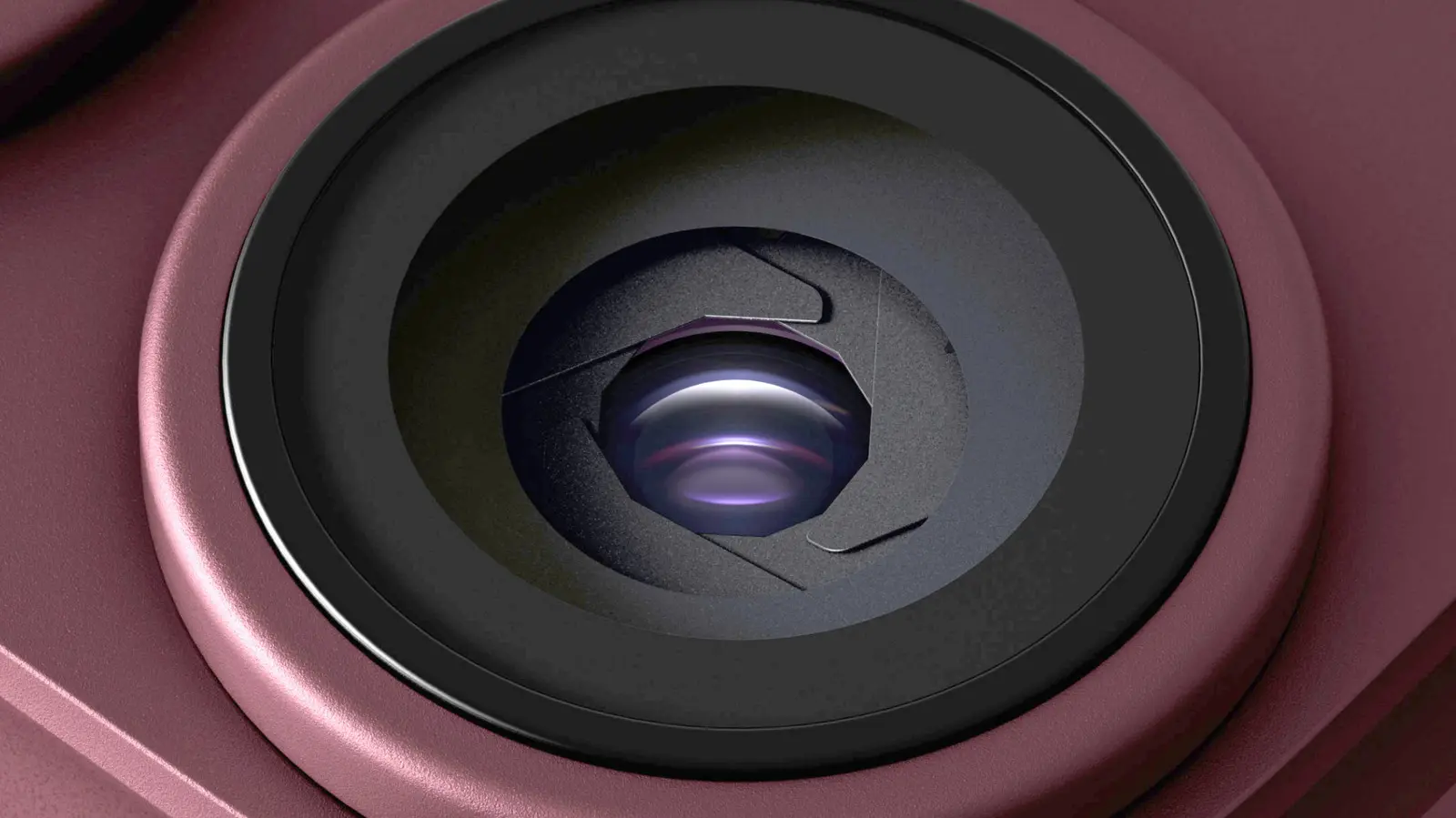
At Apple's September 2026 event, the launch of a folding iPhone Duo drew plenty of attention, but the most consequential update may have been the camera system on the iPhone 18 Pro and iPhone 18 Pro Max. The changes extend far beyond higher resolution or another round of AI features. A new variable aperture, a redesigned sensor, expanded Pro controls, persistent subject tracking and a signed Reference mode collectively push the iPhone camera closer to dedicated camera territory than ever before.
For years, smartphone cameras have relied on fixed apertures. The lens lets in a constant amount of light, and the phone adjusts shutter speed and ISO to compensate. That approach works well in many conditions, but it forces compromises. In bright light, a fixed wide aperture can make it hard to avoid overly fast shutter speeds or clipped highlights. In low light, the camera may need to raise ISO, introducing noise and grain. A variable aperture addresses those trade-offs directly by changing the size of the opening through which light reaches the sensor.
A Variable Aperture Built for a Tiny Sensor
Implementing variable aperture in a phone is not trivial. The sensor is small, the lens assembly is thin, and the aperture blades must be tiny enough to fit yet precise enough to open and close smoothly. Apple said it achieved this with "laser-cut" blades that allow for fluid transitions between settings. That engineering detail matters because a sticky or inconsistent aperture mechanism would undermine the entire feature.
The benefits are both automatic and manual. In automatic exposure mode, the camera can open or close the aperture to let in more or less light without changing the shutter speed. For action photography, that means the camera can keep the shutter speed high in lower light to freeze motion while avoiding the grainy look that comes from pushing ISO too far. The aperture can also stop down in bright conditions to prevent overexposure without forcing an excessively fast shutter speed.
The feature offers even more value in the updated Pro mode. Users can manually choose among four aperture settings: f/1.48, f/1.8, f/2.8 and f/4.0. Those settings provide different levels of background blur. A wide aperture like f/1.48 creates a shallow depth of field, which can isolate a portrait subject. A narrower setting like f/4.0 keeps more of the scene in focus, which is useful for landscapes, cityscapes or any image where the entire frame should be sharp.
Apple illustrated how variable aperture and Pro controls can work together. Imagine a scene with cars or people walking in front of a sharp background, and the goal is to blur the foreground while keeping the background clear. On previous models with a wide-open aperture, achieving that effect in daylight would be difficult because the shutter speed cannot easily be lowered enough without overexposing the image. With the aperture stopped down to f/4.0, the same shot becomes feasible. That is a concrete example of how hardware control can expand creative options.
Variable aperture on a phone is not completely new. Samsung introduced a dual aperture on the Galaxy S9, and some Xiaomi models have offered an even more advanced smooth aperture range. What is notable here is the combination of variable aperture with a broad set of professional controls and a sensor designed to take advantage of those changes. The innovation is less about being first and more about integrating the feature into a cohesive camera system.
Pro Controls, Histograms and the Exposure Triangle
The updated Pro mode also gives photographers control over ISO, aperture and shutter speed. Those three settings form the exposure triangle, the fundamental relationship that determines how bright an image is and how motion, depth of field and noise are rendered. Letting users adjust all three on a phone is a significant step for anyone who wants to move beyond automatic shooting.
Beyond the exposure triangle, the Pro controls allow adjustments to white balance. That matters because color temperature can dramatically change the mood of a photo or video. A scene shot under warm indoor lighting may look orange if the white balance is set for daylight, while a cool shade setting can make a portrait look unnatural. Manual white balance gives photographers a way to set the look intentionally rather than relying on the camera's interpretation.
Apple also added a histogram to the Pro controls, letting users check levels and exposure distribution. A histogram is a graph that shows how many pixels fall at each brightness level, from shadows to highlights. It is a highly useful tool for judging whether an image is properly exposed, underexposed or overexposed. Some dedicated cameras do not even offer a histogram, so its inclusion on a smartphone highlights how seriously the iPhone 18 Pro is treating manual photography.
These controls do not simply duplicate what dedicated cameras have done for decades. They also reflect how smartphone photography has evolved. Early phone cameras were almost entirely automatic, and computational photography filled in the gaps. As sensors and processors improved, manufacturers added manual modes, but they often felt like approximations. The new Pro controls appear to be a more complete implementation, with real hardware aperture changes backing up the software interface.
Persistent Subject Tracking for Photos and Video
Another update that stands out is persistent subject tracking for both video and photos. The system is designed to lock onto a person and continue tracking them even if they are in a crowd or momentarily disappear behind someone else. That kind of persistence is difficult because the camera must remember the subject's identity and reacquire them after an obstruction.
Canon first demonstrated this feature on its EOS R5 II mirrorless camera, a $4,500 professional body, so the iPhone 18 Pro is entering impressive company. For video shooters, persistent tracking can be transformative. It reduces the need to constantly tap the screen to maintain focus on a moving subject. For photographers, it can help ensure that the intended person remains in focus even in busy scenes.
The feature also reflects a broader trend in camera design: subject detection and tracking have become central to autofocus systems. Sports photographers, wedding photographers and documentary filmmakers rely on reliable tracking because missing focus can ruin an otherwise perfect moment. Bringing similar capabilities to a phone makes high-level tracking more accessible to a wider audience.
Photographic Styles, Grain and Cinematic Effects
Apple updated Photographic Styles with new texture and grain controls. These adjustments move the iPhone closer to compact cameras like the Fujifilm X100 VI, which is known for its film simulations and customizable looks. Texture and grain can give digital images a more analog feel, adding character without requiring external editing apps.
The company also added the ability to apply Cinematic effects after capture to videos shot at up to 60 frames per second. That makes it easier to adjust depth-of-field-style effects after the fact and then post clips to social platforms. For creators who shoot quickly and edit on their phones, post-capture flexibility is valuable because it allows changes without reshooting.
These features may sound like minor additions, but they point to a camera philosophy that values creative control. Instead of forcing users into a single processed look, the iPhone 18 Pro offers more ways to customize images and videos. That approach aligns with the needs of enthusiasts who want their phone to behave more like a tool and less like a black box.
Reference Mode and Verified Image Data
One of the most interesting professional features is Apple Reference Image. When shooting in the new Reference mode, the camera captures signed sensor data that Private Cloud Compute develops into an "unalterable reference image." That reference can be viewed in the Photos app beside the main image, functioning like a digital negative.
The purpose is to compare and check for unauthorized edits. If someone steals or alters a copyrighted photo, the reference image can help establish what the original capture looked like. In an era when synthetic media and easy editing make image authenticity a growing concern, a signed reference offers a way to verify provenance. It does not solve every question about truth in photography, but it provides a technical layer that professionals and publishers may find useful.
The feature also illustrates how camera hardware and cloud services are converging. The signed sensor data is captured at the moment of exposure, then processed through Private Cloud Compute into a reference image. That chain of custody is what gives the reference its value. For photojournalists, legal teams, stock photographers and anyone concerned with copyright, such a tool could become an important part of the workflow.
Resolution and the AI Silence
It was refreshing to see a smartphone launch emphasize camera features other than higher resolution and AI. The iPhone 18 Pro models still have plenty of resolution. They include a 48MP Main Fusion camera with the variable aperture, a 48MP Fusion Ultra Wide camera with an f/2.2 aperture, and a 48MP Fusion Telephoto camera with an f/2.8 aperture. That trio covers wide, ultra-wide and telephoto focal lengths without relying on megapixel headlines alone.
Apple barely mentioned AI, saying only that the Main camera has a "new computational imaging pipeline" that produces sharper, more detailed shots. The restraint is notable because AI has dominated recent smartphone launches. Computational imaging still matters, but the iPhone 18 Pro's appeal rests more on optical and manual controls than on generative features.
The variable aperture remains the headline hardware change. It affects exposure, depth of field, low-light performance and creative control. Combined with Pro controls, a histogram, persistent subject tracking, Reference mode and improved Photographic Styles, the iPhone 18 Pro camera system is less about a single specification and more about giving photographers and videographers more ways to shape an image. The result is a phone that moves closer to the flexibility of a dedicated camera while retaining the convenience that made smartphone photography dominant in the first place.
Source:Engadget News