

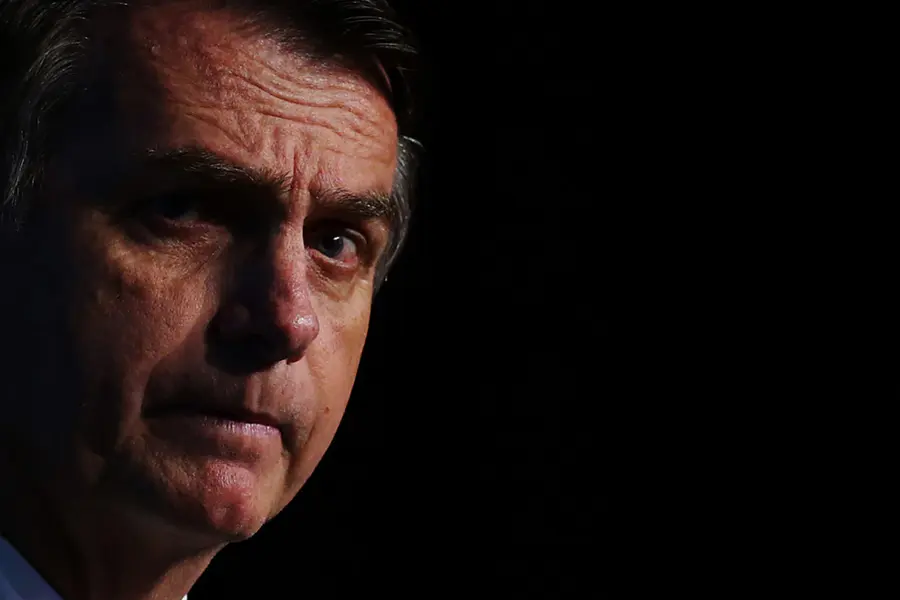
Brazil’s highest electoral court ruled on Friday that former President Jair Bolsonaro cannot run for public office until 2030, delivering a watershed decision that is likely to end the far-right leader’s ambitions for a return to the presidency. The Tribunal Superior Eleitoral (TSE) voted 5-2 to declare Bolsonaro ineligible after finding that he abused his power and spread unproven allegations about the integrity of the country’s electronic voting system. The ruling, which came just over eight months after he lost his reelection bid, strips Bolsonaro of the legal right to appear on any ballot in 2024, 2026, or 2028.
Abuse of power and unfounded doubts
The case centered on a July 18, 2022 meeting in which Bolsonaro used government staffers, the state television channel, and the presidential palace in Brasilia to tell foreign ambassadors that Brazil’s electronic voting system was rigged. At the time, Bolsonaro was gearing up for his reelection campaign against Luiz Inácio Lula da Silva, and he repeatedly claimed without evidence that the system was vulnerable to fraud. The electoral court concluded that the meeting was not a simple act of government communication but an abuse of authority intended to promote his campaign and undermine public confidence in the electoral process.
In her decisive vote that formed a majority, Judge Carmen Lucia, who also sits on the Supreme Court, said “the facts are incontrovertible.” She noted that the meeting clearly took place, was convened by the then-president, and was broadcast for all to see. “Its content is available. It was examined by everyone, and there was never a denial that it did happen,” she said. Judge Alexandre de Moraes, another Supreme Court justice on the panel, said the decision represented rejection of “populism reborn from the flames of hateful, antidemocratic speech that promotes heinous disinformation.”
Bolsonaro’s response
Speaking to reporters in Minas Gerais, Bolsonaro lamented that the trial was unfair and politically motivated. He said the ruling was an attack on Brazilian democracy and described the moment as “rather difficult.” When asked about his next step, he said he would consult his lawyers but insisted that “life goes on.” The former president has long portrayed himself as a victim of judicial persecution, and his supporters quickly echoed that message online after the verdict was announced.
Political analysts, however, saw the decision as a decisive blow. Carlos Melo, a political science professor at Insper University in Sao Paulo, said the ruling would end Bolsonaro’s chances of becoming president again. “After this, he will try to stay out of jail, elect some of his allies to keep his political capital, but it is very unlikely he will ever return to the presidency,” Melo said.
Background: Bolsonaro’s attacks on the voting system
Bolsonaro’s hostility toward Brazil’s electronic voting machines was a central feature of his political career. The country has used electronic voting since 1996, and ballots are transmitted digitally from more than 500,000 voting machines. The system allows results to be announced within hours of polling stations closing, and repeated audits have found no evidence of widespread fraud. Nevertheless, Bolsonaro spent years claiming that the machines could be hacked or manually manipulated to favor his opponents.
His rhetoric escalated before the 2022 election. In 2021, he publicly suggested that the 2022 vote should be delayed until printed receipts could be introduced, a proposal that was rejected by Congress and the electoral authorities. He also heightened tensions with the TSE, which repeatedly defended the system’s security. The July 2022 meeting with foreign ambassadors was part of that broader campaign to delegitimize the election in advance. After Lula won the October 2022 runoff with 50.9 percent of the vote against Bolsonaro’s 49.1 percent, Bolsonaro did not explicitly concede, and his supporters mounted challenges to the results.
Political fallout and legal consequences
The ban removes Bolsonaro from the 2024 and 2028 municipal elections as well as the 2026 general elections. He remains the ceremonial leader of the Liberal Party, but the ruling sharply limits his ability to run for any office for almost seven years. Beyond the electoral case, Bolsonaro faces multiple criminal investigations. Federal police are examining his role in the January 8 uprising, when thousands of his supporters stormed the Congress, the presidential palace, and the Supreme Court in an attempt to oust Lula from power. Bolsonaro has denied any wrongdoing, but future criminal convictions could extend his political ban by years and potentially lead to prison time.
The case marks the first time a Brazilian president has been suspended from running for office for election violations rather than a criminal offense. Brazilian law forbids candidates with criminal sentences from running for office, and the TSE has used its powers to bar politicians for misuse of public authority in other cases. Former President Fernando Collor de Mello was declared ineligible after resigning amid corruption allegations, and Lula himself was barred from the 2018 election after a corruption conviction. Lula’s eligibility was later reinstated by Brazil’s top court after rulings that then-judge and now Sen. Sergio Moro was biased when he sentenced the leftist leader to almost 10 years in prison.
Reactions among Brazilians
The verdict split Brazilians along familiar political lines. Maria Maris, a 58-year-old engineer in Rio de Janeiro, celebrated the ruling but said she feared Bolsonaro would appeal and attempt to run in the next presidential election anyway. “My fear is that Bolsonaro appeals and runs in the next presidential election, even though he was made ineligible today,” Maris said. The chairwoman of Lula’s Workers’ Party, Gleisi Hoffmann, said on social media that Bolsonaro’s ineligibility offered a teachable moment. “The far-right needs to know that the political struggle takes place within the democratic process, and not with violence and threatening a coup,” she wrote. “He will be out of the game because he doesn’t respect the rules. Not only him, his whole gang of coup mongers has to follow the same path.”
Bolsonaro’s supporters, by contrast, denounced the ruling as judicial bias. Katia Caminha, a 67-year-old retiree in Rio de Janeiro’s Copacabana neighborhood, said she considered the trial a “clown show.” “Everything that has to do with the electoral court is biased and against” Bolsonaro, Caminha said. “This is terrible news for Brazil.”
Online engagement and support network
The trial reenergized Bolsonaro’s base online, with supporters claiming he was a victim of an unfair judicial system and comparing his fate to that of former U.S. President Donald Trump, according to Marie Santini, coordinator of NetLab, a research group at the Federal University of Rio de Janeiro that monitors social media. But Santini noted that the level of engagement was far lower than the feverish activity seen during the polarizing election campaign. The muted online response was also reflected in the streets; no significant protests materialized outside the electoral court as the verdict was read.
This week, Bolsonaro’s supporters showed their continued loyalty in a more concrete way, contributing money to help him pay 1.1 million reais (about $230,000) in fines levied by Sao Paulo state’s government for repeated violations of health protocols during the COVID-19 pandemic. Bolsonaro was repeatedly fined for attending large gatherings without masks, holding rallies during lockdown periods, and flouting other public health measures. His decision to decamp to Florida for several months at the beginning of Lula’s term weakened his standing as the leader of the opposition, according to political analyst Thomas Traumann.
“There won’t be a mass movement, because he diminished in size. The fact that he went to Florida and didn’t lead the opposition caused him to diminish in size,” Traumann said. “The leader of the opposition is clearly not Bolsonaro.” While Bolsonaro may still wield influence as a kingmaker within the right, his ability to dictate the direction of Brazilian conservative politics has been shrinking since his electoral defeat.
The ruling does not remove Bolsonaro from public life entirely. He can still appear in media, attend political events, and endorse candidates, and his support will carry significant weight among his loyal followers. But the ban effectively closes the door on any immediate presidential ambitions. His lawyers have indicated that they will explore legal appeals, though most constitutional experts consider an overturn highly unlikely. The electoral court’s majority was firm, and the evidence included video recordings, government communications, and Bolsonaro’s own public statements.
As the trial drew to a close, a trumpeter standing outside the electoral court played the song that became a sensation during last year’s presidential race: “It is Time for Jair to Go Away.” The image captured the mood of the moment for those who had long awaited Bolsonaro’s formal exclusion from the political arena. For the former president’s opponents, the ruling was not just a legal defeat but a validation of Brazil’s democratic institutions after a turbulent period marked by attacks on the electoral process and the January 8 insurrection. For his supporters, it was another sign of the establishment closing ranks against a disruptive force. Either way, the decision reshapes Brazil’s political landscape for the rest of the decade.
Source:Telegraphindia News