

Background and Context
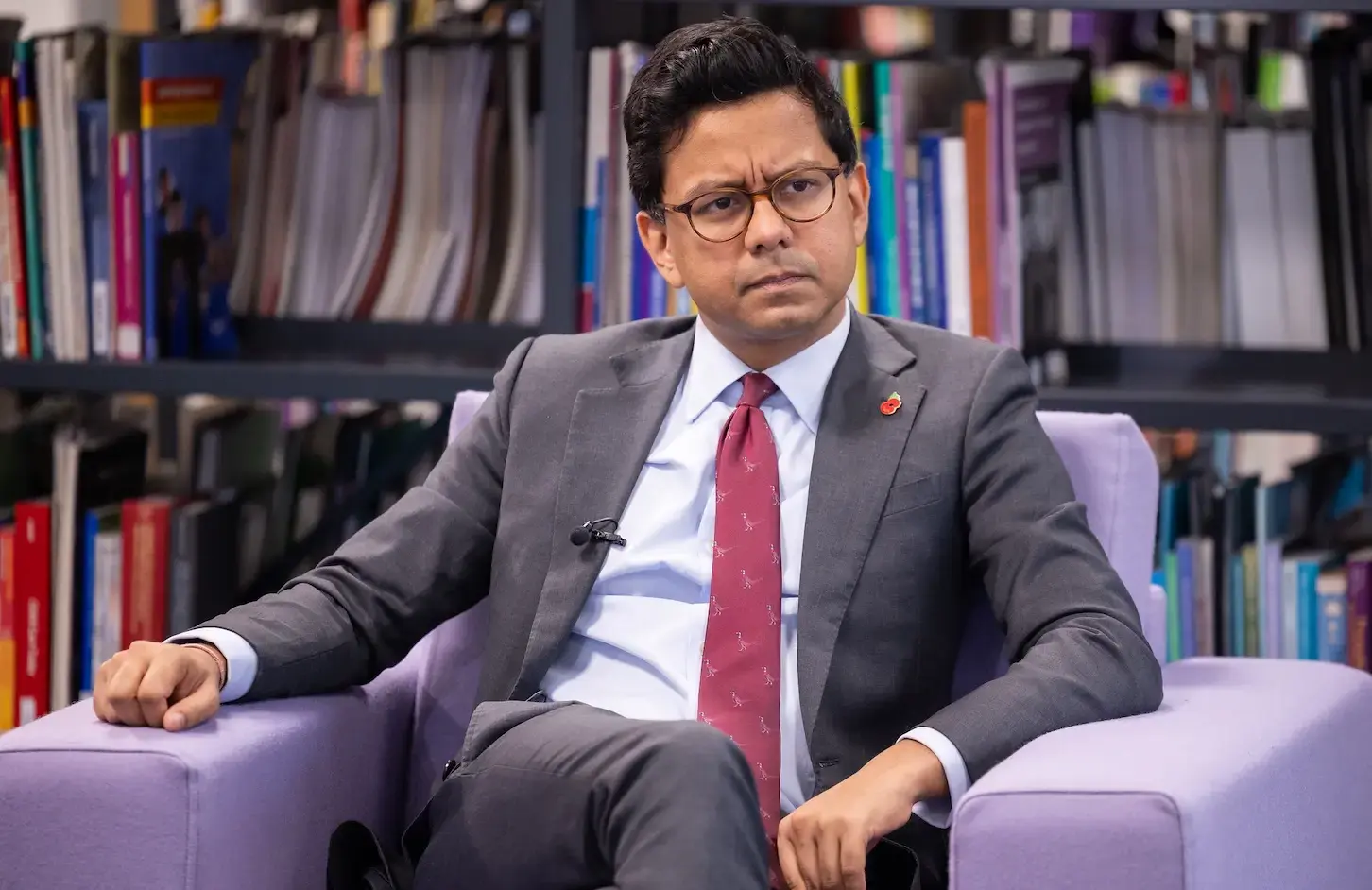
The UK government has announced the appointment of a dedicated Minister for Artificial Intelligence, a move that underscores the growing importance of AI in national strategy. While the exact portfolio and name of the Minister have been the subject of speculation—some reports linking it to a senior figure with experience in digital policy—the decision reflects a broader trend of governments worldwide creating specific roles to harness the potential of AI while mitigating its risks. This appointment comes at a critical juncture as the AI sector continues to expand rapidly, with applications ranging from healthcare diagnostics to autonomous systems, and as public debate intensifies around issues of bias, job displacement, and ethical governance.
The UK has long positioned itself as a leader in AI research and development, with world-class universities and a thriving start-up ecosystem. However, critics have pointed to a lack of coherent policy direction and fragmented regulatory oversight as obstacles to sustained growth. The new AI Minister is expected to coordinate efforts across departments, liaise with industry stakeholders, and represent the UK in international AI governance forums. This role is not entirely unprecedented—previous governments have had digital ministers—but the explicit focus on AI signals a recognition that the technology's transformative power demands dedicated attention.
Role and Responsibilities of the AI Minister
The AI Minister will oversee a range of areas, including regulation, research funding, skills development, and international collaboration. A primary responsibility will be to implement the government's AI whitepaper, which outlines principles for trustworthy AI and proposes a pro-innovation regulatory framework. The Minister will work closely with the Office for Artificial Intelligence, the Alan Turing Institute, and the newly established AI Safety Institute to ensure that the UK remains at the forefront of safe and ethical AI deployment.
Additionally, the Minister will be tasked with addressing the skills gap in the AI workforce. With demand for AI talent far outstripping supply, the UK needs to invest in education, retraining programs, and immigration policies that attract global experts. The Minister will also negotiate with tech companies to secure commitments to responsible AI development and to encourage them to base their operations and research labs in the UK. This is particularly important as other regions, such as the EU with its AI Act and the US with its executive order, are competing to set global standards.
Another critical aspect is ensuring that the benefits of AI are distributed equitably across society. The Minister will need to consider how AI can be leveraged to improve public services, boost productivity in SMEs, and create high-quality jobs, while also protecting vulnerable groups from algorithmic discrimination. This requires close collaboration with the equalities watchdog, data protection authorities, and civil society organizations.
Industry Reaction and Expectations
The appointment has been broadly welcomed by industry bodies, though some have called for more detail on the Minister's powers and resources. TechUK, the trade association representing technology companies, noted that a dedicated minister could help streamline decision-making and give the sector a single point of contact within government. Many start-ups and scale-ups have expressed hope that the Minister will reduce regulatory uncertainty and provide clearer guidance on issues such as liability for AI systems and intellectual property rights for AI-generated works.
Major tech companies, including DeepMind, Microsoft, and Google, have also signaled their support, emphasizing that the UK needs to maintain a competitive edge in AI. They have urged the Minister to prioritise investment in compute infrastructure, such as high-performance computing clusters, and to support the development of large language models and other foundational AI technologies. Meanwhile, academics and ethicists have called for the Minister to take a strong stance on transparency and accountability, particularly in high-stakes areas like criminal justice, healthcare, and finance.
There is also a degree of skepticism among some observers. They point out that previous ministerial appointments with similar briefs have sometimes struggled to effect meaningful change due to limited departmental budgets or competing priorities. The AI Minister will need to navigate a complex landscape where other ministries, such as the Department for Business and Trade and the Home Office, have overlapping interests. Without clear authority and a dedicated budget, the role could become largely ceremonial.
Regulatory Implications and the Broader Landscape
One of the most immediate tasks for the AI Minister will be to shape the UK's approach to AI regulation. The government has so far taken a sector-based approach, with regulators in areas like financial services, healthcare, and transport issuing their own guidance. However, this fragmented system has led to inconsistency and uncertainty. The AI Minister is expected to push for a more coordinated regulatory framework that balances innovation with safety, possibly by building on the principles outlined in the AI whitepaper.
The EU AI Act, which is set to impose strict requirements on high-risk AI systems, presents both a challenge and an opportunity. The UK Minister must decide whether to align closely with EU standards to facilitate trade and cross-border compliance, or to diverge in order to create a more flexible environment that attracts investment. A middle path might involve mutual recognition agreements or a commitment to maintain equivalent levels of protection. The Minister will also need to engage with the Council of Europe's framework convention on AI and other international initiatives.
In parallel, the Minister will likely accelerate the work of the AI Safety Institute, which is testing frontier models for risks such as misuse, loss of control, and societal harm. Strengthening this institute's capacity to conduct research and provide early warnings could become a key priority. The Minister might also push for mandatory incident reporting and robust testing requirements before deployment of the most powerful AI systems.
Innovation Boost and Economic Impact
Beyond regulation, the AI Minister's appointment is expected to drive innovation through targeted investments and partnerships. The government has already committed significant funding to AI research through programmes like the UK Research and Innovation's AI hubs. The Minister could advocate for additional resources to support the commercialisation of AI technologies and to create national AI infrastructure, such as shared datasets and testing facilities. This would lower barriers for small companies and researchers.
The economic impact of AI is projected to be substantial, with studies suggesting it could add hundreds of billions of pounds to the UK economy by 2035. The AI Minister will need to work with the Treasury to ensure that tax incentives, procurement policies, and innovation clusters are aligned to capture this value. Priority sectors include pharmaceuticals, where AI is accelerating drug discovery; manufacturing, through predictive maintenance and robotics; and creative industries, where generative AI is opening new possibilities.
However, there are risks that rapid automation could lead to job losses without corresponding retraining programmes. The Minister will need to collaborate with the Department for Work and Pensions to design an 'AI transition' strategy that supports workers whose roles are disrupted. This might include upskilling initiatives, social safety nets, and incentives for companies to redeploy affected employees into new positions.
Ethical Considerations and Public Trust
Public trust in AI remains fragile, with many people concerned about privacy, bias, and lack of accountability. The AI Minister has a crucial role in building and maintaining trust through transparent governance and public engagement. This could involve launching a national public dialogue on AI, similar to the UK's Citizens' Juries on AI, to understand societal values and expectations. The Minister should also ensure that diverse perspectives are incorporated into AI policy, including from underrepresented groups who may be disproportionately affected.
Ethical guidelines alone are not enough; enforcement mechanisms are needed. The Minister might consider establishing a dedicated AI ethics body with the power to investigate complaints and issue sanctions. Alternatively, existing bodies like the Equality and Human Rights Commission could be empowered to tackle algorithmic discrimination. The AI Safety Institute's work on ethical frameworks could also be translated into actionable standards for developers.
Another ethical dimension is environmental sustainability. Training large AI models consumes vast amounts of energy and water. The Minister could promote research into more efficient algorithms and encourage the use of renewable energy for data centres. Carbon offsetting requirements for AI companies might also be explored. By addressing these issues proactively, the Minister can help position the UK as a leader in responsible AI.
International Positioning and Global Influence
The AI Minister will also represent the UK in global forums such as the G7, OECD, and the UN. The UK hosted the first global AI safety summit in 2023 and is seen as a key player in shaping international norms. The Minister should build on this momentum to advance binding agreements on military use of AI, surveillance, and data governance. Collaboration with like-minded countries, including those in the Five Eyes intelligence alliance, could amplify the UK's influence.
At the same time, the Minister must navigate geopolitical tensions, particularly between the US and China. The UK's position as a US ally and member of the Five Eyes could constrain its ability to work with Chinese AI companies. However, the UK has its own strengths in AI research and can act as a bridge between different regulatory regimes. The Minister should foster interoperable standards that facilitate cross-border AI trade while safeguarding national security.
Finally, the AI Minister must be mindful of the developing world's needs. Many low-income countries lack the infrastructure and expertise to benefit from AI, and there is a risk that AI could widen global inequalities. The UK could promote access to open-source models, capacity building, and technology transfer. By championing inclusive AI, the Minister can reinforce the UK's soft power and commitment to sustainable development goals.
The appointment of an AI Minister is a landmark step for the UK, but its success will depend on the clarity of vision, the allocation of resources, and the ability to build consensus across political, industrial, and civil society lines. The UK has the potential to be a global leader in responsible AI, and the new Minister holds the key to unlocking that potential. The sector will be watching closely to see how this role evolves in the coming months and years.
Source:UKTN News