

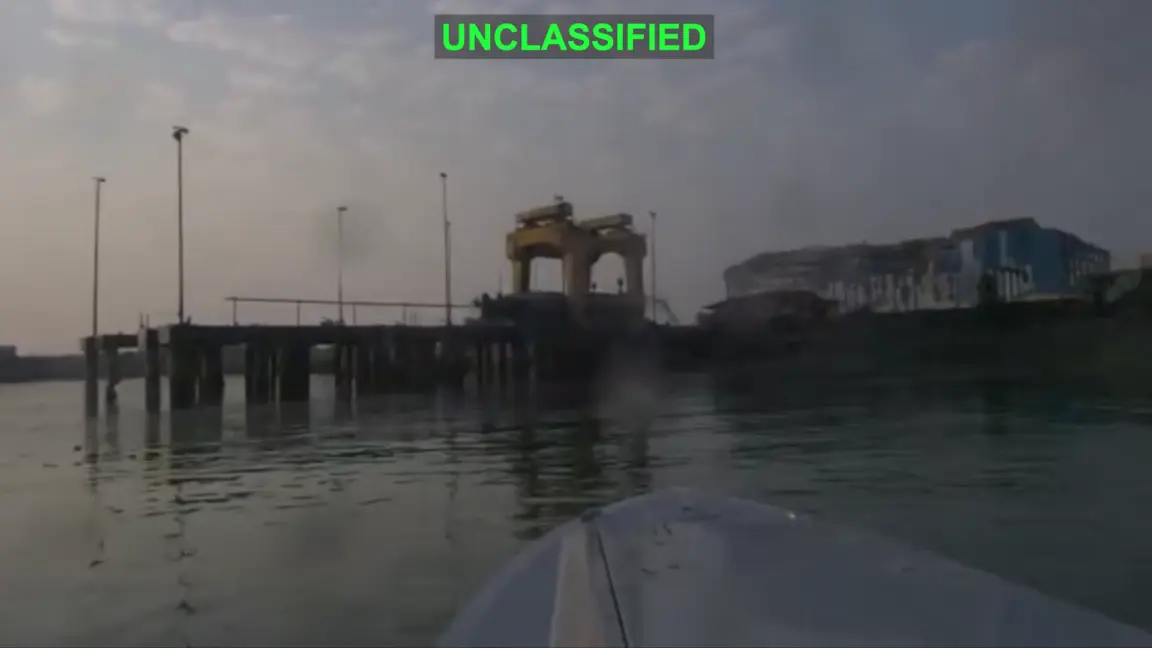
For the first time in its history, the US military sent explosive-laden drone boats into combat by attacking an Iranian midget submarine and naval port. The unprecedented use of such kamikaze sea drones by the United States comes nearly a decade after Iranian and Houthi forces first demonstrated such weapons.
The US military shared a video showing three "one-way attack surface drones" exploding after approaching an Iranian midget submarine and ship maintenance facility at Iran’s Bandar Abbas Naval Base on the night of July 12. US Central Command described the strikes as the "first time American forces have employed sea drones in combat operations."
The US drone boats were able to "make a low-speed, uncontested approach" to their targets before exploding, according to USNI News. One of the targets was identified as an Iranian Ghadir-class midget submarine that was out of the water while being suspended from a gantry.
Technology Behind the Strikes
The technology involved Saronic Corsair autonomous surface vessels developed by Saronic Technologies, a defense company based in Austin, Texas. The Corsair is 24 feet in length and can carry up to 1,000 pounds over 1,000 nautical miles at a top speed surpassing 34 knots. These drone boats can operate autonomously without direct human control, including long-range navigation, patrol missions, and loitering at specific positions by regulating power consumption and engine use. They are designed for a wide variety of missions and were likely equipped with explosives for this specific strike.
This marks the second notable US military use of drone boats during the war, which began with the United States and Israel attacking Iran on February 28, 2026. Previously, a Corsair sea drone rescued two US Army helicopter pilots in the waters off the coast of Oman on June 8, after their AH-64 Apache helicopter was shot down by an Iranian Shahed drone.
History of Drone Boat Violence
The United States is far from the first country to use exploding drone boats, also known as kamikaze or suicide drone boats. The first confirmed use occurred on January 30, 2017, when the Houthi faction in Yemen struck the Royal Saudi Naval frigate Al Madinah using an uncrewed remote-controlled boat. A US Navy commander noted that the Houthi weapon likely received technical assistance from Iran.
In more recent years, Ukraine has developed and deployed drone boats for asymmetric warfare at sea since Russia launched a full-scale invasion in February 2022. Despite lacking a traditional navy, Ukraine used a combination of flying drones and explosive drone boats to strike Russian warships and tankers, forcing Russia to withdraw its Black Sea Fleet to bases farther from Ukraine and cutting off vital shipping routes. Ukrainian drone boats have also achieved milestones by using missiles to shoot down Russian helicopters and acting as platforms to deploy small flying drones to strike Russian air defenses. Notably, a Ukrainian drone boat deployed an armed ground robot onto contested coastal territory in an unprecedented amphibious operation.
The US drone boat strikes came as part of a broader attack by conventional US military forces on Iranian targets in recent days, including strikes by fighter aircraft and warships. The US military has also been using one-way aerial attack drones for the first time during the war—LUCAS drones based largely on Iranian-developed Shahed drones. The United States is following the example of less powerful countries that have used inexpensive drone weapons for asymmetric warfare. The US military is currently trying to procure a new generation of cheaper surveillance and strike drones, especially after losing dozens of costly Reaper drones worth more than $1 billion in the war against Iran.
Technical Details of Saronic Corsair
The Corsair is built with a fiberglass hull and is powered by a single diesel engine that drives a waterjet. It has a range of over 1,000 nautical miles at patrol speeds, making it suitable for long-endurance missions. The boat can be armed with various payloads, including ISR (intelligence, surveillance, reconnaissance) sensors, electronic warfare packages, and explosive warheads. Its autonomous software allows for waypoint navigation, obstacle avoidance, and coordinated swarm operations. The US Navy has been testing these vessels for several years, and their combat debut represents a significant step in naval unmanned systems.
The decision to use drone boats in combat reflects a broader shift in military strategy towards unmanned systems that reduce risk to human life and offer cost-effective strike capabilities. Each Corsair costs approximately $200,000, far less than a Tomahawk cruise missile or a manned aircraft. This highlights the Pentagon's focus on "affordable mass" to overwhelm enemy defenses.
Implications for Naval Warfare
The use of explosive drone boats by the US military is a milestone in naval warfare. It demonstrates that the US is willing to adopt tactics pioneered by its adversaries, adapting them for its own purposes. The attack on the Iranian submarine and port suggests that the US is targeting key naval infrastructure to degrade Iran's ability to project power in the Persian Gulf. Analysts believe that the strike was intended to send a message about US capabilities and deter future attacks.
However, the move also raises concerns about escalation. Iran has a history of using asymmetric tactics, including mine-laying and small boat swarms. The US deployment of drone boats may prompt Iran to develop countermeasures, such as electronic jamming or directed energy weapons. Additionally, the success of the operation could lead to increased investment in unmanned surface vessels across the US military.
The US Navy has already announced plans to acquire a fleet of small, low-cost unmanned surface vessels for various missions, including mine countermeasures, anti-submarine warfare, and surveillance. The operational experience gained from this strike will likely inform future doctrine and procurement decisions.
Source:Ars Technica News