

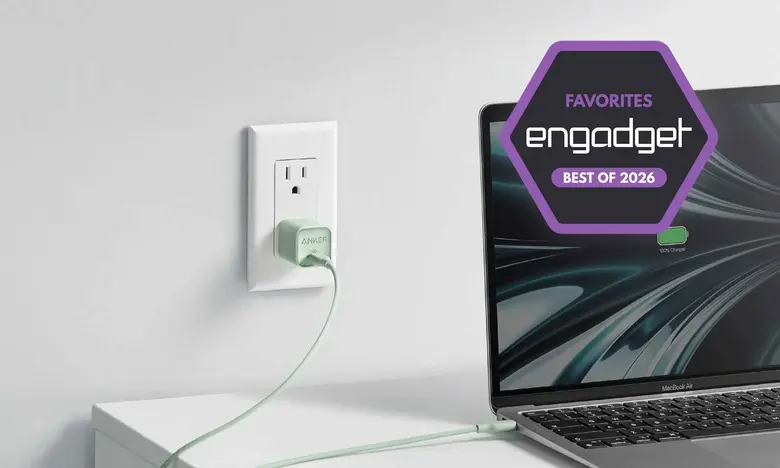
Fast chargers are no longer a nice-to-have item. With phones, tablets, laptops, and wearables all competing for outlets, the right charger can make a significant difference in how quickly you get back to full power without worrying about overheating or long-term battery wear. Since many devices now ship without a power brick, choosing a charger with the right compatibility, ports, and charging technology is just as important as raw speed.
Today's best fast chargers are designed to handle multiple devices at once, whether that's a phone, laptop, earbuds, or a smartwatch. Many models combine USB-C ports with a USB-A charger option to support older cables like Lightning, while newer designs focus on multi-port chargers that can intelligently distribute power across everything you plug in. Brands like Anker continue to refine their designs, with compact options that are easy to toss in a bag yet powerful enough for everyday use.
With so many wattages, port layouts, and standards to consider, finding the best fast charger depends on how and where you charge. Whether you want a simple wall adapter, a travel-friendly option, or a desktop hub built to power everything at once, this guide breaks down the essential facts and considerations for 2026.
Best fast chargers for 2026: Key facts
While the market is flooded with options, the standout fast chargers share several common traits. High wattage output (typically 30W to 100W or more), support for USB Power Delivery (USB PD) and PPS (Programmable Power Supply), and gallium nitride (GaN) technology are the hallmarks of top-tier adapters. GaN components allow for smaller, cooler-running bricks that can deliver high power without the bulk of older silicon-based chargers.
For phones, the most versatile chargers offer at least 45W to 65W of power, which can fast-charge most flagship smartphones and even some compact laptops. Multi-port models let you charge a phone and a laptop simultaneously, with dynamic power distribution that adjusts wattage based on connected devices. Many of the best chargers also include foldable prongs for easy travel, and some support a wide input voltage range (100-240V) for international use.
Another key trend for 2026 is the shift toward multi-port GaN chargers that replace the need for multiple wall warts. A 65W dual-port adapter can handle a MacBook and an iPhone at the same time, while a 100W or 140W desktop charger can power a heavy-duty laptop plus accessories. The best models prioritize safety features like overcurrent protection, overvoltage protection, and thermal regulation to prevent battery damage.
What to consider before buying a fast charger
Before you start looking at specific chargers, it's critical to determine three things: how many devices you need to charge, how much power they require, and whether or not you plan on traveling with any of them. This is especially true if you're charging a mix of devices that still rely on Lightning cables alongside newer USB-C gear.
The reason for the first question is simple. If you only need to charge a single device, like an iPhone or Android phone, it's cheaper and usually more space-efficient to get a lower-wattage charger with one port instead of two or three. Next, it's critical to figure out how much electricity your gadgets need because it doesn't make sense to buy a power brick that pushes out more juice than your device can actually use. This may sound a bit tricky, but most major manufacturers will list a product's max charging speeds in its tech specs, typically denoted by a specific wattage (15W, for example) or a quick-charge rating.
Unfortunately, very powerful or large laptops like gaming notebooks can suck a ton of juice (more than 140 watts), which means they may rely on more traditional power adapters with barrel plugs. This may result in them not being compatible with universal chargers. Some of these PCs may also support charging over USB-C, so even if a specific adapter can't deliver its full power draw, it can still send over some energy — but it will do so at a slower rate compared to the laptop's included charger. To get the best performance, using a high-quality fast charging cable, such as a USB-C cable with the proper power delivery rating, can make a big difference in maintaining consistent performance.
For frequent travelers, size and weight are often important considerations, because the bigger and heavier a charger is, the more annoying it will be to lug around. You'll also want to think about other factors like support for international plugs, which can be a big help to anyone who regularly visits other countries. If you're already traveling with power banks or a charging station, choosing a compact GaN charger can help streamline your gear.
Finally, you'll want to figure out if your smartphone uses a proprietary charging standard or if it's compatible with the USB Power Delivery spec (USB PD). For example, the OnePlus 13's included SuperVOOC power adapter can send up to 100 watts to the phone. However, if you use a generic USB-PD charger, speeds top out at 45 watts. That's still pretty quick, but not nearly as fast as the proprietary brick — and the same applies to devices with super fast charging support. Also, make sure your charging cable and connector are up to spec, as lower-quality accessories can bottleneck speeds or contribute to overheating during fast charging.
The role of wattage and power delivery
Understanding wattage is fundamental. A 5W charger might take hours to refill a modern smartphone, while a 20W charger can get an iPhone to 50% in about 30 minutes. For laptops, the stakes are even higher: a 60W charger can run a 13-inch ultrabook, but a 16-inch MacBook Pro may need 96W or more for full-speed charging. Many chargers support multiple protocols, including Qualcomm Quick Charge, Samsung Super Fast Charging, and USB PD PPS, which allows the charger to dynamically adjust voltage and current for optimal efficiency and reduced heat.
When selecting a multi-port charger, pay close attention to how power is shared. A 65W charger with two USB-C ports might deliver 45W through one port and 20W through the other when both are in use, but if you plug in two laptops, neither may receive enough power. The best multi-port chargers use intelligent power management to allocate power based on device priority, ensuring that a phone and laptop get what they need without tripping the breaker.
What is GaN?
When looking for chargers, you may notice that some are marked as GaN, which stands for gallium nitride. This is an important distinction because, when compared to older adapters that use silicon switches, GaN-based devices support increased power efficiency and output, allowing manufacturers to create more compact bricks that run cooler and support higher wattages.
Depending on the specific power output, GaN adapters can be 30 to 50 percent smaller and lighter than silicon-based alternatives. That might not sound like much, but when they're sitting in a bag alongside a laptop and a half dozen other accessories you might have, cutting down on excess bulk and weight goes a long way. GaN chargers also reduce energy loss during conversion, which means less heat generation and a longer lifespan for both the charger and the connected device.
Since GaN technology first became mainstream around 2018, it has revolutionized the charging market. Today, even budget-friendly GaN chargers offer features that were once reserved for premium models, such as fast charging protocols and safety certifications. As we move into 2026, GaN has become the standard for any serious fast charger, and it's hard to recommend a silicon-based alternative for most new purchases.
Do fast chargers affect battery life?
Technically yes, because the process of sending a ton of watts into a gadget and potentially generating additional heat while doing so can decrease battery health over time. That said, modern devices and chargers use various protocols to ensure temperatures and power levels stay within preset limits — in large part to avoid damaging the product or creating a safety risk. At a base level, simply charging a gadget regardless of speed will cause degradation over time (nothing stays perfect forever). So as long as you use compatible chargers and cables, the impact of fast charging is generally quite negligible.
Battery technology has also improved in recent years. Lithium-ion and lithium-polymer cells are designed to handle higher charge rates, and many phones have adaptive charging features that slow down the top 20% of the charge to reduce stress. Additionally, most fast chargers communicate with the device to maintain a safe voltage and current curve. For example, USB PD uses a negotiation process that ensures the charger and device agree on the output before sending power, preventing spikes that could damage the battery.
Still, extreme heat is the enemy of battery health. Leaving a phone on a fast charger overnight in a hot room can cause unnecessary wear. That's why many chargers now include thermal sensors and automatic shutdown features. If you want to prolong battery life, avoid using a fast charger in direct sunlight or while playing graphics-intensive games, and consider using a standard charger for overnight top-ups if your device lacks smart charging management.
What's the difference between a fast charger and a regular charger?
There isn't a single generally accepted definition of fast charging. However, with power adapters capable of sending as little as five watts or less, it's important to know how much juice your device is getting, especially if you need to recharge something quickly. So depending on who you ask (particularly when it comes to smartphones), any charger that can push out more than 15 to 18 watts is generally considered to be "fast." That said, with some phones capable of receiving more than 100 watts and up to 240 watts for some laptops, it's more important than ever to consider what devices you own before buying a new fast charger.
Regular chargers usually lack the negotiation circuitry that fast chargers use. A standard 5W or 10W adapter simply provides a steady voltage and current, which is fine for overnight charging but woefully inadequate when you're in a hurry. Fast chargers, on the other hand, dynamically raise the voltage or current to match the device's maximum supported rate, cutting charging times dramatically. For example, a 30W charger can recharge a typical smartphone from empty to 50% in about 25 minutes, while a 5W charger might take over an hour to achieve the same amount.
The distinction also matters for compatibility. Some older devices may not support fast charging at all, and using a high-wattage charger on such a device typically results in the device only drawing the amount it can handle, which is safe but not faster. However, mixing proprietary fast charging standards can lead to reduced speeds. For example, a charger with Qualcomm Quick Charge might not fast-charge a device that relies on USB PD or a proprietary standard like OnePlus's SuperVOOC. When in doubt, look for chargers that support multiple protocols, including PPS, which provides broader compatibility.
How to pick the right fast charger for your lifestyle
If you're a frequent traveler, a slim 30W or 45W GaN charger with one or two ports is often the best balance of portability and performance. This size can charge a phone, earbuds, and a Nintendo Switch, and sometimes a lightweight laptop if the output matches. For average users who need to charge a phone and a tablet simultaneously, a 65W dual- or tri-port charger is the sweet spot. These models are small enough to slip into a pocket but powerful enough to top up a MacBook Air or Thunderbolt laptop.
For families or people with many devices, a 100W or even 200W desktop charger with four or five ports can eliminate the need for a power strip. These larger bricks are ideal for a nightstand or office desk, and they often come with detachable AC cables for easier routing. Some premium models include USB-C and USB-A ports, plus output displays that show real-time wattage per port. While these chargers are bigger, they offer incredible convenience, especially if you're tired of swapping adapters among laptops, tablets, phones, and other gear.
An increasing number of chargers now include foldable prongs, which reduce bulk and protect other items in your bag. For international travelers, a charger with 100-240V input and multiple plug adapters is a wise investment. Some high-end models even have interchangeable plug heads, allowing you to switch between US, EU, UK, and AU outlets without a separate adapter.
Safety certifications are another critical factor. Look for UL, CE, FCC, or other relevant marks that indicate the charger has been tested for electrical and thermal safety. Many reputable brands also include a warranty and customer support, which is worth the slightly higher price. Knockoff chargers may be cheaper, but they often lack proper insulation and can damage your devices or pose a fire hazard.
Finally, the cable you use matters just as much as the charger itself. A high-quality USB-C cable with E-marker (electronic marker) rated for 100W or 240W ensures that power delivery is transparent and safe. Cheap cables without proper shielding can cause voltage drops, leading to slower charging and increased heat. If your charger supports multiple ports, consider color-coding cables for different devices so you know which cable goes where without fussing.
Charging safety and battery health: Best practices
To get the most out of your fast charger, avoid exposing it to extreme temperatures, and keep the vents clear. Unplug the charger when it's not in use to save power and reduce wear on the components. For devices with removable or older batteries, fast charging is generally safe, but it's wise to avoid charging while using the device for heavy tasks like gaming. Modern smartphones manage heat well, but physical removal from tight enclosures can help.
Many batteries reach 80% capacity after around 500 full charge cycles. Fast charging alone doesn't dramatically shorten battery life, but heat does. If you're charging in a warm environment, consider using a lower-wattage charger or enabling the device's battery-saver charging mode. Most newer phones and laptops feature optimized charging that pauses at 80% and resumes to 100% based on your routine, which can significantly slow battery degradation.
As we look toward 2026, USB-C has become the universal standard, and legacy USB-A ports are disappearing from high-end chargers. If you still own older devices with micro-USB or proprietary ports, keep a spare cable or adapter handy, but focus on future-proofing your setup by choosing a charger with multiple USB-C ports. This ensures that your investment will support years of new devices to come.
Source:Engadget News