

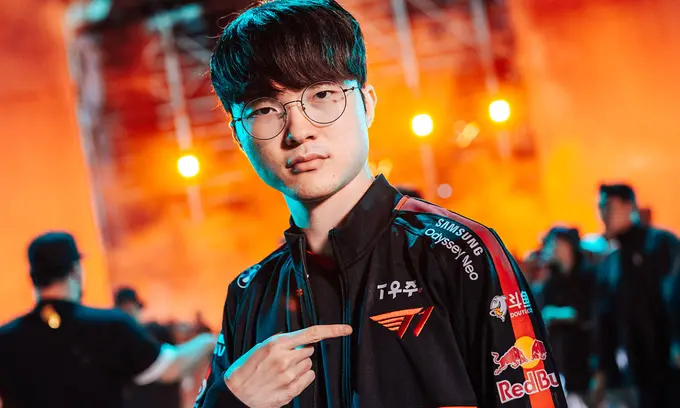
The Korean National Police Agency announced Wednesday that it had appointed Lee Sang-hyeok, widely known as Faker, as an honorary police officer with the rank of sergeant. He was also named ambassador for a nationwide campaign to prevent cyber gambling among teenagers. The agency said Faker was selected because of his international recognition as an esports player and his positive influence on young people. His honorary rank matches that of officers recruited through career-competitive examinations for cyber investigations, according to reports.
As part of the campaign, Faker will appear in promotional videos and posters encouraging teenagers involved in online gambling to voluntarily report themselves through a police self-reporting program. He said, as quoted by local media, 'I am honored to be appointed as an honorary police officer and ambassador, and I feel a great sense of responsibility. I will actively take part in ambassador activities, including widely publicizing to teenagers the dangers of online gambling and the self-reporting system.'
Background on Cyber Gambling in South Korea
South Korea has seen a surge in youth cyber gambling, with online betting platforms, illegal sports betting, and cryptocurrency-based gambling games increasingly accessible through smartphones and social media. The National Police Agency's youth cyber gambling self-reporting system, launched on May 18, allows teenagers to voluntarily come forward without facing immediate legal consequences. They receive counseling from school police officers and gambling prevention specialists before undergoing an addiction assessment and, if necessary, referral to treatment programs. The system will remain open through Aug. 31.
According to government data, the number of adolescents treated for gambling addiction has more than doubled in the past five years. The anonymity and ease of online gambling make it particularly dangerous for young people who may not fully grasp the financial and psychological risks. The police campaign aims to reduce stigma and encourage early intervention.
Who Is Faker?
Lee Sang-hyeok, better known as Faker, is widely regarded as the greatest esports player of all time. Born in 1996 in Seoul, he debuted professionally in 2013 with T1 (formerly SK Telecom T1) and quickly became the face of League of Legends. Over his career, he has won a record six League of Legends World Championship titles, including the past three consecutive championships from 2022 to 2024. His team, T1, dominates the competitive scene, and Faker's mechanical skill, game sense, and leadership have earned him nicknames like 'The Unkillable Demon King' and 'God of League of Legends.'
Faker became the first player inducted into the League of Legends Hall of Legends in 2024, cementing his legacy. Beyond competitive play, he owns an equity stake in T1, whose commercial partners include global brands such as Nike, Red Bull, and Mercedes-Benz. Off the Rift, he owns a nine-story commercial building in Seoul known as 'Faker Tower' and was named to Time magazine's 2026 Most Influential People in Sports list. His estimated net worth exceeds $10 million, making him one of the wealthiest esports athletes.
Faker's Role in the Campaign
As honorary police sergeant, Faker's primary duty is to use his platform to reach teenagers. He will film public service announcements and appear on posters displayed in schools, public transport, and online platforms. The campaign also includes digital content where Faker discusses the dangers of gambling, sharing his own experiences of discipline and focus as a professional athlete.
The police agency emphasized that Faker's history of overcoming adversity and maintaining peak performance under pressure makes him a credible role model. His message aligns with the campaign's core values: self-control, responsibility, and seeking help when needed. This is not the first time South Korean authorities have enlisted celebrities for social campaigns, but Faker's appointment as an officer—rather than just an ambassador—underscores the seriousness of the issue.
Esports and Social Responsibility
Faker's appointment also highlights the growing recognition of esports figures as influencers beyond gaming. With millions of followers on social media and a fan base that spans generations, Faker's endorsement carries significant weight. The campaign leverages his image to normalize conversations about gambling addiction among youth, a demographic that traditionally avoids speaking up.
The move reflects a broader trend in South Korea where the government partners with pop culture icons to address public health issues. Previous campaigns have enlisted K-pop stars for COVID-19 awareness and actors for anti-bullying initiatives. Faker's involvement is seen as particularly effective because he represents the pinnacle of discipline and success, contrasting sharply with the destructive nature of gambling addiction.
Detailed Career Highlights
Faker's career is a tapestry of record-breaking achievements. He has won the League of Legends World Championship six times (2013, 2015, 2016, 2022, 2023, 2024), a feat unmatched in any esport. He has been named MVP of the World Championship multiple times and holds records for most kills, most games played, and most tournaments won. His rivalry with other top players, such as former ROX Tigers and current Generation Gaming members, has defined the competitive landscape.
In addition to World titles, Faker has won numerous LCK (League of Legends Champions Korea) championships, Mid-Season Invitationals, and All-Star events. He was the first player to reach 1,000 career kills in the LCK and later 2,000 kills. His consistency over a decade—rare in a sport where careers often last only a few years—is a testament to his work ethic and adaptability. Faker has also pioneered new champion strategies, such as his iconic LeBlanc plays, and his decision-making under pressure is studied by aspiring players worldwide.
Off the Rift, Faker is known for his humble personality and dedication to charity. He has donated millions of won to children's hospitals and disaster relief funds. His clean public image and avoidance of controversy make him a safe and effective spokesman for the police campaign.
The League of Legends Hall of Legends
In 2024, Riot Games introduced the Hall of Legends to honor the most impactful players in League of Legends history. Faker was the first inductee, receiving a custom ceremony and a dedicated exhibit at the Riot Games headquarters. The Hall of Legends recognizes not only skill but also contributions to the growth of the esport. Faker's induction was widely celebrated, with fans and fellow pros sharing tributes. His legacy is now permanently preserved in the game's official history.
The Hall of Legends induction also included a special in-game event where players could earn Faker-themed cosmetics and recall animations. The proceeds from the event went to charitable causes chosen by Faker, further highlighting his commitment to giving back.
Broader Context of Esports in South Korea
South Korea is the birthplace of professional esports, with a robust infrastructure dating back to the late 1990s. The country has dedicated TV channels for esports, government-supported training facilities, and mandatory military service exemptions for top players (though Faker has not yet served; he is expected to fulfill his service in the coming years). Esports players enjoy celebrity status comparable to K-pop stars, and Faker is arguably the most famous athlete—traditional or electronic—in the nation.
The National Police Agency's decision to appoint an esports athlete as an honorary officer reflects the mainstream acceptance of gaming culture. It also acknowledges that the same digital platforms that foster esports can also facilitate harmful behaviors like gambling. By using Faker as a positive counterweight, authorities hope to redirect the influence of gaming toward healthier outcomes.
The campaign is part of a larger government effort to regulate and reduce illegal online gambling. In 2025, South Korea passed stricter laws targeting unlicensed gambling sites and imposed harsher penalties for those targeting minors. The self-reporting system is a preventive measure designed to reach youth before they develop severe addictions. Faker's involvement is expected to significantly increase awareness and participation in the program.
The police agency has also launched a dedicated hotline and website for youth to report their gambling anonymously. Counselors are trained to handle cases with sensitivity, ensuring that young people do not fear punishment but rather receive help. Faker's personal story of overcoming challenges in his career—such as wrist injuries and roster changes—can serve as an example of resilience and seeking support.
As the campaign progresses, the agency plans to track metrics such as the number of self-reports, referrals to treatment, and reductions in youth gambling rates. Early reports indicate a positive response, with many teenagers citing Faker's involvement as a reason they felt comfortable coming forward. The program will also expand to include educational workshops in schools, potentially featuring Faker in live-streamed Q&A sessions.
Faker's appointment as honorary police officer marks a new chapter in his post-competitive career. While he continues to play for T1 and pursue more championships, his off-Rift responsibilities have grown. Balancing professional gaming with ambassadorial duties will be challenging, but Faker has always thrived under high expectations. His willingness to take on this role demonstrates his understanding that his influence extends beyond the Summoner's Rift and into real-world issues affecting his fans.
The collaboration between the National Police Agency and a global esports icon is unprecedented in South Korea and likely a model for other countries facing similar youth gambling crises. With Faker's credibility and reach, the campaign has the potential to make a lasting impact on the lives of many teenagers, steering them away from addiction and toward healthier hobbies—perhaps even inspiring the next generation of esports pros to follow a disciplined path.
Source:VnExpress International – Latest news, business, travel and analysis from Vietnam News