

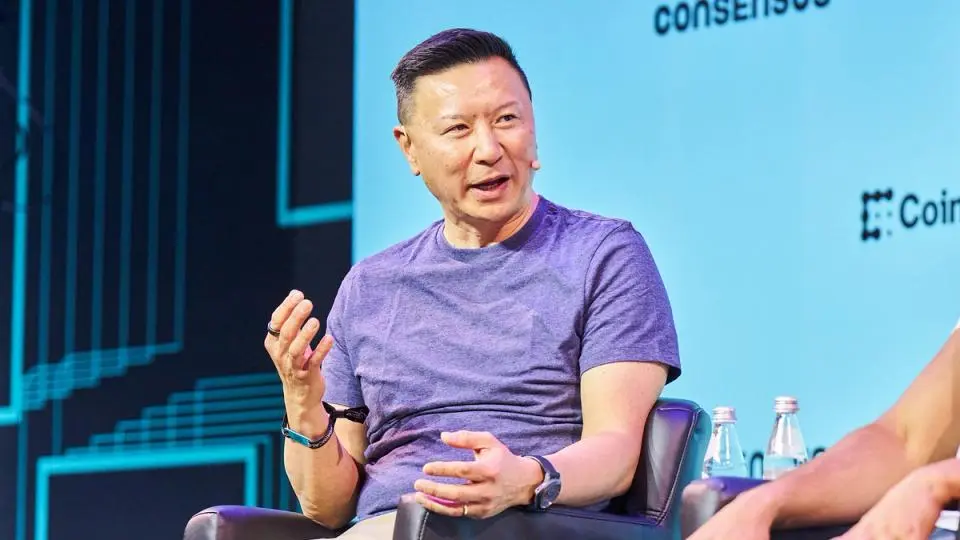
MoneyGram's CEO Anthony Soohoo has a clear philosophy when it comes to blockchain technology: it should operate seamlessly in the background, invisible to customers. In a recent interview with CoinDesk, Soohoo detailed how MoneyGram's blockchain strategy has evolved from early experimentation into a comprehensive modernization of the company's global payments infrastructure.
The core idea is simple: blockchain can make cross-border remittances faster, cheaper, and more transparent, but end users don't need to understand or even notice the underlying technology. This approach mirrors how many fintech companies have adopted backend blockchains for settlement while offering familiar consumer interfaces.
Background: MoneyGram's Blockchain Journey
MoneyGram, a legacy money transfer company founded in 1940, has been exploring blockchain since at least 2019. The company initially partnered with Stellar to pilot a blockchain-based settlement system for cross-border transactions. The partnership aimed to reduce the time and cost of moving money between different currencies.
Over time, MoneyGram's blockchain footprint has expanded. According to Soohoo, the company now takes on validator roles on multiple networks, including Solana and Tempo. These roles allow MoneyGram to participate in network consensus and earn rewards while ensuring transaction integrity.
Key Facts from the Interview
- Blockchain strategy evolution: Early experiments have given way to a broader effort to modernize the entire payments infrastructure.
- Customer invisibility: Soohoo explicitly stated that blockchain works best when customers don't know it's there, emphasizing that the user experience should remain unchanged.
- Core blockchain partners: Stellar remains a core partner, but MoneyGram is expanding into Solana and Tempo as validators.
- Stablecoin launch: The company launched its own stablecoin, MGUSD, which Soohoo sees as a platform for building new financial products within MoneyGram's ecosystem.
- Cross-border focus: The primary use case remains remittances, where blockchain can reduce settlement times from days to seconds and cut costs significantly.
Why Invisible Blockchain Matters
Soohoo's comment taps into a broader trend in enterprise blockchain adoption. Many successful implementations—like JP Morgan's JPM Coin or Ripple's ODL—operate quietly under the hood. For MoneyGram, which serves millions of customers globally through agents, kiosks, and digital channels, maintaining trust and simplicity is paramount. Customers want to send money to family overseas; they don't care about distributed ledger technology.
The emphasis on invisibility also addresses regulatory concerns. By abstracting the technology, MoneyGram can comply with anti-money laundering and know-your-customer regulations without exposing end users to blockchain's complexities. This approach has helped MoneyGram navigate the often rocky regulatory landscape for crypto-related services.
Expanded Context: MoneyGram's Position in the Market
MoneyGram operates in a highly competitive remittance market alongside Western Union, Wise, and newer fintech players like Remitly and PayPal. The global remittance market was valued at over $800 billion in 2025, with significant growth driven by migration and digital adoption. Blockchain-based solutions have the potential to capture a substantial share by offering faster, cheaper, and more transparent services.
However, blockchain adoption in remittances has faced hurdles. Volatility, regulatory uncertainty, and lack of interoperability have slowed widespread deployment. MoneyGram's strategy of using stablecoins and participating in multiple networks attempts to overcome these barriers. By minting MGUSD, MoneyGram creates a token that can be used across different blockchains, reducing dependence on any single network.
Anthony Soohoo's Background
Soohoo became CEO of MoneyGram in 2022, bringing extensive experience in technology and payments. He previously served as CEO of OfferUp, a mobile marketplace, and held leadership roles at eBay and Walmart's e-commerce division. His appointment signaled MoneyGram's intent to pivot toward digital innovation. Under his leadership, MoneyGram has invested heavily in blockchain, artificial intelligence, and mobile technology.
In the interview, Soohoo emphasized that blockchain is not a panacea but a tool. MoneyGram's strategy is to use blockchain where it provides clear advantages—settlement speed and cost—while retaining traditional rails for other purposes. This pragmatic approach has resonated with investors, as MoneyGram's stock has risen steadily since 2024.
Detailed Analysis of Stellar and Solana Partnerships
Stellar, a blockchain designed for cross-border payments, has been MoneyGram's partner for years. The Stellar network allows for low-cost, near-instantaneous transactions between any pair of currencies. Soohoo confirmed that Stellar remains a core part of MoneyGram's infrastructure. However, the addition of Solana and Tempo indicates a multi-chain strategy.
Solana offers high throughput and low transaction fees, making it suitable for high-volume remittance corridors. MoneyGram's validator role on Solana gives it a voice in network governance and a revenue stream. Tempo, a lesser-known blockchain focused on African remittances, provides access to a continent with enormous growth potential. By being a validator, MoneyGram earns staking rewards while helping secure the network.
The multi-chain approach reduces single points of failure and allows MoneyGram to optimize routes based on transaction costs and speed. This is similar to how payment networks like Visa and Mastercard use multiple clearing systems.
MGUSD Stablecoin: A Platform for Product Innovation
Soohoo described MGUSD as more than just a stablecoin; it's a platform. By issuing a dollar-pegged token on multiple blockchains, MoneyGram can build financial products that leverage programmable money. Possible use cases include automated savings accounts, micro-loans, and loyalty programs. MGUSD can be integrated with MoneyGram's existing agent network, allowing customers to buy, sell, and transfer the stablecoin at thousands of locations worldwide.
The stablecoin also enhances transparency. Every transaction is recorded on a public ledger, providing immutable audit trails. This could help MoneyGram meet regulatory requirements for anti-money laundering and sanctions screening. Moreover, MGUSD can be used for business-to-business payments, reducing the friction of moving funds between MoneyGram's subsidiaries and partner institutions.
Soohoo noted that MGUSD is still in early stages, but the potential is enormous. He drew parallels to PayPal's stablecoin PYUSD, which has been used for payments and settlements. MoneyGram's advantage lies in its global reach, especially in markets with limited banking infrastructure.
Broader Industry Impact and Future Trends
MoneyGram's approach reflects a wider trend among traditional financial institutions embracing blockchain for back-end operations. Unlike crypto-native firms that prioritize decentralization, traditional firms prefer permissioned or hybrid models that offer control and compliance. MoneyGram's comment that blockchain works best when customers don't know it's there is a mantra echoed by many incumbents.
Looking ahead, Soohoo expects blockchain to become ubiquitous in the payments industry. He cited decreasing costs of transaction validation, improved scalability solutions like sharding and layer-2s, and clearer regulations as catalysts. MoneyGram plans to continue expanding its validator roles and exploring new blockchains as the ecosystem matures.
The company is also experimenting with artificial intelligence to predict transaction volumes and optimize liquidity. By combining AI with blockchain, MoneyGram aims to reduce the need for pre-funded accounts in different countries, freeing up capital. This could dramatically lower the cost of cross-border transfers.
Practical Implications for Customers
For the average MoneyGram customer, these changes should translate into lower fees and faster delivery times. Soohoo promised that remittances using blockchain infrastructure would be processed in seconds rather than days, with fees potentially cut by half. The user experience—whether via mobile app or at a physical agent location—will remain unchanged.
This is a key selling point for MoneyGram as it competes with digital-only services. Customers who are less tech-savvy can continue using familiar methods while benefiting from backend improvements. MoneyGram agents also benefit: they can offer new services like stablecoin cash-in/cash-out without needing to understand blockchain technology.
In addition, blockchain's transparency could reduce fraud. Each transaction is immutable and traceable, making it harder for bad actors to launder money. MoneyGram already has robust compliance systems, but blockchain adds an extra layer of security. Soohoo noted that regulators have been supportive of this approach, as it brings more visibility into cross-border flows.
As of July 2026, MoneyGram processes millions of transactions daily. The blockchain infrastructure currently handles a fraction of that volume, but Soohoo expects it to scale rapidly. He projected that within two years, the majority of MoneyGram's cross-border volume could be settled via blockchain. This would represent a massive shift for a legacy company.
The path to that future involves continued investment in technology and partnerships. MoneyGram recently expanded its presence in Asia and Africa, where mobile money and remittances are booming. Blockchain integration will be key to capturing market share in these regions. Soohoo emphasized that MoneyGram is not trying to disrupt the system overnight but rather evolve with it.
Source:Coindesk News