

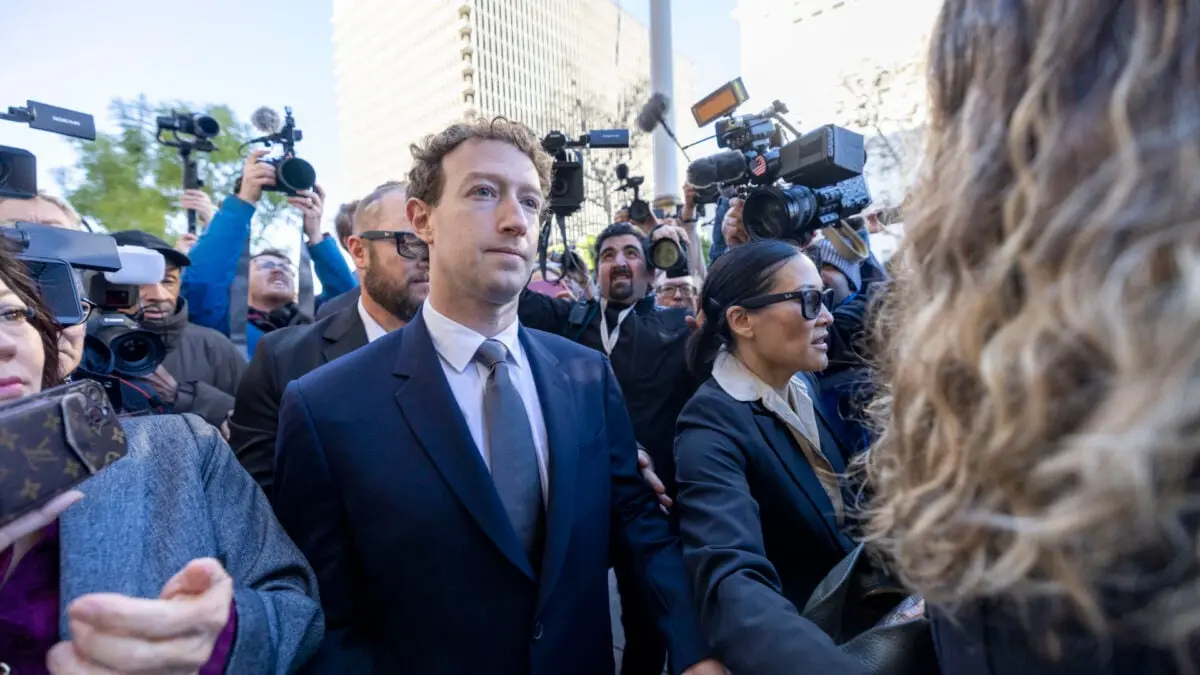
A U.S. appeals court just dealt Meta a major setback in its long-running fight against social media addiction lawsuits. The 9th U.S. Circuit Court of Appeals rejected an appeals request from Meta, effectively allowing the social media giant and its co-defendants TikTok owner ByteDance, YouTube owner Google, and Snapchat owner Snap to face more than 3,000 social media addiction lawsuits. The ruling removes a key legal barrier that Meta had hoped would shield it from a growing wave of litigation brought by young users, school districts, and state governments.
The decision is the latest development in a legal saga that has been building for years. Social media companies have long argued that they are protected by Section 230 of the Communications Decency Act, a landmark 1996 law that shields online platforms from liability for content posted by third parties. But the 9th Circuit's ruling makes clear that Section 230 does not give platforms a free pass when the claims are based on their own design choices, rather than on user-generated content. The court said that Section 230 only offers a defense against liability, not immunity from being sued in the first place.
A Landmark Bellwether Case
The appeals court's decision comes on the heels of a watershed moment earlier this year. Meta lost a bellwether social media trial in which a now 20-year-old plaintiff, identified only by the initials K.G.M., claimed that deliberately addictive design features on Instagram got her hooked from a very young age. Her lawsuit alleged that features such as endless scrolling, algorithmically curated content, and autoplay videos fueled her addiction, which in turn worsened mental health problems including depression, body image issues, and anxiety.
The jury ruled in favor of K.G.M., creating a powerful precedent that opened the floodgates to thousands of similar lawsuits. Until that verdict, Meta and other social media operators were widely seen as shielded from such litigation under Section 230. The March verdict essentially established a pathway to hold social media companies accountable by focusing on the design features of their platforms, not on third-party content. That distinction has become central to the legal battles now unfolding across the country.
In its appeal, Meta had argued that it was legally immune to accusations that its platforms caused harm to users, citing Section 230. The company also claimed that the law provided broad protection from claims brought by both school districts and state attorneys general, at least in substantial part. But a district court rejected that defense, and the 9th Circuit has now declined to overturn the lower court's decision. The practical effect is that Meta will have to face trial in the mounting pile of social media addiction cases, which are increasingly proving to be a significant financial headache for the company.
Social Media Design Under Scrutiny
The lawsuits are built on a simple but powerful argument: social media platforms are engineered to keep users engaged for as long as possible, often at the expense of their mental health. Plaintiffs point to features like infinite scroll, autoplay, push notifications, and personalized recommendations as mechanisms designed to maximize screen time. These features, they argue, exploit psychological vulnerabilities, especially in children and teenagers whose brains are still developing.
Experts have testified about the ways in which social media platforms use variable rewards, social validation loops, and fear of missing out to create compulsive usage patterns. The bellwether case in particular highlighted how Instagram's algorithm can feed young users content that reinforces negative body image and self-esteem issues. The verdict in that case appeared to resonate with judges and juries who are increasingly willing to treat addictive design as a form of product defect, rather than a matter of free speech or third-party content liability.
The 9th Circuit's ruling does not necessarily strike down Meta's Section 230 argument on the merits. Instead, it determined that Meta acted prematurely in appealing before the litigation had progressed. The court emphasized that legal protections under Section 230 are defenses that can be raised during the course of a case, but they do not make a company immune from being haled into court. That procedural distinction is crucial, as it means the cases are now moving forward through discovery, pretrial motions, and ultimately trial.
School Districts and State Attorneys Join the Fight
Beyond individual plaintiffs like K.G.M., school districts across the country have also filed lawsuits against Meta, Snap, Google, and ByteDance. These districts claim that social media platforms have had such a negative impact on the mental health of school-age children that they have placed a significant burden on the American education system. School leaders say they have been forced to devote more resources to counseling, mental health services, and disciplinary measures because students are struggling with anxiety, depression, and attention problems linked to social media use.
The stakes are even higher when it comes to the legal actions brought by state governments. Meta is currently being sued by 33 states alleging that the company exploits young Instagram and Facebook users for profit, including by collecting data without parental consent. Four of those states—California, New Jersey, Colorado, and Kentucky—are also alleging that Meta's addictive design features have misled consumers and caused mental health damage to vulnerable children.
Meta has said that the social media addiction claims from those four states alone could result in $1.4 trillion in damages. That figure represents an existential threat to the company, whose current market value is only slightly above $1.5 trillion. Meta was hoping to delay the trial in that case as well, but with the appeals court's ruling, the trial is set to begin tomorrow with jury selection. The sheer scale of potential damages dwarfs almost any corporate legal exposure in recent memory, and investors are paying close attention to how the company navigates the coming weeks.
The Financial Toll on Meta
The legal pressure is already showing up on Meta's bottom line. The company spent $2.4 billion on litigation in the past quarter alone, according to its latest earnings report. The bulk of those legal expenses concerned youth social media addiction lawsuits. That spending was reported before a New Mexico court ordered Meta to pay an additional $567 million, on top of a previous fine. That money went into a fund aimed at addressing the negative mental health impact that Meta's social media platforms have had on young users.
The New Mexico ruling was a separate but related blow. A judge declared Meta a public nuisance and ordered the company to adopt new safeguards for young users as part of the penalty. The judgment was one of the first major state-level victories against a social media platform in the addiction arena, and it set a precedent that other states may try to follow. Legal analysts say the combination of individual lawsuits, class actions, school district claims, and state enforcement actions creates a web of liability that is incredibly difficult for any single company to manage.
Meta's litigation spending is likely to keep climbing. Each new case requires extensive discovery, expert witness testimony, and pretrial motions. The company has also faced scrutiny from investors about whether it can continue to compete in artificial intelligence while simultaneously dealing with a flood of legal claims. During the latest earnings call, executives tried to reassure analysts that the company has strong defenses and that many of the lawsuits are without merit. But the 9th Circuit's ruling makes it clear that the arguments cannot be resolved quickly or easily.
Beyond Addiction: AI and Minors
The negative publicity surrounding Meta's legal troubles has been compounded by a separate controversy involving artificial intelligence and minors. Last year, Meta came under considerable public scrutiny following a report that found its AI chatbots had engaged in what were described as sensual conversations with children. The report sparked outrage among child safety advocates and lawmakers, who accused Meta of failing to safeguard minors from inappropriate interactions with AI systems.
Meta said it would review and update its safety measures, but the incident reinforced a broader perception that the company has not done enough to protect young people across its products. Although the AI chatbot issue is separate from the social media addiction lawsuits, it has contributed to an environment in which regulators, educators, and families are more willing to hold Meta accountable for the harms associated with its platforms.
The combination of addiction lawsuits, state investigations, school district claims, and AI safety concerns has created one of the most complex legal environments in the history of the consumer technology industry. Meta now faces the prospect of years of litigation, massive potential damages, and ongoing public scrutiny of how its products affect children. The 9th Circuit's decision ensures that these issues will be examined in open court, where plaintiffs will have the chance to present evidence about the design choices that underlie social media addiction. For Meta, the fight is far from over.
Source:Gizmodo News