

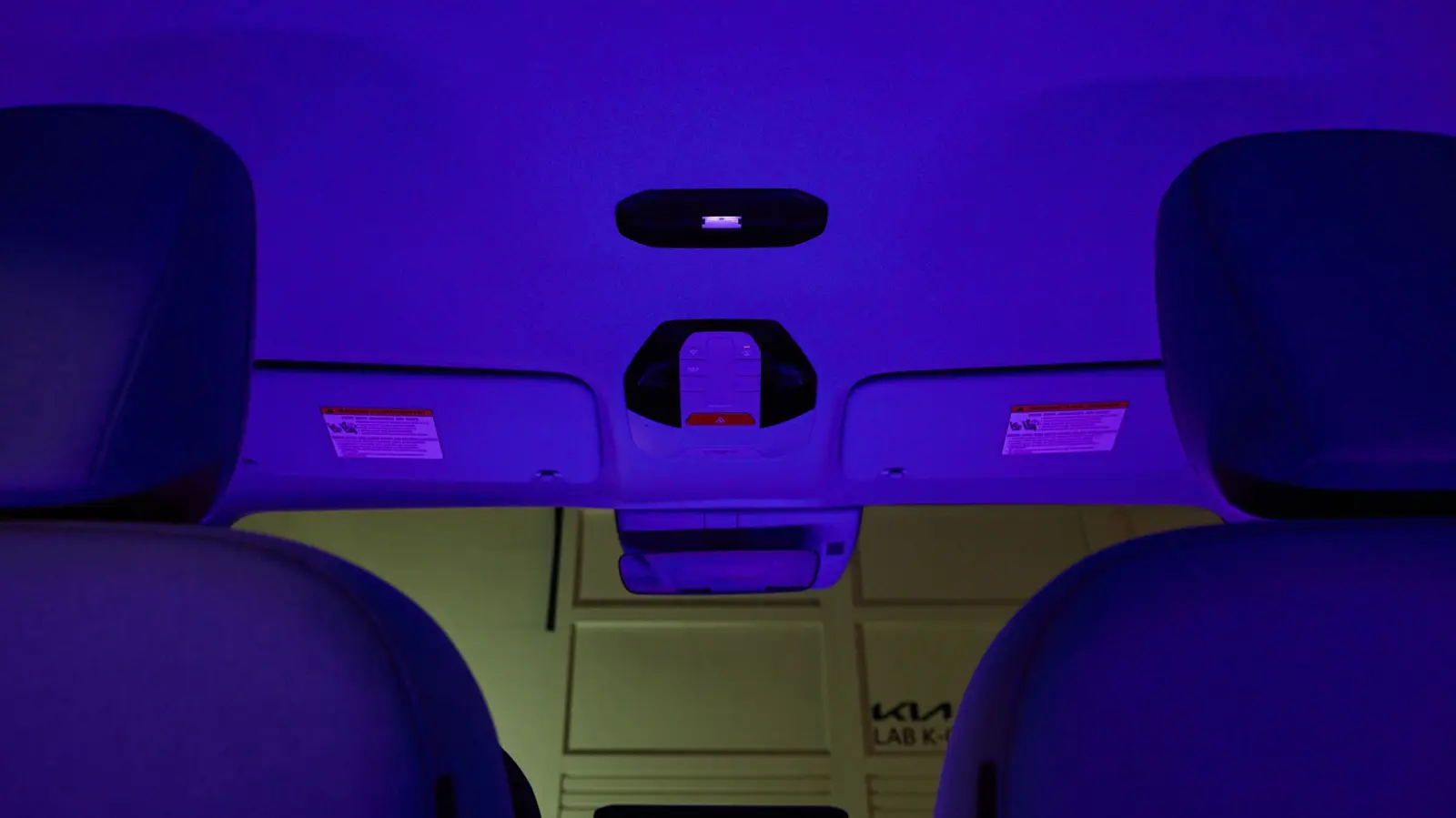
For most vehicle owners, maintaining an impeccably clean interior is a constant challenge. Dust, spills, and everyday wear are one thing, but invisible germs and pathogens present a more insidious threat. While regular cleaning helps, it rarely eliminates all microorganisms. Hyundai and Kia, the South Korean automotive giants, have now introduced a cutting-edge solution that could revolutionize in-car hygiene: a far-ultraviolet C (far-UVC) sanitizing system that promises to kill bacteria and viruses without endangering passengers.
What Is Plasma Care UVC?
The technology, termed "Plasma Care UVC," employs far-UVC light with a wavelength between 200 and 230 nanometers. This specific range is critical because it differs from conventional UVC light, which typically operates at 254 nm and is known to be harmful to human skin and eyes. Far-UVC light, on the other hand, has a shorter wavelength that cannot penetrate the outer layer of human skin or the tear layer of the eye. Yet, it retains the ability to penetrate and destroy the genetic material of bacteria, viruses, and other microbes, making it a potent disinfectant when used in occupied spaces.
Hyundai and Kia emphasize that this is the first integration of far-UVC sanitizers directly into a vehicle cabin. While similar technologies have been deployed in hospitals, hotels, schools, and even aircraft for years, miniaturizing the system to fit within a car's interior posed significant engineering challenges. The existing units were simply too large and consumed too much power for automotive use. Hyundai's engineers had to develop a compact, energy-efficient version while also incorporating an optical filter to ensure no harmful wavelengths are emitted.
How the System Works
The Plasma Care UVC system is designed to be integrated into the vehicle's HVAC (heating, ventilation, and air conditioning) system or mounted in key areas of the cabin. When activated, it bathes the interior in far-UVC light, targeting surfaces such as seats, steering wheels, door handles, and even the air circulating through the vents. The process is rapid and can be run while the car is parked or even while driving, with no risk to occupants. Hyundai's testing showed that the system achieved a high reduction rate of common pathogens, including Staphylococcus aureus and Escherichia coli, within minutes.
One of the standout features is its safety profile. Unlike traditional UV sanitizers that require the cabin to be empty or use ozone (which can be irritating), Plasma Care UVC allows passengers to remain inside during operation. This makes it ideal for ride-sharing services, public transportation, or families who want continuous protection. The system can be triggered manually or set to run automatically at specific intervals, ensuring a consistently clean environment.
Testing and Intended Applications
Hyundai chose the PV5 minivan as the testbed for this technology. The PV5 is a versatile platform that Hyundai has positioned as a purpose-built vehicle (PBV), capable of being configured for everything from passenger transit to cargo delivery to food service. The choice of the PV5 was deliberate: Hyundai wants to demonstrate that Plasma Care UVC can be adapted for various commercial and personal uses. For example, a school minibus could sanitize itself between trips, reducing the spread of illnesses among children. A food truck could maintain a hygienic preparation area without harsh chemicals. A ride-hailing vehicle could reassure passengers that the cabin is disinfected before each ride.
Beyond the PV5, Hyundai sees potential in autonomous vehicles, where drivers are absent and cleaning protocols must be fully automated. In a self-driving shuttle or taxi, the far-UVC system could activate during passenger transitions, ensuring a sterile environment for each new occupant. This aligns with Hyundai's broader vision of mobility services that prioritize health and safety alongside convenience.
The Science Behind Far-UVC
Far-UVC light has been a subject of intense research, especially after the COVID-19 pandemic highlighted the need for effective surface and air disinfection. Studies have shown that far-UVC is effective against coronaviruses, influenza, and antibiotic-resistant bacteria. The key advantage is that it can be used continuously in occupied spaces; a 2020 study from Columbia University demonstrated that far-UVC lamps in a room reduced airborne virus levels by more than 99% without harming human tissue. Hyundai and Kia are leveraging this same scientific foundation for the confined environment of a car.
The integration into vehicles requires careful engineering to ensure uniform coverage. A car's interior has complex geometry with many nooks and crannies. Hyundai's engineers designed multiple small far-UVC emitters placed strategically—above seats, in the overhead console, and near the dashboard—to minimize shadows. The optical filter is a critical component because it blocks UV emissions below 200 nm (which can produce ozone) and above 230 nm (which could be harmful). The result is a sanitizer that is both effective and safe.
Comparison with Other In-Car Hygiene Technologies
Plasma Care UVC is not the first attempt to sanitize cars automatically. Several automakers have introduced air purification systems with HEPA filters and ionizers, such as Tesla's Bioweapon Defense Mode or Volvo's air quality system. Others have experimented with photocatalytic coatings that break down pollutants when exposed to light. However, these systems primarily target airborne particles and odors, not surface-borne germs. UV sanitization addresses surfaces directly, which is where many infections are transmitted through touch.
Some aftermarket products claim to sanitize car interiors using UV wands or boxes, but these require manual handling and cannot be used while the car is occupied. Hyundai and Kia's integrated approach is far more convenient and promises a higher level of hygiene. The companies have also noted that they are exploring combinations with other technologies, such as antimicrobial materials for high-touch surfaces and advanced sensors that detect when sanitization is needed.
Commercial and Consumer Implications
If Plasma Care UVC reaches production vehicles, it could become a strong selling point for health-conscious consumers. In a post-pandemic world, many buyers prioritize cleanliness, and automakers are competing to offer the safest cabins. Kia and Hyundai could gain an edge by offering factory-installed UVC sanitization that requires no effort from the owner. Additionally, fleet operators—such as taxi companies, rental car agencies, and shuttle services—would benefit from reduced cleaning downtime and improved customer trust.
However, the technology is not yet ready for mass production. Hyundai has stated that more safety and technical validation tests are needed before it is approved. Regulatory approval may also be required, as UV devices are subject to health and safety standards in different markets. Pricing remains unknown, but given the complexity, it may initially be offered as an optional feature on higher-end models or PBVs before trickling down to mainstream vehicles.
Hyundai and Kia's move into far-UVC sanitation represents a significant step in automotive health technology. It builds on decades of research in photobiology and offers a tangible solution to a problem that affects every driver. While the timeline for production remains open, the successful test in the PV5 minivan indicates that the engineering hurdles have been largely overcome. As the industry shifts toward electric and autonomous vehicles, the integration of health-focused features like Plasma Care UVC will likely become a standard expectation rather than a novelty.
The development also highlights the importance of collaboration between automakers and researchers in fields like microbiology and optical engineering. Hyundai's ability to miniaturize the system and ensure safety demonstrates how automotive innovation can draw from diverse scientific disciplines. For germaphobes and everyday drivers alike, the prospect of a self-sanitizing car is now closer than ever. Though it may take a few more years before the technology appears in showrooms, the path is clear, and the potential benefits are enormous.
Source:SlashGear News