

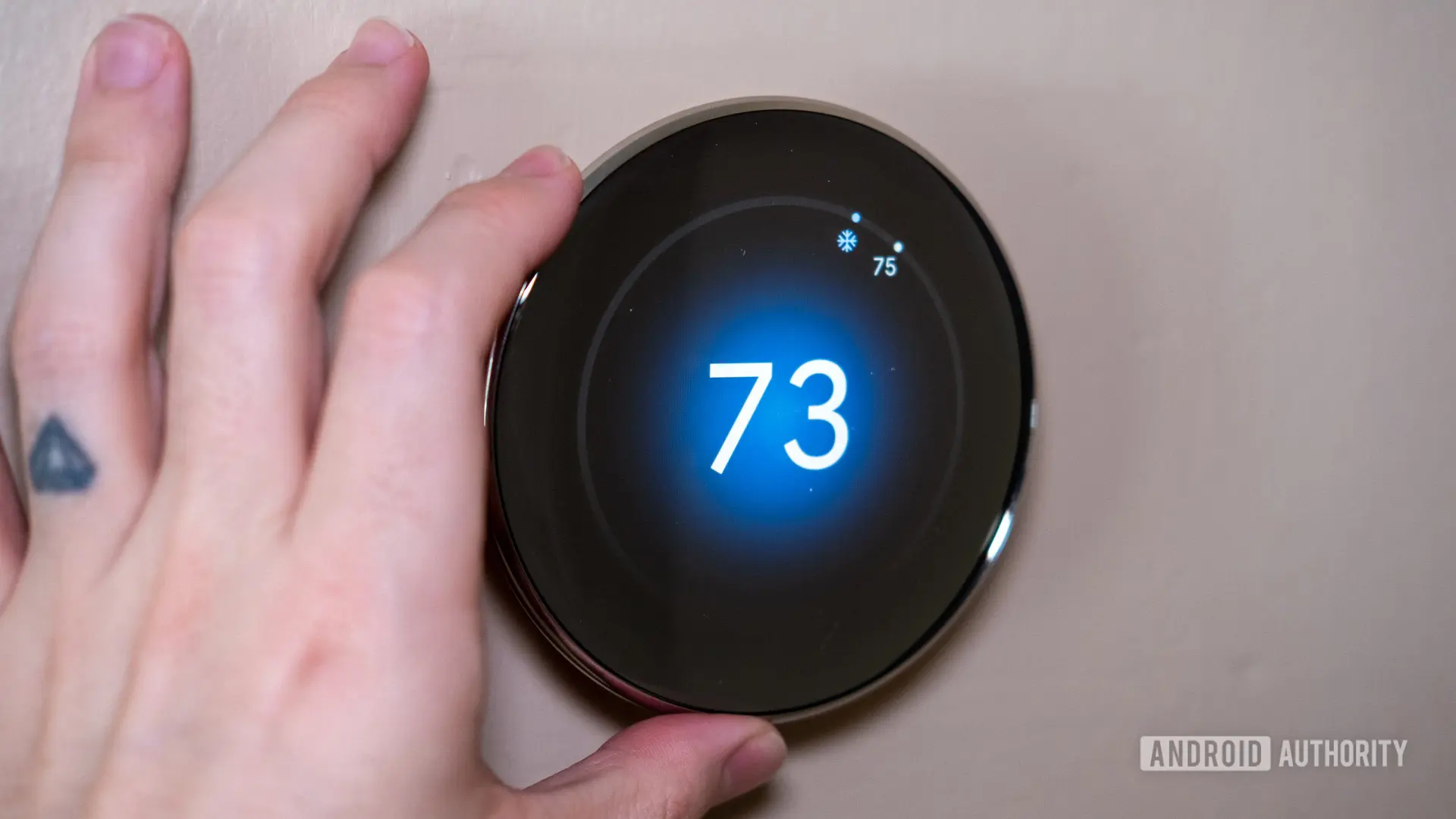
Smart home technology promises convenience, allowing users to adjust their thermostat, lights, and locks with simple voice commands. For Google Home users, this convenience has recently become a source of frustration as many report losing the ability to control their Nest Thermostats via voice. The issue, which appears to be widespread, has left owners reaching for their smartphones or walking to the thermostat—the very scenario smart home devices are meant to avoid.
The problem first gained widespread attention on Reddit, where a user detailed a situation where their Google Home speakers refused to connect to their Nest Thermostat. When attempting to use voice commands such as "Hey Google, set the thermostat to 72 degrees," the user received a robotic response: "Sorry, I can't reach the Nest Thermostat right now." The confusion deepened when the user discovered that the Google Home app on their phone could still adjust the thermostat without any hiccups. This suggests the issue is not with the thermostat itself or its internet connection, but rather with the communication pathway between Google Assistant voice commands and the Nest device.
Numerous commenters on the Reddit thread reported experiencing identical symptoms. The uniformity of the reports points to a systemic problem—likely a server-side glitch or a bug within the latest Google Home software update. Some users speculated that a recent Google Home app update might have broken the voice integration, while others suggested a backend issue where the Assistant's voice recognition fails to properly route commands to the Nest API. Interestingly, the original poster noted that by the next day, Google Home had resumed communication with the Nest Thermostat without any user action, hinting at an automatic recovery similar to intermittent cloud-service outages.
This is not the first time Google Home users have faced integration problems with Nest products. Since Google acquired Nest in 2014, the company has slowly migrated Nest devices onto its own smart home platform, merging Works with Nest and Google Home features. However, the transition has been rocky. In 2019, Google deprecated the Works with Nest program, forcing third-party integrations to switch to the Google Home app. Many users lost support for devices like IFTTT applets and certain automations. More recently, there have been issues with thermostat schedules disappearing, temperature sensors not syncing, and routine failures. Each glitch erodes trust in the platform, especially for users who invested heavily in a unified smart home ecosystem.
Voice control remains one of the most heralded features of smart home devices. The ability to say "Set the thermostat to 74 degrees" without touching a screen is a key selling point. When that fails, the smart home feels dumb. The current glitch affects not just the thermostat but also potentially other Nest devices connected via Google Home. Some users reported similar issues with Nest Cameras and Nest Protects—though thermostats seem most affected. The fact that the app still works suggests the issue lies within the Assistant's voice processing pipeline or the authentication between the Google account and the Nest service.
Troubleshooting steps that users have attempted include restarting Google Home speakers, re-linking the Nest account, clearing cache, and even factory resetting the thermostat—all with mixed results. One user found that removing and re-adding the thermostat to the Google Home app temporarily fixed the voice control, only for it to break again hours later. This inconsistency further points to a cloud-side problem rather than a local configuration error. Google has not yet officially acknowledged the issue, but the company's support forums are filled with reports. As of this writing, Android Authority has reached out to Google for comment, and this article will be updated once new information becomes available.
The impact extends beyond simple inconvenience. For elderly individuals or those with mobility issues, voice control is not a luxury but a necessity. Losing hands-free control can make daily tasks difficult. Similarly, for parents with their hands full or individuals cooking in the kitchen, voice commands are a practical tool. The glitch underscores a deeper vulnerability in the smart home model: reliance on cloud services. When a company's servers flicker or a software update introduces a bug, the smart devices in homes can become dumb. This incident reminds us that while smart home technology has advanced rapidly, reliability still lags behind traditional manual controls.
Looking at the broader smart home landscape, interoperability between devices is a constant challenge. Google Nest and Amazon Alexa, the two dominant voice assistants, each have their own ecosystems. While Amazon has seen similar issues with Alexa losing connection to smart thermostats, Google's current glitch is particularly notable because the Nest Thermostat is a first-party Google product. If Google cannot maintain seamless voice control for its own devices, it raises questions about its commitment to a stable platform. Competitors like Amazon's Ecobee and Honeywell have managed to maintain more consistent voice integration, partly because they don't rely on a single company's assistant stack.
Future updates from Google will likely address this specific bug. The company regularly pushes updates to the Google Home app and the Nest Thermostat firmware. Users are advised to keep both the app and the thermostat up to date. In the meantime, workarounds exist: using the Google Home app on the phone, connecting to the Nest app directly, or setting up routines that bypass voice commands. For those who rely heavily on voice, temporarily switching to a competing smart speaker like Amazon Echo might be an option, though that adds complexity to a multi-assistant home. The glitch is also a reminder to back up manual control methods—such as keeping a physical thermostat within reach—even in a fully automated home.
As the smart home market matures, reliability will become the differentiator. Users forgive occasional glitches, but repeated failures push them to switch platforms. Google has the resources to resolve this quickly, and the fact that the issue resolved itself for some within a day suggests the company may already have applied a server-side fix. Others, however, may still be experiencing the problem. If you are affected, checking the Google Home community forums or contacting Nest support is advisable. Sharing your experience can help other users and alert Google to the scale of the issue. The smart home dream remains alive, but incidents like this show it still has a long way to go before it is truly hands-free.
Source:Android Authority News