

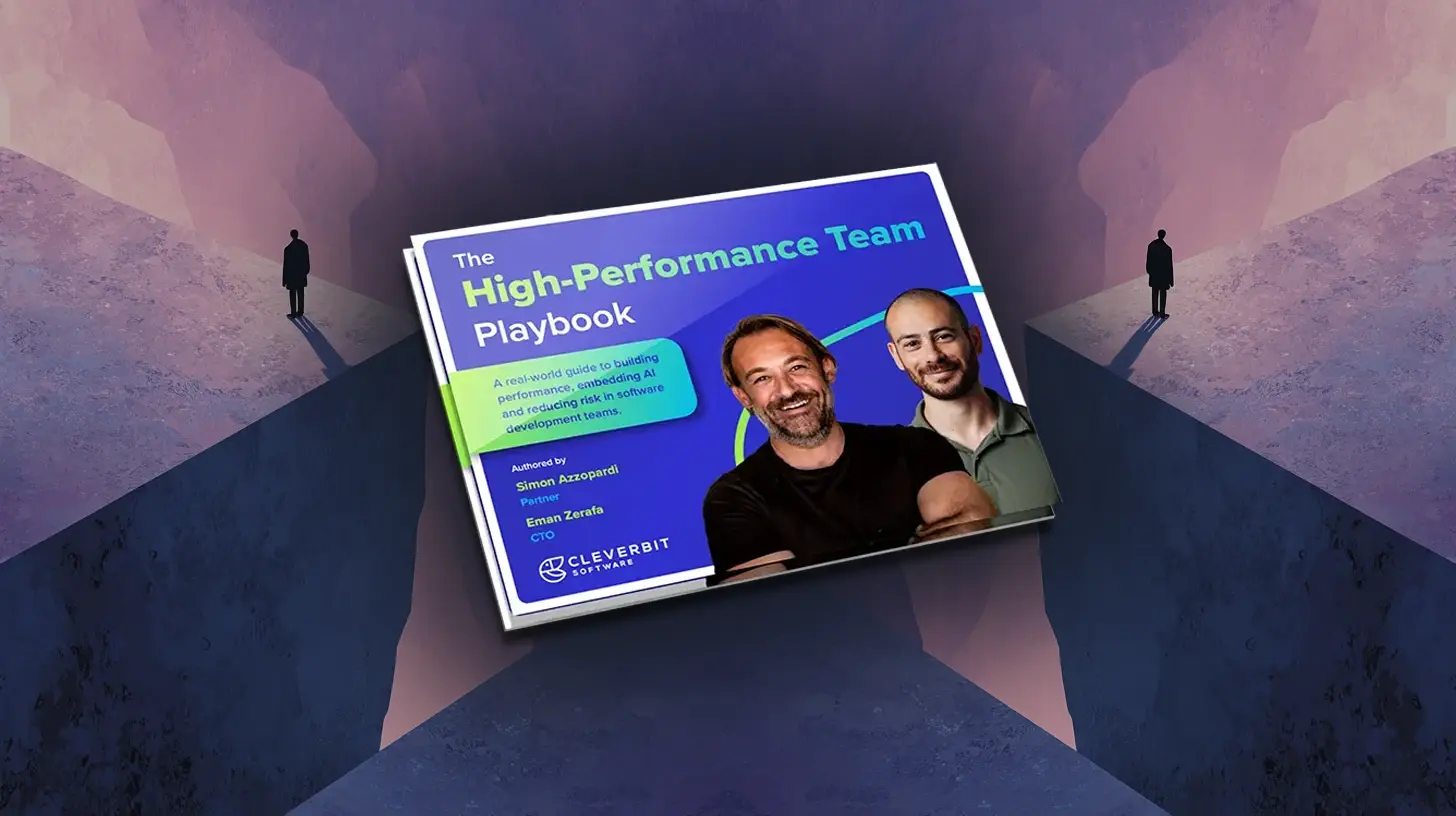
Why Performance Cannot Be Assumed
In the world of software engineering, there is a persistent myth that if you hire the smartest people and give them the latest tools, high performance will follow automatically. Reality tells a different story. Many engineering teams with brilliant individuals still struggle to deliver reliably, innovate consistently, and retain top talent. The missing ingredient is intentionality. High-performance teams are not accidents; they are deliberately crafted through a combination of culture, structure, leadership, and emerging technologies like AI.
This playbook draws on lessons from engineering leaders who have built, scaled, and successfully handed over functions at enterprise level. It offers a blueprint for turning a group of skilled individuals into a cohesive, high-impact unit. The insights are not theoretical; they are forged under real delivery pressure in organizations ranging from startups to Fortune 500 companies.
Building Ownership, Trust, and Clarity
The foundation of any high-performance team is a culture where ownership is clear, trust is earned, and goals are transparent. Without these elements, even the best technical strategies fall apart. Ownership means that every team member knows exactly what they are responsible for and feels empowered to make decisions within that domain. Trust is built when leaders consistently demonstrate that they believe in their team's judgment and when team members support each other through challenges.
Clarity goes beyond just assigning tasks. It involves setting a compelling vision and breaking it down into measurable objectives. When engineers understand how their work contributes to the organization's larger mission, they are more motivated and more likely to take initiative. Regular communication rituals, such as weekly syncs and retrospectives, help maintain alignment and surface issues early.
Hiring and Retaining for Performance, Not Comfort
One of the most common mistakes in team building is hiring for cultural fit rather than performance potential. While culture is important, high-performance teams need people who challenge the status quo, ask hard questions, and push the boundaries of what is possible. This means looking beyond a candidate's technical skills and evaluating their ability to collaborate, learn quickly, and take ownership.
Retention is equally critical. The best engineers stay because they feel challenged, valued, and part of something meaningful. Compensation and perks are table stakes; what truly retains top talent is a growth-oriented environment, meaningful work, and a leadership that actively removes blockers. Investing in continuous learning, mentoring, and career progression paths pays dividends in both performance and loyalty.
Structuring Teams That Scale Without Bureaucracy
As organizations grow, the natural tendency is to add layers of management and processes to maintain control. This often leads to bureaucracy that slows down decision-making and stifles innovation. High-performing teams adopt structures that balance autonomy with alignment. Techniques like two-pizza teams, functional squads, and matrixed reporting can scale without creating silos.
Key principles include: keeping teams small enough to maintain strong communication, defining clear interfaces between teams, and empowering teams to self-organize around outcomes rather than tasks. Leaders must resist the urge to micromanage and instead focus on providing resources, removing obstacles, and ensuring that strategic priorities are understood at every level.
Using AI as a Force Multiplier (Without Losing Control)
Artificial intelligence is rapidly becoming a central tool in the engineering manager's toolkit. When used correctly, AI can accelerate development, improve code quality, and free up engineers to focus on higher-level problems. However, it also introduces risks such as over-reliance, security vulnerabilities, and loss of oversight. The playbook emphasizes that AI should be treated as a force multiplier, not a replacement for human judgment.
Practical strategies include: integrating AI-assisted code review tools, using machine learning for predictive analytics in project management, and creating guardrails that ensure human validation of critical decisions. Teams that succeed with AI are those that maintain a culture of curiosity and experimentation while enforcing strict testing and monitoring protocols. The key is to let AI handle repetitive tasks while humans focus on creativity, architecture, and stakeholder communication.
Measuring What Actually Drives Long-Term Results
Traditional metrics like lines of code written or number of hours worked are misleading at best. High-performance teams measure outcomes that correlate with business impact and team health. These include cycle time, deployment frequency, mean time to recovery, and customer satisfaction scores. But beyond these quantitative measures, qualitative indicators such as team morale, innovation rate, and knowledge sharing are equally important.
Effective measurement systems are transparent and used for learning, not punishment. Teams regularly review their performance data in retrospectives and adjust their practices accordingly. Leaders also track leading indicators like employee net promoter score (eNPS) and skill development to predict future performance. By focusing on what truly matters, teams can continuously improve without burning out.
Another critical aspect is the ability to adapt measures as the team evolves. What works for a startup may not suit a mature enterprise. The playbook encourages periodic re-evaluation of metrics to ensure they remain aligned with current goals. For example, a team shifting from rapid feature development to platform stability might need to emphasize uptime and technical debt reduction rather than speed.
Real-World Case Studies and Lessons Learned
Behind every principle in the playbook are real stories of transformation. One engineering leader described how their team moved from a chaotic, firefighting culture to a predictable delivery engine by implementing clear ownership boundaries and a structured onboarding process. Another shared how adopting AI code assistants reduced the time to implement routine changes by 40% while maintaining code quality through mandatory human reviews.
A particularly powerful example involved a team that was on the verge of collapse due to high turnover and burnout. By focusing on psychological safety and giving engineers more control over their work schedules, they turned around retention and eventually became one of the company's highest-performing units. These stories underscore that there is no one-size-fits-all solution, but the core principles of intentionality, trust, and continuous learning are universal.
Leaders who have successfully handed over their teams emphasize the importance of documentation, mentoring successors, and gradually transitioning decision-making authority. A successful handoff ensures that the team's performance persists even after the original builder moves on. This requires building a self-sustaining culture where processes are embedded and everyone feels ownership.
The Role of Leadership in Sustaining High Performance
Ultimately, the sustainability of a high-performance team rests on leadership. Leaders must be willing to invest time in coaching, remove bureaucratic obstacles, and champion a vision that inspires. They also need to be humble enough to admit when they don't have all the answers and to seek input from the team. The best leaders create an environment where it is safe to fail fast and learn from mistakes.
Modern engineering leaders also need to stay current with technological trends, including AI, platform engineering, and developer experience. They must advocate for their teams at the organizational level, securing the resources and autonomy needed to excel. By modeling the behaviors they want to see—ownership, transparency, and a growth mindset—they set the standard for the entire team.
In practice, this means regular one-on-ones that go beyond status updates, encouraging cross-team collaboration, and celebrating both successes and learnings from failures. Leaders who prioritize these aspects find that their teams naturally self-organize around high standards and continuous improvement.
Practical Steps for Getting Started
For teams looking to adopt these principles, the playbook suggests starting with a self-assessment. Evaluate current ownership structures, trust levels, measurement practices, and AI readiness. Then pick one area for improvement and run a focused experiment for a few sprints. For example, introduce a single metric like cycle time and see how teams respond. Or implement a peer review process for code quality. Small, consistent changes compound over time.
Another recommendation is to invest in team-level retrospectives that look beyond process to culture and interpersonal dynamics. Use tools like team health checks or psychological safety surveys to surface hidden issues. Address them openly and collaboratively. Over time, these practices become ingrained and the team's performance naturally rises.
Finally, remember that building a high-performance team is a journey, not a destination. The landscape of technology and business is constantly changing, and the best teams are those that can adapt quickly. The principles outlined in the playbook provide a compass, but the path will be unique for each organization. Embrace the process, learn from setbacks, and keep striving for excellence.
Source:Help Net Security News