

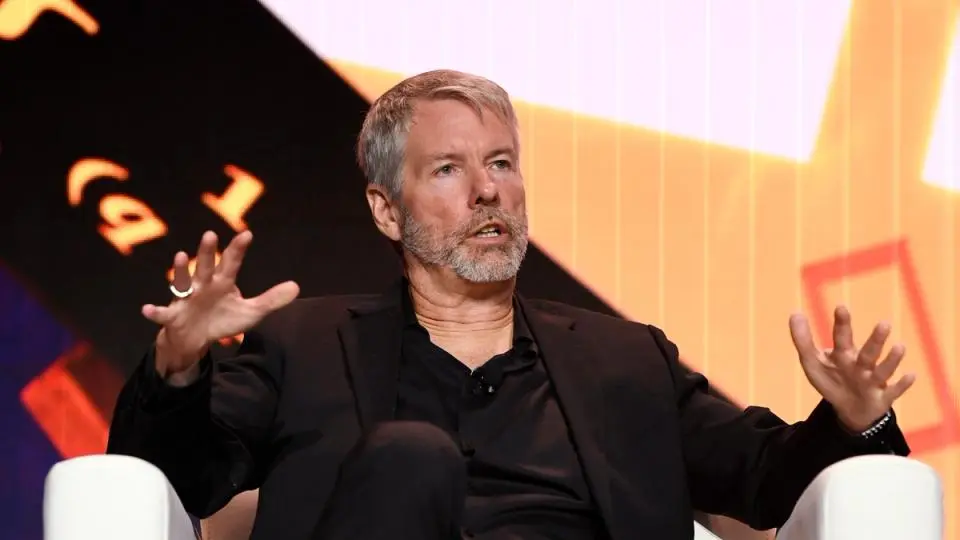
Michael Saylor, the executive chairman of Strategy (formerly MicroStrategy) and one of Bitcoin's most vocal proponents, has publicly denounced a new proposal aimed at cleaning up the Bitcoin blockchain. In a statement issued on July 19, 2026, Saylor called Bitcoin Improvement Proposal 110 (BIP-110) "a bad idea," warning that it threatens the network's neutrality and could create a dangerous precedent for censorship.
The Proposal: BIP-110
BIP-110, introduced by an anonymous developer under the pseudonym "CleanBlocks," proposes a temporary one-year soft fork that would impose new consensus limits on data embedded in Bitcoin transactions. Specifically, it would restrict so-called "spam" data—non-financial data such as images, messages, or files—that some users have been inscribing on the blockchain, particularly through protocols like Ordinals. The proposal sets a lower miner-signaling threshold of 55%, rather than the typical 95% required for most soft forks, to expedite implementation.
Proponents of BIP-110 argue that spam data clogs the network, drives up transaction fees for legitimate users, and degrades Bitcoin's utility as a peer-to-peer electronic cash system. They claim that by temporarily blocking such data, the blockchain can maintain its efficiency and focus on financial transactions.
Saylor's Opposition
Saylor, whose firm holds over 200,000 bitcoins and has become synonymous with corporate Bitcoin adoption, took to social media and a subsequent press conference to voice his concerns. He argued that BIP-110 violates Bitcoin's fundamental ethos of permissionlessness and openness. "Bitcoin is a neutral network. It doesn't discriminate between 'good' and 'bad' data—that's the beauty of it," Saylor said. "Once you start picking winners and losers at the protocol level, you open the door to all forms of censorship."
He further warned that introducing consensus rules based on the content of transactions sets a dangerous precedent. "What's considered spam today could be a legitimate use case tomorrow. Who gets to decide? The miners? The developers? That's not how Bitcoin works." Saylor emphasized that fee markets already provide a natural mechanism to regulate data: users willing to pay higher fees can include more data, while those who cannot afford it are effectively priced out. This market-based approach, he argued, is far superior to arbitrary protocol-level restrictions.
Historical Context: Ordinals and the Data Debate
The debate over non-financial data on Bitcoin is not new. The launch of Ordinals in early 2023 allowed users to inscribe data such as images and text onto individual satoshis, creating a new form of NFTs on the Bitcoin blockchain. This sparked a contentious debate within the community. Some hailed it as a sign of Bitcoin's flexibility and cultural adoption, while others decried it as spam that wasted block space and increased fees.
In 2023, transaction fees spiked to record levels—sometimes exceeding $30 per transaction—due to the popularity of BRC-20 tokens and Ordinals inscriptions. Critics argued that this priced out ordinary users and made Bitcoin less attractive for everyday payments. However, supporters noted that higher fees also led to increased miner revenue, which is crucial for network security after the block reward halves.
Saylor's position aligns with the "free market" camp, which holds that users and miners should decide what data belongs on-chain through economic incentives. "If people are willing to pay for it, it's not spam. It's a transaction," he said in a previous interview. "Bitcoin's security model relies on miners being able to choose which transactions to include based on fees. Let the market decide."
Technical Risks: Network Split and Miner Incentives
Saylor also highlighted technical risks associated with BIP-110. The proposal's lower activation threshold of 55% could lead to a network split if a significant minority of miners or nodes refuse to adopt the new rules. "A soft fork with 55% support is a recipe for disaster," Saylor warned. "If only 55% of miners upgrade, the remaining 45% could produce blocks that are invalid under the new rules, effectively creating a chain split. That would cause tremendous uncertainty and potentially destroy value."
He further argued that the one-year sunset clause—designed to make the change temporary—does not mitigate the risk. "Once a soft fork is activated, even temporarily, it sets a standard. Reversing it becomes politically difficult, if not impossible. We can't keep introducing temporary fixes as a substitute for careful deliberation."
Additionally, Saylor suggested that BIP-110 could weaken miner incentives over the long term. By reducing the number of transactions that can carry data, the proposal would cap the maximum fee revenue miners can earn during high-demand periods. "Miners are currently planning their operations based on the assumption that fee income will grow as the block subsidy declines. If you artificially cap that growth, you might make mining less profitable, which could lead to centralization."
Broader Implications for Bitcoin's Governance
The opposition from a figure as influential as Saylor carries weight, but it also highlights deeper divisions within the Bitcoin community over governance. The proposal has garnered support from some prominent developers and mining pools who believe that cleaning the blockchain is necessary to preserve its original vision. However, Saylor's stance reflects a growing fear that top-down restrictions could fragment the community and erode trust in Bitcoin's immutability.
"Bitcoin is not a democracy, but it's also not a dictatorship. It is a system of rules that anyone can follow or modify. Changing those rules should require overwhelming consensus," Saylor stated. He referenced the Block Size War of 2017, where a contentious debate over increasing the block size led to a hard fork and the creation of Bitcoin Cash. "We learned from that experience that divisive changes can cause lasting damage. We should avoid repeating those mistakes."
Other industry figures have echoed Saylor's concerns. Adam Back, CEO of Blockstream, tweeted: "BIP-110 is an overreach. The existing fee market works fine. If you don't like high fees, use a different layer like Lightning." Similarly, CoinDesk's own reporting has noted that many developers prefer off-chain solutions, such as relay policies that allow individual nodes to filter transactions without changing the consensus rules.
The Role of Fee Markets and Relay Policies
Saylor emphasized that the proper way to handle unwanted data is through voluntary relay policies, not consensus changes. "Nodes can already choose not to relay transactions that contain large data payloads. That's their right. But forcing all nodes to reject those transactions is a concentration of power." He noted that miners can also decide to ignore certain transactions, but that decision should be made at the local level, not imposed globally.
This approach, he argued, preserves the network's neutrality while allowing individual participants to set their own standards. "If a node operator doesn't like Ordinals, they can block them. But they shouldn't force their preference on everyone else. That's the difference between censorship and choice."
Saylor also pointed to the Lightning Network as a layer that already provides fast and cheap transactions without clogging the main chain. "The solution to high fees is not to ban certain transactions; it's to encourage adoption of second-layer technologies. Lightning is maturing quickly, and it offers an elegant way to scale without sacrificing decentralization."
Market Reaction and Next Steps
Following Saylor's comments, the price of Bitcoin remained relatively stable, though some analysts noted increased volatility in futures markets. The debate over BIP-110 is expected to intensify in the coming weeks as the proposal moves toward a formal mining signaling period in August. Several major mining pools, including F2Pool and Antpool, have yet to take a public stance. Meanwhile, the developer community is divided, with ongoing discussions on the Bitcoin development mailing list.
For now, Saylor's intervention has clarified the stakes: either the Bitcoin community accepts temporary data restrictions to address perceived spam, or it doubles down on its commitment to permissionless innovation. The outcome could shape the network's evolution for years to come. As Saylor put it, "Bitcoin is the first truly neutral money. We must protect that neutrality at all costs, even if it means tolerating some noise."
Critics of Saylor's position argue that his firm's massive Bitcoin holdings give him a skewed incentive: higher fees increase his returns, and he may underestimate the harm that spam causes to small users. However, Saylor maintains that his primary concern is the integrity of the protocol, not short-term profits. "I've been buying Bitcoin for years because I believe in its long-term value. That value comes from its rules. If we bend the rules for convenience, we destroy the very thing that makes it valuable."
As the debate unfolds, one thing is clear: BIP-110 has forced the Bitcoin community to confront fundamental questions about governance, censorship, and the boundaries of financial freedom. Whether the proposal passes or not, the discussion itself will leave a lasting impact on how Bitcoin holders view their role in shaping the network's future.
Source:Coindesk News