

Japan's recent decision to explore a backup capital to ensure government continuity in the event of a major earthquake has once again triggered a familiar question in India: should the country have a second capital? While Japan's debate is rooted in disaster preparedness, India's recurring conversation has historically revolved around regional representation, administrative efficiency and national security. The idea is not new, and it has been advocated by some of the country's most influential political thinkers and leaders.
Key facts
- B.R. Ambedkar proposed Hyderabad as a second capital in his 1955 book 'Thoughts on Linguistic States'.
- Karnataka's then housing minister M. Krishnappa pitched Bengaluru as India's second capital in 2018.
- Several countries, including South Africa, Malaysia and Bolivia, have multiple capitals.
- Japan's backup capital plan focuses on disaster continuity, not regional representation.
- New Delhi remains India's only capital despite decades of debate.
The Ambedkar proposal
One of the earliest and strongest arguments came from Dr B.R. Ambedkar, the chief architect of India's Constitution. In his 1955 book 'Thoughts on Linguistic States', Ambedkar argued that New Delhi was not the ideal location to serve as India's only capital. He identified three major concerns. First, Delhi was geographically distant from southern India, making it inconvenient for citizens and officials travelling from the region. Second, he argued that the city's extreme summers and harsh winters made it an uncomfortable administrative centre. Third, Ambedkar warned that Delhi's proximity to India's borders made it vulnerable during wartime. Instead, he proposed Hyderabad as a second capital, describing it as a centrally located, cosmopolitan city that could serve as a 'permanent equilibrium' between northern and southern India. His suggestion did not gain immediate traction, but it established a framework for later debates.
Interestingly, Hyderabad had a long history as a princely state capital and retained a distinct administrative identity even after independence. In 1956, it became the capital of Andhra Pradesh, and later, in 2014, it became the joint capital of Andhra Pradesh and Telangana before turning into solely Telangana's capital. Ambedkar saw the city as a symbol of India's composite culture. He believed that an administrative centre there would make governance more accessible and reduce the dominance of a single city. Though the demand was not acted upon, it remains one of the most frequently cited arguments in the second capital debate.
Bengaluru proposal and southern aspirations
The issue resurfaced in 2018 when Karnataka's then Housing Minister M. Krishnappa wrote to Prime Minister Narendra Modi seeking Bengaluru's recognition as India's second capital. The proposal argued that Bengaluru's position as India's technology hub, its relatively pleasant climate and strong economic base made it an ideal administrative centre in southern India. Supporters also said such a move would strengthen the integration of southern states into the country's governance framework. The pitch, like earlier appeals, did not lead to any official change. But it showed that the demand for decentralisation was not confined to any one region or party.
The Bengaluru proposal was also seen as a response to the perception that India's policy-making is heavily tilted towards the Hindi heartland. Southern states, which have made significant progress in human development, education and technology, often complain that they do not receive adequate representation in central institutions. A second capital in the south, supporters argue, would bring the government closer to these states. Opponents, however, point out that Bengaluru is already facing severe infrastructure, traffic and water challenges, and adding the national bureaucracy to its responsibilities would only worsen the situation.
How other countries handle multiple capitals
India would not be the first country to distribute government functions across multiple cities. South Africa has perhaps the best-known multi-capital model. Pretoria houses the executive, Cape Town hosts Parliament, while Bloemfontein is home to the judiciary. This arrangement was a compromise between British and Boer interests and reflects the country's federal character. Malaysia shifted its executive offices to Putrajaya while Parliament continues to function from Kuala Lumpur. The move was designed to ease congestion in the capital while creating a new administrative hub. Putrajaya is a purpose-built city, developed in the late 1990s, and has since become a model for deliberate administrative relocation.
Sri Lanka's Parliament sits in Sri Jayawardenepura Kotte, a suburb of Colombo, while Colombo remains the commercial hub and seat of many government institutions. The relocation was intended to decongest Colombo and create a dedicated legislative zone. The Netherlands recognises Amsterdam as its constitutional capital, but the government, Parliament and Supreme Court are based in The Hague. In practice, The Hague functions as the political centre of the country. Bolivia also has two capitals, with La Paz serving as the administrative capital and Sucre remaining the constitutional capital and seat of the judiciary. This split arose from a historical compromise after the federal war. These examples show that there are multiple ways to decentralise governance without abandoning the original capital entirely.
Why Japan's proposal is different
Japan's proposal differs from India's debate in one important way. Tokyo is expected to remain the country's capital. The government is instead studying a contingency administrative centre that could continue functioning if a devastating earthquake or other large-scale disaster disrupts the capital. The objective is continuity of government rather than regional representation. Japan sits on the Pacific Ring of Fire and experiences frequent seismic activity. The 2011 earthquake and tsunami demonstrated how a major disaster can disrupt critical government functions. A backup capital would allow essential ministries to relocate quickly and maintain order during a crisis. Similar plans have been discussed in Japan for years, with some proposals suggesting the creation of a secondary administrative hub outside the Tokyo metropolitan area.
India, by contrast, does not face the same level of seismic risk in Delhi, but the capital is still vulnerable to other threats, including air pollution, water scarcity and even security challenges. The Indian debate has been more about creating a sense of inclusion for distant regions, especially the south, than about disaster preparedness. Delhis location in the northern part of the country has often been a point of political and cultural tension. Many southern leaders argue that issues like language policy and education funding are decided without fully understanding regional sensitivities. A second capital, in their view, would force policymakers to engage with the south in a more direct and sustained manner.
Does India really need one?
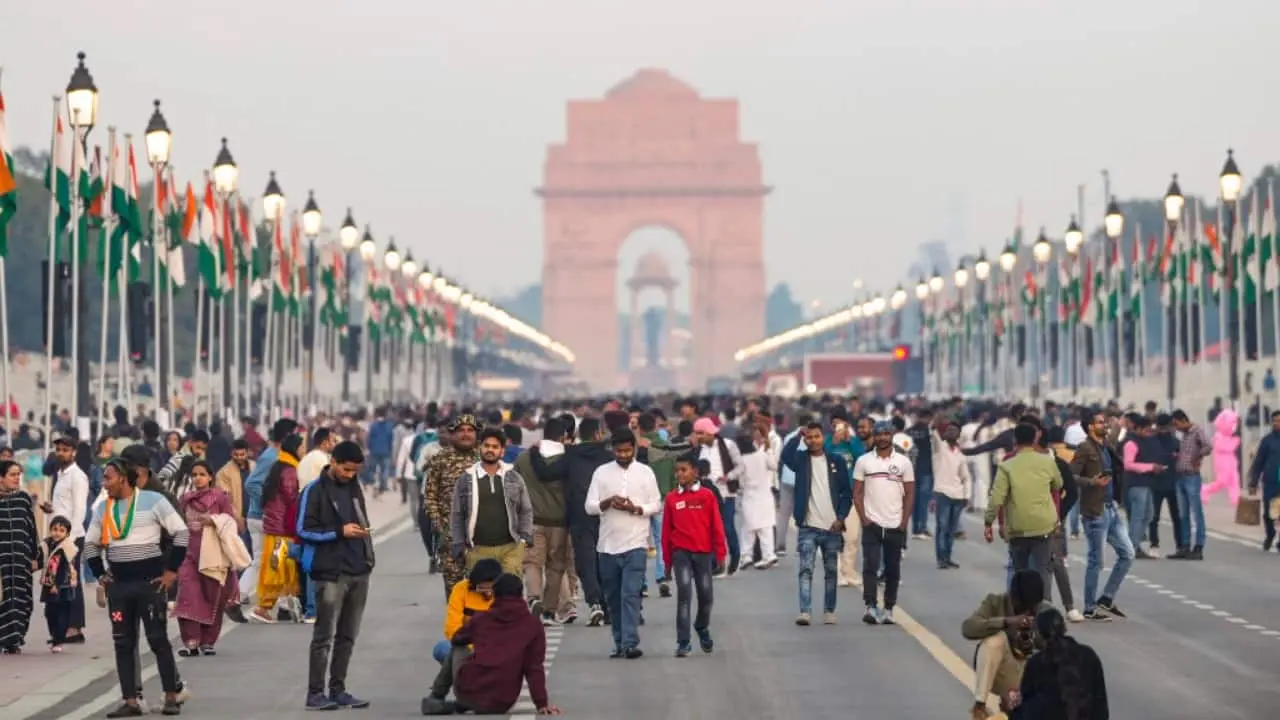
While the idea has periodically resurfaced, creating a second capital appears unlikely given the enormous investments made in New Delhi, including the redevelopment of the Central Vista. The Central Vista project, which includes a new Parliament building and revamped administrative spaces, signals that the government is committed to keeping New Delhi as the nerve centre of governance. Moving or even splitting administrative functions would require massive expenditure, legal changes and logistical coordination. India has recent experience with creating a new capital at Amaravati for Andhra Pradesh, and that project has faced delays and legal battles, highlighting how difficult it is to build a new administrative city from scratch.
Instead of a full second capital, experts have suggested more practical alternatives. These include holding one session of Parliament every year in a southern city, similar to Maharashtra's winter Assembly session in Nagpur, and establishing permanent regional benches of the Supreme Court in cities such as Chennai, Mumbai and Kolkata to improve access to justice. Others have called for strengthening state capitals and promoting federal cooperation rather than creating a second national capital. These measures would address some of the concerns about Delhi-centric governance without the prohibitive cost of relocating the entire government apparatus.
The debate is also complicated by India's political economy. A new capital would require decades of construction and the creation of new infrastructure, housing and transport links. It would also raise difficult questions about which region should host the new capital and which institutions would move. Every state would want a share of the prestige and resources that come with hosting a national institution. For this reason, piecemeal measures like regional courts and rotating parliamentary sessions are often seen as more feasible options.
For now, New Delhi remains India's sole capital. But as countries look at making governance more resilient and accessible, the question of whether India should decentralise some of its institutions continues to resurface. The demand for a second capital is unlikely to disappear, especially if the gap between India's northern political centre and its southern economic and social aspirations remains wide. The experience of Japan and other countries may offer useful lessons, but the answer for India will ultimately depend on its own federal balance and administrative priorities.
Source:Moneycontrol News