

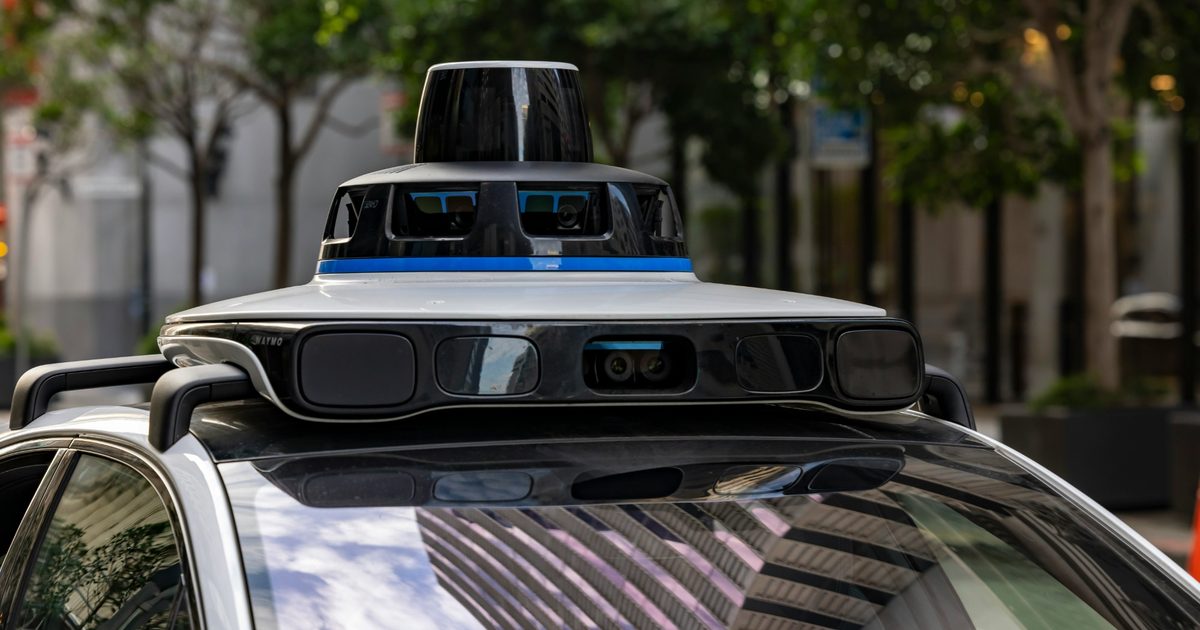
Self-driving cars have made remarkable progress in navigating roads under normal conditions. They can handle highway cruising, lane changes, and even complex urban intersections with growing competence. Yet the industry still struggles with a fundamental challenge: teaching autonomous vehicles to drive safely in unexpected situations that no one planned for. From erratic behavior around emergency vehicles to confusion at unusual road configurations, self-driving cars have often fallen short when it matters most.
A team of researchers at Seoul National University, led by Professor Jun Won Choi from the Department of Electrical and Computer Engineering, believes they have cracked part of that puzzle with a new AI model called SafeDrive. The work recently earned the distinction of being selected as a highlight paper at CVPR 2026, one of the premier conferences in computer vision and artificial intelligence, a recognition given to only about three percent of all submissions.
How does SafeDrive make driving decisions safer?
Most modern end-to-end autonomous driving systems operate by ingesting vast amounts of real-world driving data and learning to mimic human reactions. These deep learning models have proven effective in everyday scenarios, but they come with a significant drawback: they often cannot explain why they chose one action over another. This lack of transparency becomes a serious liability when safety is on the line, especially in critical situations where split-second decisions can mean the difference between an accident and a successful maneuver.
Choi’s team designed SafeDrive to overcome this limitation by implementing what they call Fine-grained Safety Reasoning. Instead of considering only one possible trajectory and acting on it, SafeDrive generates several candidate paths that the vehicle could follow. It then cross-references each path with data from the car’s sensor suite, which includes cameras, lidar, radar, and ultrasonic sensors. Each trajectory is scored based on safety metrics such as proximity to obstacles, likelihood of collision, adherence to traffic rules, and passenger comfort. The system then selects the path that achieves the highest safety score. This approach directly addresses the two biggest weaknesses of current end-to-end systems: safety and explainability. Because each trajectory can be evaluated and its score decomposed into factors, engineers can understand why the car chose a particular maneuver, building trust and enabling iterative improvement.
The technical implementation involves a multi-modal perception module that fuses information from different sensors into a unified representation of the environment. A trajectory proposal network generates a diverse set of possible future paths, taking into account the vehicle’s kinematics and the predicted movements of other road users. A safety evaluation module then assigns scores to each trajectory using learned safety constraints and risk metrics. The final module selects the trajectory with the highest score and issues commands to the vehicle’s steering, throttle, and brakes. This pipeline is designed to run in real time on the vehicle’s embedded computing hardware, a requirement for any practical deployment.
Why is this such a big deal for Korea?
As reported by TechXplore, this is the first time a Korean-made end-to-end autonomous driving paper has secured a highlight spot at CVPR, a conference that attracts thousands of researchers from across the globe, including dominant players from the United States and China. The achievement signals that Korea is no longer content to watch from the sidelines while other nations race ahead with self-driving ambitions. It also reflects the country’s growing investment in artificial intelligence and autonomous vehicle technologies, areas that the Korean government has identified as strategic priorities for economic growth and technological sovereignty.
SafeDrive is not remaining confined to academic research. The model has already been integrated into EAD, a reference autonomous driving platform backed by Korea’s Ministry of Trade, Industry and Energy. Choi’s team is now collaborating with domestic autonomous driving companies to test SafeDrive in real vehicles on public roads. According to Choi, the next steps involve improving the model with larger and more diverse datasets, refining the safety scoring mechanism, and eventually pushing toward full commercialization using data collected from their own test fleet. The ultimate goal is to create a safety-critical component that could be licensed to automakers and autonomous driving system developers worldwide.
The broader context of this research is the ongoing global push for safer autonomous driving. High-profile incidents, such as the fatal Uber self-driving car crash in Arizona in 2018 and several Waymo and Cruise vehicle encounters with emergency vehicles, have highlighted the dangers of systems that cannot adequately reason about rare or ambiguous situations. Traditional rule-based systems, which rely on hand-coded driving policies, are brittle and cannot cover all possible edge cases. End-to-end deep learning models, while more flexible, are black boxes that can fail in unexpected ways. SafeDrive’s trajectory scoring approach offers a middle ground: it retains the learning capabilities of modern AI while adding a layer of interpretability and safety reasoning that current black-box models lack.
The significance of CVPR recognition cannot be overstated. The conference, which stands for Computer Vision and Pattern Recognition, is one of the top venues for publishing breakthroughs in visual perception, a core enabling technology for autonomous driving. A highlight paper designation is a rare honor that draws attention from industry leaders, investors, and potential collaborators. For a relatively small academic team in Korea, this accomplishment elevates their work onto the global stage and demonstrates that innovation in autonomous driving safety can come from anywhere, not just from Silicon Valley or Shenzhen.
Looking ahead, the field of autonomous driving is likely to see increasing emphasis on safety validation and explainability. Regulatory bodies around the world, including the U.S. National Highway Traffic Safety Administration and the European Union, are developing frameworks that require manufacturers to demonstrate the safety of their autonomous systems before deployment. Models like SafeDrive could provide the technical foundation for meeting these new requirements, offering a way to quantify and communicate the safety level of an autonomous driving system in a transparent manner. The integration of multiple trajectory candidates with safety scoring also opens the door to more advanced features, such as real-time risk assessment, adaptive driving styles, and even cooperative maneuvers between connected vehicles.
Choi’s team has already begun working on extending SafeDrive to handle more complex scenarios, such as intersections with traffic signals, unprotected left turns, and interactions with pedestrians and cyclists. They are also exploring ways to incorporate high-definition maps and vehicle-to-everything (V2X) communication data to further enhance the trajectory scoring engine. The long-term vision is a holistic safety framework that can be seamlessly integrated into any autonomous driving stack, making roads safer for everyone, whether inside or outside the vehicle.
Source:Digital Trends News