

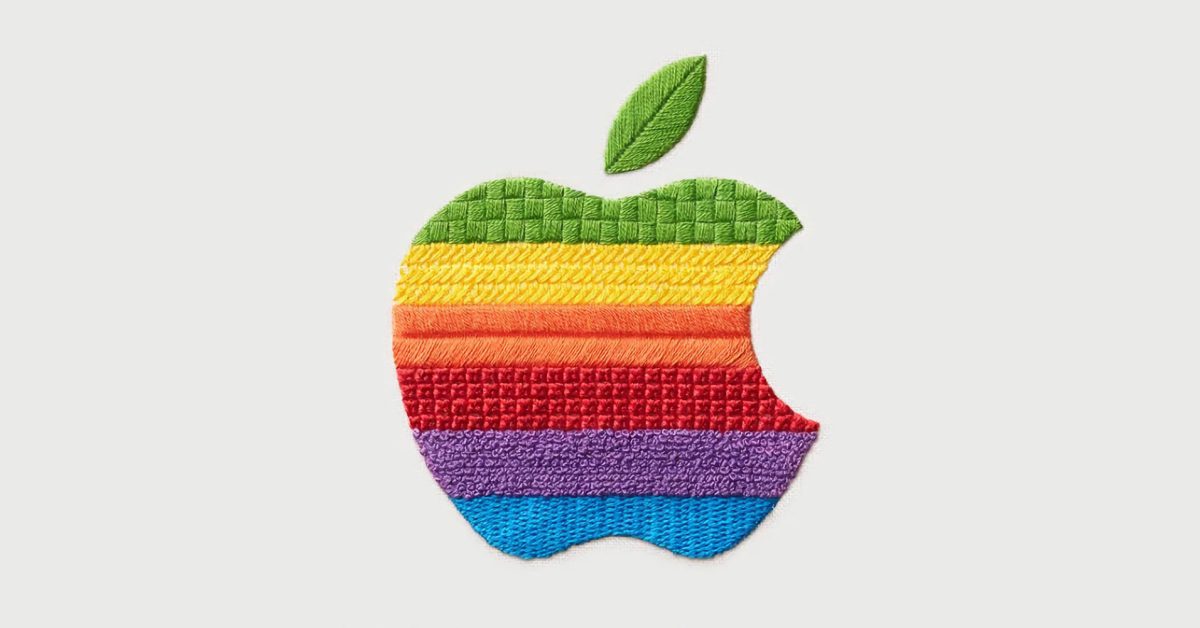
Apple has formally announced its next product event, sending invitations to the press for a special gathering on Tuesday, October 13. The company is promoting the date with a deliberately understated two-word tagline: “Welcome home.”
The announcement arrived alongside a brief teaser video shared by Apple’s senior vice president of worldwide marketing, Greg Joswiak, whose post read simply “Welcome home. October 13.” Invitations went out at the same moment to members of the media, confirming an in-person “Apple Experience” scheduled for Tribeca, New York, beginning at 9:00 a.m. Eastern Time.
The phrasing of the tagline, combined with the New York venue and the timing, has left little doubt about the theme. This is not a Mac event, and it is not an iPhone event. Apple is turning its attention to the home, and the company appears ready to make its most concentrated push into the connected living space in years.
An “Apple Experience” rather than a traditional keynote
One notable detail is the format itself. Rather than the polished, pre-recorded keynote videos Apple has favored for its flagship iPhone and Mac launches, this October 13 gathering is being billed as an “Apple Experience” — a smaller, more intimate affair built around hands-on time for invited press.
Apple has used this template before. Earlier this year, when the company introduced the MacBook Neo, it hosted a similar press-facing experience rather than a full broadcast production. That unveiling was preceded by several days of product announcements delivered quietly through press releases, with the in-person event serving as the capstone rather than the main stage.
The current expectation, however, is different. Rather than stretching announcements across a week, Apple is believed to be preparing to debut its entire slate of new home products on a single day. Whether the company also publishes a full-length introductory video at 9:00 a.m. Eastern is reportedly still unclear, leaving open the possibility that the event is strictly a hands-on briefing for media.
What Apple is expected to unveil
According to the prevailing expectations heading into next week, Apple’s October 13 lineup will center on three core pieces of hardware, with additional accessories rounding out the announcement:
- A new Apple TV 4K — a refreshed version of Apple’s streaming box, which has gone several years without a significant update. A faster chip and improved gaming and Apple Intelligence capabilities are widely anticipated.
- The “HomePad” — a long-rumored smart home display that would serve as a central hub for controlling HomeKit accessories, running a home-optimized interface and anchoring Apple’s broader connected-home ambitions.
- HomePod mini 2 — a second-generation version of Apple’s small, affordable smart speaker, which launched in 2020 and has since received only minor color refreshes.
Beyond those three products, Apple is also expected to introduce a set of leaked LG home accessories that the two companies have reportedly co-developed. Those items would be positioned as first-party-style companions for HomeKit setups, giving Apple a curated accessory catalog rather than relying entirely on third-party manufacturers.
A decade of groundwork in the connected home
The October 13 event, if it unfolds as expected, would mark the culmination of more than a decade of incremental work. Apple introduced HomeKit in 2014 as a software framework for controlling third-party accessories, but the platform’s early years were defined by strict certification rules and slow adoption. Device makers complained about the complexity of the program, and consumers often found that the most compelling smart home products skipped HomeKit support entirely.
The first major piece of hardware arrived in 2018 with the original HomePod, a premium, audio-first speaker priced at $349. It sounded excellent but sold poorly against cheaper competitors, and Apple eventually discontinued it in 2021. The HomePod mini followed in 2020 at $99, finding a much warmer reception as a gateway into the ecosystem. A second-generation full-size HomePod returned in 2023, restoring the high-end speaker line and adding Thread radio support for smart home devices.
Alongside the hardware, Apple rebuilt its Home app, introduced support for the Matter interoperability standard, and leaned on Thread networking to make accessories more responsive and reliable. Those moves quietly laid the foundation for a device like the HomePad — a product that only makes sense once the underlying platform is mature.
The HomePad and the future of Siri
The rumored HomePad is the most consequential product on the docket. A dedicated smart display would put Apple in direct competition with Amazon’s Echo Show and Google’s Nest Hub lines, both of which have occupied kitchen counters and bedside tables for years while Apple watched from the sidelines.
What could differentiate Apple’s take is software. A home-focused display would be the most natural showcase yet for a rebuilt Siri and the Apple Intelligence features the company has been rolling out across its platforms. Voice control, visual answers, camera feeds, reminders, and multi-room audio would all converge in a single device that lives permanently in a shared space rather than in a pocket.
The form factor also opens the door to ambient computing — an always-available assistant that responds to glanceable information rather than requiring a phone to be unlocked. Apple has signaled interest in this direction for years, and the HomePad would be its first genuine expression of it.
Why the timing matters
The smart home market has consolidated around a handful of platforms, and Apple has consistently been the smallest of the major players in terms of installed devices. Amazon and Google both shipped inexpensive speakers aggressively to establish themselves as the default assistants in living rooms and kitchens, while Samsung has spent years integrating SmartThings across its appliances and televisions.
Apple’s counterargument has always been privacy, tight integration, and reliability over volume. But that argument only holds if the company has hardware worth buying. A refreshed Apple TV, a new HomePod mini, and a smart display would finally give Apple a coherent, modern lineup at multiple price points, rather than a single aging speaker and a streaming box.
The Matter standard also changes the calculus. Because Apple, Amazon, Google, and Samsung all back Matter, accessories are increasingly platform-agnostic. That means the battle is shifting away from lock-in and toward the quality of the hub experience — precisely the area where a well-executed Apple display and a smarter Siri could matter most.
Apple TV and the living room fight
The Apple TV 4K is the sleeper item on the list. It is the least exciting product to speculate about but arguably the most important to Apple’s strategy, because the living room remains the single most contested space in the home. A faster chip would improve gaming performance, enable richer on-device intelligence, and make the device a more credible smart home hub in its own right.
Apple has also been steadily investing in television content and sports-adjacent programming, and a more capable streaming box strengthens the case for the services bundle. For many households, the Apple TV is already the only Apple product in the living room — which makes it a critical on-ramp.
Pricing and availability remain open questions
What Apple has not disclosed is pricing, availability, or which products will ship immediately. Historically, the company has staggered availability for home products, and a smart display in particular would represent a new category with new supply considerations.
Analysts and observers will also be watching for software details: which version of the Home app ships, how deeply HomeKit Secure Video is integrated, and whether the new devices require a specific iPhone or operating system version to function fully. Those constraints often dictate how quickly an ecosystem product finds an audience.
For now, the invitation itself is the news. Apple has a date, a tagline, and a venue — and the phrase “Welcome home” says more about the company’s direction than any specification sheet could. The full picture arrives on October 13 at 9:00 a.m. Eastern, when the company is expected to reveal everything at once rather than spreading announcements across the week.
Source:9to5Mac News